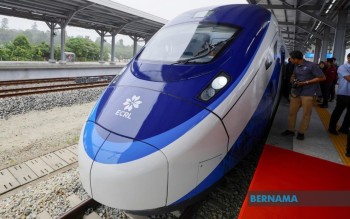
The East Coast Rail Link (ECRL), one of Malaysia's most ambitious infrastructure undertakings, is expected to deliver a cumulative economic boost of between RM80 and RM90 billion to the national gross domestic product by 2047, according to projections outlined by Deputy Economy Minister Datuk Mohd Shahar Abdullah. This substantial contribution represents more than just the direct benefits of improved transportation connectivity; it reflects the government's strategy to leverage the corridor as a comprehensive engine for regional development and attracting sustained private investment across the eastern seaboard.
The economic returns are anticipated to flow primarily through 21 Economic Accelerator Projects (EAPs) strategically positioned throughout the ECRL route. These initiatives have been deliberately designed to maximise spillover effects from the rail infrastructure and transform traditionally underdeveloped regions into vibrant economic zones. Rather than treating the railway as an isolated transport asset, planners view it as an integrated development tool that can reshape settlement patterns, industrial location decisions, and supply chain architecture across east coast states.
Three locations have been earmarked for particular attention as logistics transformation sites. Pasir Puteh in Kelantan will accommodate 213 acres of dedicated logistics space, while Kemaman in Terengganu has been allocated 68 acres for similar purposes. Temerloh in Pahang, strategically positioned along the corridor, will feature a 50-acre logistics facility. These hubs represent far more than simple cargo handling points; they function as nodes within a broader network intended to consolidate the region's role in Malaysia's national logistics ecosystem and draw regional trading activity away from bottlenecks around Kuala Lumpur and Port Klang.
For Malaysian businesses and the broader southeast Asian supply chain, this development carries significant implications. The ECRL is explicitly framed not as a competitor to established international maritime routes but as a complementary system that strengthens overall logistics efficiency. This positioning is strategically important in a region where multimodal transport integration—seamlessly connecting rail, road, port, and air facilities—increasingly determines competitiveness. By enhancing east coast connectivity, the project could attract manufacturing and distribution operations that have historically concentrated on the western peninsula, potentially rebalancing industrial geography across Malaysia.
The government's commitment to local industry development is underscored by ancillary initiatives such as the Perodua logistics hub at Paya Besar in Kuantan. The first phase of this facility is scheduled for completion by 2029 and represents the kind of private sector engagement crucial for translating rail infrastructure into tangible employment and prosperity. Such projects demonstrate how ECRL can catalyse knock-on investment in dependent industries—warehousing, distribution, light assembly, and value-added logistics services—that generate employment beyond direct railway operations.
Integrating the ECRL into Malaysia's broader development framework is essential to understanding its strategic weight. The project is explicitly aligned with the MADANI Economy framework, which prioritises sustainable and inclusive growth, and draws guidance from the 13th Malaysia Plan. These planning documents establish criteria through the Malaysia Development Composite Index and MyRMK system to direct development resources toward economically lagging regions with greater precision. The ECRL thus represents application of data-informed regional policy rather than ad hoc infrastructure spending.
Mohd Shahar, who represents Paya Besar constituency, emphasised that the railway must address the longstanding development disparity between Malaysia's prosperous west coast and its comparatively underdeveloped east coast. This regional inequality has persisted despite decades of development initiatives and remains a structural challenge for national cohesion. Improved connectivity through ECRL offers a mechanism to integrate peripheral economies more tightly into national supply networks and reduce transport costs that historically disadvantaged east coast enterprises.
The project itself comprises formidable technical specifications. At 665 kilometres in length, the ECRL will operate 11 six-car electric multiple unit (EMU) train sets dedicated to passenger services, alongside 12 electric locomotives (E-Loco) configured for freight operations. This dual-service configuration reflects sophisticated planning to balance social objectives—connecting communities along the corridor—with commercial logistics demands. The electric propulsion system also aligns with Malaysia's environmental commitments and reduces long-term operating costs compared to diesel alternatives.
Construction timelines indicate that the RM50.27 billion infrastructure investment is on track for completion in December 2026, with revenue-generating operations commencing in January 2027. This phased approach allows incremental economic activation; initial services will generate early operational learning and baseline revenue while Economic Accelerator Projects mature. Once fully operational, the combination of passenger connectivity, freight capacity, and ancillary logistics development should begin materialising the projected GDP contributions, though the distributed timeline to 2047 reflects realistic expectations about infrastructure payoff periods.
For Malaysian investors and policymakers, the ECRL represents a calculated bet that deliberately sequencing transport infrastructure, logistics facility development, and policy alignment can overcome historical geographic barriers to equitable growth. Success depends partly on transport economics—achieving sufficient freight and passenger volumes to sustain operations—but equally on whether accompanying investments in logistics hubs and industrial zones materialise. The outlined RM80-90 billion GDP projection is achievable only if these complementary projects attract actual investment and deployment, underscoring the importance of the government's parallel initiatives to catalyse private sector participation along the corridor.

