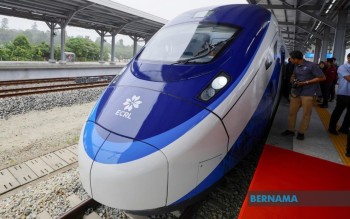
The East Coast Rail Link represents far more than a transportation infrastructure project—it signals a fundamental restructuring of economic possibilities for entrepreneurs across Malaysia's eastern corridor. According to Deputy Minister of Economy Datuk Mohd Shahar Abdullah, the ECRL initiative will catalyse market expansion and accelerate economic development throughout Pahang, Terengganu, Kelantan, and Selangor by fundamentally altering how goods and services flow through the region.
The transformation will unfold through the deliberate creation of an interconnected economic ecosystem rather than isolated transport connectivity. Beyond rail infrastructure itself, the project encompasses multiple layers of commercial activity spanning construction, operations, and ongoing maintenance activities. This holistic approach means employment generation and wealth creation will ripple across numerous sectors simultaneously, creating multiplier effects that extend beyond immediate rail users.
Transit-oriented development anchored around ECRL corridors will spawn entirely new business districts. Strategically positioned warehousing facilities, industrial parks, and commercial zones along the route will attract manufacturers, logistics operators, and distributors seeking proximity to efficient transport networks. Datuk Mohd Shahar, who represents Paya Besar, emphasised that this spatial reorganisation fundamentally changes business mathematics for regional entrepreneurs who previously faced geographical disadvantages.
Cost structures in regional commerce stand to transform dramatically through ECRL implementation. Logistics expenses historically constrained small and medium enterprises operating in East Coast states, forcing them to choose between limited local markets or prohibitively expensive national distribution. Reduced transportation costs and accelerated delivery times will enable entrepreneurs to profitably reach consumers across multiple states simultaneously, essentially collapsing the economic distance between regional producers and nationwide markets.
The scaling implications prove particularly significant for manufacturing competitiveness. An entrepreneur currently producing ten thousand units for a confined regional market operates under entirely different cost structures than one producing twenty thousand units for a nationwide audience. Volume-driven pricing advantages compound rapidly at scale, meaning ECRL-enabled market expansion will strengthen price competitiveness while maintaining or improving profit margins. This structural advantage particularly benefits standardised products where economies of scale prove decisive.
Tourism represents an underappreciated vector for ECRL-driven growth across the East Coast. Improved rail connectivity will attract leisure and business travellers currently deterred by limited transport options or lengthy journey times. This influx directly stimulates demand across hospitality, food service, and retail sectors whilst creating sustained demand for local cultural products. Batik craftspeople, handicraft manufacturers, and food entrepreneurs positioned near ECRL stations gain reliable customer flows that justify expansion and employment increases.
Small traders and artisanal producers occupy particular advantage positions within this emerging framework. Rather than competing primarily on price within saturated local markets, these entrepreneurs gain access to customers in multiple states who value authenticity and regional distinctiveness. Tourism-driven demand specifically rewards locally-made products, whether traditional batik, regional specialities, or handcrafted goods that appeal to visitors seeking authentic experiences. ECRL-enabled tourism thus creates dedicated markets for products previously confined to holiday periods or local consumption.
However, realising these opportunities requires proactive adaptation by business operators. Datuk Mohd Shahar cautioned against passive reliance upon traditional business models unchanged by the new infrastructure reality. Entrepreneurs must embrace technological integration, implement modern supply chain management, and restructure operations to accommodate volume increases and multistate distribution. Digital ordering systems, inventory management platforms, and logistics coordination tools become essential rather than optional for operations seeking to capture ECRL-enabled opportunities.
The project timeline demonstrates accelerating momentum toward commercial activation. Pahang-based segments have achieved 97.33 percent completion while overall construction reached 93.66 percent completion as of April, with full operational status anticipated by December. This trajectory suggests that market preparation cannot wait for ribbon-cutting ceremonies—entrepreneurs should begin strategic positioning immediately to capitalise on opportunities upon project completion.
The ECRL's economic significance extends beyond direct rail operations to encompass supply chain restructuring across the East Coast region. Manufacturing firms previously locked into single-state markets gain multi-state reach; wholesalers benefit from consolidation opportunities; logistics providers discover substantial service expansion; and retail networks can adopt multi-location strategies previously economically infeasible. This cascading transformation throughout regional supply chains amplifies development benefits far beyond those captured by actual ECRL users.
For Malaysian policymakers and regional economic strategists, the ECRL exemplifies how infrastructure investment generates optimal returns when accompanied by deliberate ecosystem development rather than isolated transport provision. The project validates the transit-oriented development model increasingly adopted across Asia as cities and regions recognise that transportation infrastructure alone proves insufficient without supporting commercial frameworks. East Coast entrepreneurs who recognise ECRL not merely as connectivity but as an existential reconfiguration of their market access and competitive positioning stand positioned to capture disproportionate benefits from this transformational infrastructure investment.

