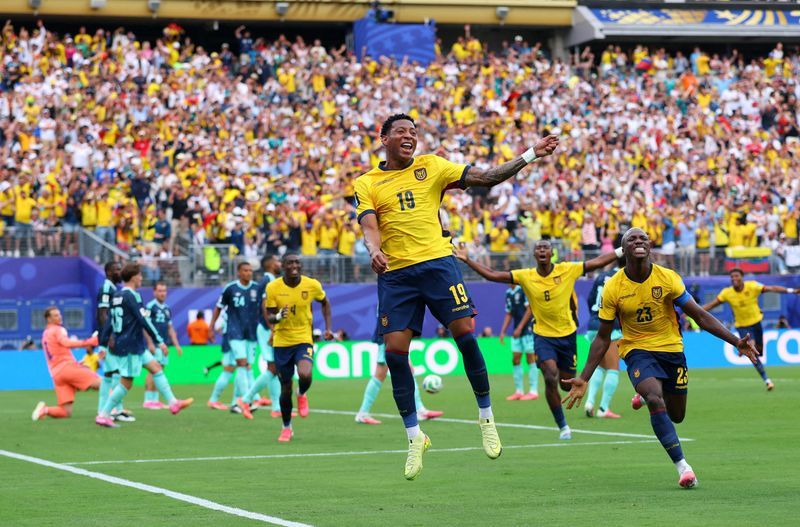
Ecuador produced one of the tournament's most dramatic reversals of fortune by overcoming Germany 2-1 in their decisive Group E encounter at East Rutherford, New Jersey on Thursday, salvaging their World Cup campaign from the brink of elimination and securing passage to the knockout rounds.
Arriving at the match under considerable duress following defeats that had left their qualification hopes hanging by a thread, the South American side faced an apparently insurmountable task against a German team already assured of progression as group winners. Yet what unfolded was a stirring display of resilience that showcased the unpredictable nature of international football and vindicated Ecuador's determination to fight despite the mathematical odds arrayed against them. The victory came as their fans, draped in the nation's distinctive yellow, created a sea of colour throughout the sold-out stadium.
Germany, seeking a third consecutive group victory and extending their unbeaten run, struck with alarming early efficiency when Leroy Sane opened the scoring in the second minute. The winger finished left-footed from just inside the penalty area after Florian Wirtz spotted him unmarked following a quick throw-in setup. For Sane, the goal represented a milestone in his international career, arriving at his 15th appearance at a major tournament—confirmation that Germany's early pressure was translating into clinical finishing against a fragile opponent.
However, Ecuador's response was immediate and unanticipated. The South Americans, who had endured a frustrating tournament marked by goalscoring struggles, finally converted their opportunities when Nilson Angulo curled a delicately struck shot beyond Manuel Neuer from the edge of the penalty box in the ninth minute. The goal broke a remarkable drought—Ecuador had attempted 39 shots without success before this match, making Angulo's 40th attempt for the team a watershed moment that ignited hope among their supporters.
The controversy surrounding Sane's opening goal hung over proceedings throughout. Ecuador protested vehemently that Aleksandar Pavlovic had committed a foul through a raised foot that caught Pedro Vite in the head during the buildup, but referee Tori Penso allowed the goal to stand. This decision would have lingering implications for how the match unfolded, adding an extra layer of drama to Ecuador's ultimate triumph.
The second half delivered its own contentious moment when Penso awarded Germany a penalty after Felix Nmecha played Kai Havertz into the box, with Havertz appearing to be brought down by Joel Ordonez. Yet following a VAR review, the referee made the correct intervention, overturning the decision after identifying a foul committed by Germany in the preceding phase of play. This reversal proved crucial, denying Germany the opportunity to extend their advantage and keeping Ecuador's narrow lifeline intact.
Gonzalo Plata delivered the decisive blow in the 78th minute with a composed finish that would ultimately determine Ecuador's fate. After substitute Kevin Rodriguez flicked a corner toward the near post, Plata reacted quickest to the loose ball, stabbing it past Neuer with clinical precision. The goal sent the stadium into an explosion of noise and celebration, transforming the match's trajectory and confirming Ecuador's passage through to the knockout phase.
Germany's performance exposed defensive vulnerabilities that had proved consistent throughout their group stage campaign. Having conceded in all three matches despite their group-topping finish, the four-time World Cup champions demonstrated that their defensive solidity could not be taken for granted. Their failure to secure victory against an increasingly desperate opponent represented a blemish on an otherwise accomplished group stage, though their six points and superior goal difference ensured they topped the standings ahead of Ivory Coast.
Ecuador's qualification represented a remarkable turnaround for a team that had appeared destined for elimination. Coming into this match following a defeat to Ivory Coast and a goalless draw against Curacao, they faced the prospect of exiting a World Cup held in North America without winning a match. Instead, they join the tournament's elite as one of the eight best-placed third-position finishers, a status earned through a performance that demonstrated character and technical quality under the most demanding circumstances imaginable. The victory vindicated their tactical adjustments and served as a reminder that football's outcomes remain gloriously unpredictable until the final whistle.

