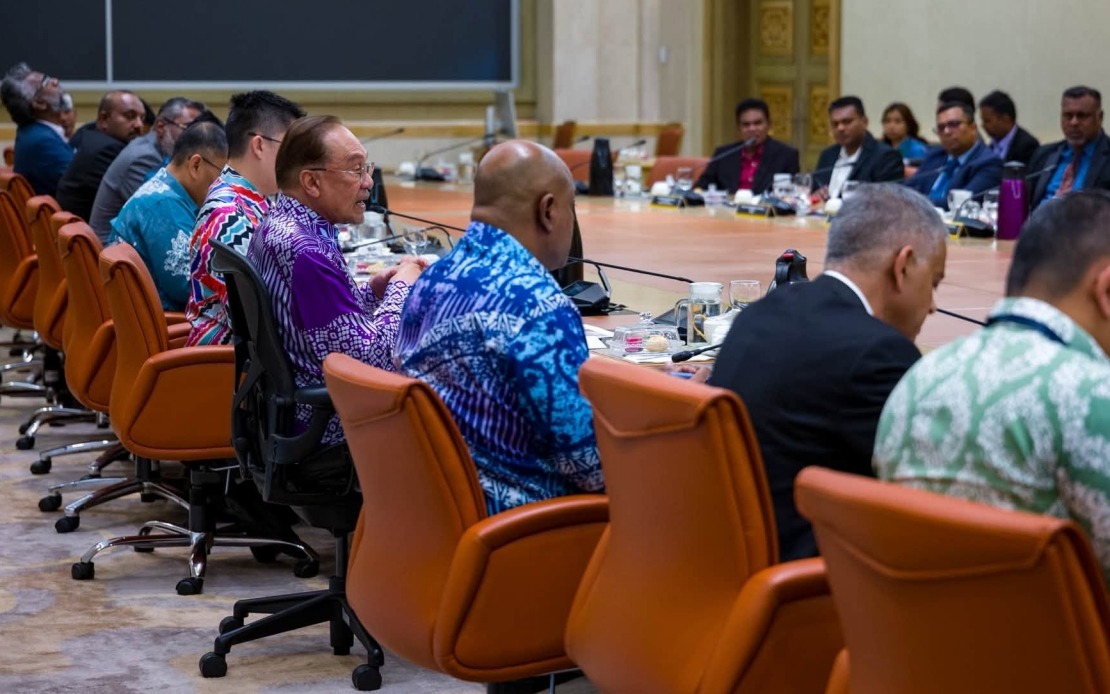
Prime Minister Datuk Seri Anwar Ibrahim has underscored the critical importance of education and welfare in advancing the socioeconomic status of Malaysia's Indian community, framing these investments as essential components of inclusive national development. Speaking following consultations with Indian community leaders, Anwar articulated a multi-faceted approach that extends beyond basic service delivery to encompass systematic skills development and meaningful employment pathways. His remarks reflect a broader recognition within government that targeted interventions, when properly designed and executed, can measurably improve outcomes for traditionally marginalised segments of the population.
The Prime Minister's emphasis on quality education addresses a long-standing concern within the Indian community, where educational disparities have historically constrained intergenerational mobility and economic advancement. Education serves not merely as a pathway to individual prosperity but as a foundational mechanism through which communities build resilience and capacity. By prioritising educational quality—rather than simply access—Anwar's framing acknowledges that Indian Malaysians require robust, well-resourced institutions capable of equipping learners with competencies relevant to contemporary labour markets. This distinction matters significantly; without sufficient investment in pedagogy, infrastructure, and educator development, educational expansion alone may perpetuate rather than resolve inequalities.
The welfare dimension of Anwar's agenda addresses immediate material vulnerabilities while broader structural improvements take effect. Comprehensive welfare systems that cover healthcare, income support, and housing create foundational security permitting families to invest in education and skills acquisition. In Malaysia's context, where Indian Malaysians experience poverty rates exceeding national averages and face barriers to social security access, enhanced welfare provisions represent concrete amelioration of hardship. Such support simultaneously generates economic stimulus through increased consumer spending in affected communities, creating secondary benefits throughout local economies.
Skills development emerges as a crucial bridge connecting educational attainment to labour market integration. The Malaysian economy increasingly demands specialised competencies across manufacturing, services, and digital sectors, yet Indian Malaysians remain underrepresented in many high-value occupational categories. Targeted vocational training, apprenticeship programmes, and professional development initiatives can systematically address this gap, enabling community members to access emerging opportunities in sectors experiencing labour shortages. The emphasis on skills also acknowledges that formal educational credentials alone may insufficiently address employer preferences or sectoral demands, requiring complementary training pathways.
Anwar's directive to the Malaysian Indian Transformation Unit (MITRA) and allied agencies reflects an administrative reorganisation intended to improve delivery of community-focused programmes. By calling for more proactive grassroots engagement, the Prime Minister implicitly critiques existing implementation approaches, suggesting that current mechanisms may inadequately identify genuine community needs or fail to ensure resources reach intended beneficiaries. This accountability focus carries particular significance in Malaysian governance, where programme leakage, misallocation, and insufficient community consultation have historically undermined effectiveness of targeted interventions. Anwar's insistence on verification that initiatives genuinely benefit those requiring support signals determination to strengthen administrative rigour.
The emphasis on identifying actual ground-level needs rather than imposing predetermined solutions represents a methodological shift toward community-responsive programming. Indian Malaysians inhabit diverse circumstances across urban centres, semi-urban zones, and rural areas, with different communities facing distinct challenges. Rubber estate workers, urban petty traders, plantation labourers, and professionals operate within vastly different contexts requiring calibrated responses. Grassroots consultation mechanisms, when genuinely inclusive and non-extractive, generate richer information enabling better-targeted resource allocation than top-down programme design.
Anwar's articulation of governance principles—compassion, accountability, and institutional integrity—frames community empowerment within broader national values. This framing positions support for Indian Malaysians not as particularistic preference but as expression of commitment to inclusive development principles applicable across all communities. By anchoring specific interventions in universal governance ideals, the Prime Minister constructs a narrative wherein advancing Indian community welfare reflects national integrity rather than destabilising favouritism. This rhetorical positioning matters significantly in Malaysia's multiethnic context, where community-specific programmes occasionally face political contestation.
The imperative that all Malaysians have fair opportunity to build better futures represents acknowledgment that inequality—whether based on ethnicity, geography, or socioeconomic origin—constitutes a national challenge requiring coordinated response. Unequal opportunity structures generate social friction, limit economic efficiency by underutilising human capital, and undermine the meritocratic aspirations central to Malaysian national identity. Indian Malaysians' advancement thus benefits the broader nation through expanded productive capacity, enhanced social cohesion, and realisation of development potential currently constrained by systematic barriers.
Implementing these priorities will require sustained political commitment, adequate resource allocation, and effective coordination across multiple government agencies. MITRA's enhanced role necessitates strengthened institutional capacity, clearer performance metrics, and genuine autonomy to innovate delivery mechanisms. Success depends equally on Indian community organisations' engagement, ensuring that grassroots voices shape programme design and that community members maintain accountability over implementation. The complexity of systemic community empowerment—extending across education, welfare, employment, and social integration—demands sophisticated coordination transcending traditional bureaucratic silos.
For Malaysian policymakers and the broader public, Anwar's articulation establishes measurable expectations against which government performance can be evaluated. Subsequent assessment should examine whether education quality improvements materialise, welfare coverage expands meaningfully, skills development reaches scale, and employment outcomes improve for programme participants. Beyond statistics, meaningful empowerment requires Indian Malaysians themselves perceive expanded agency, opportunity, and recognition within national society. This subjective dimension—how communities experience government commitment and perceive their futures—ultimately determines whether initiatives achieve genuine empowerment or remain bureaucratic exercises.
The community empowerment agenda also carries regional significance, as Indian diaspora communities across Southeast Asia face similar structural challenges. Malaysia's approaches, if successful and well-documented, might inform policy development in neighbouring nations similarly navigating multiethnic nation-building. Conversely, Indian Malaysians' experiences offer cautionary lessons regarding insufficient implementation, resource constraints, or political interference preventing realisation of well-intentioned programmes. The coming years will substantially clarify whether Anwar's stated priorities translate into sustained, substantive institutional changes or represent rhetorical commitment unmatched by implementation capacity.

