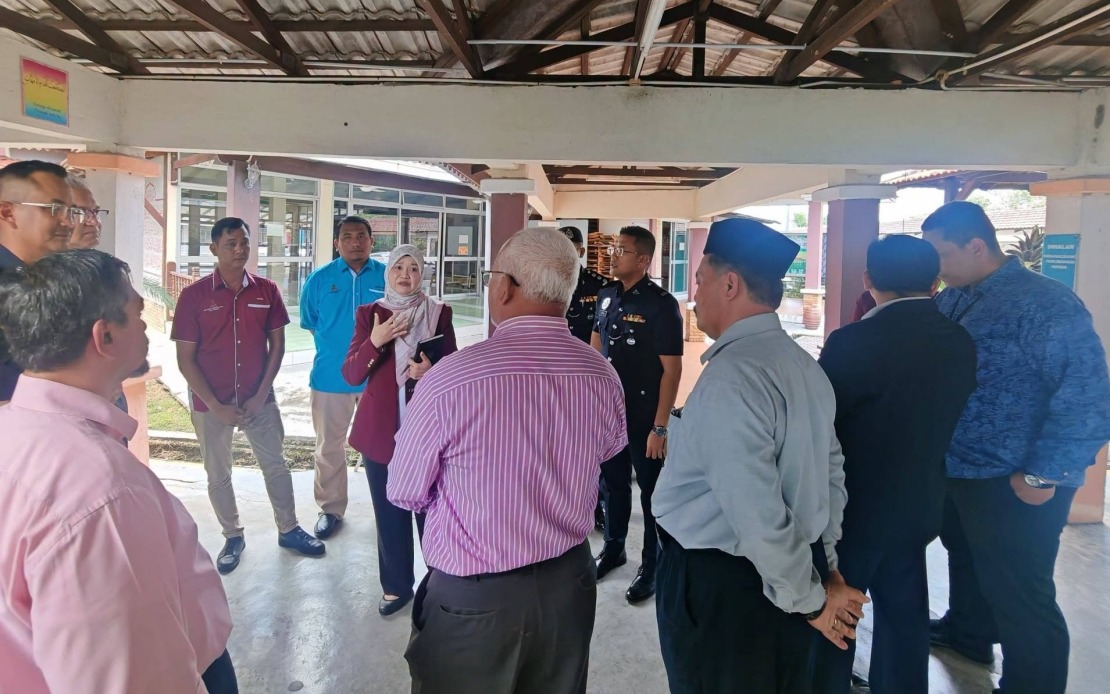
Education Minister Fadhlina Sidek made an unscheduled visit to a secondary school in Banting, Kuala Langat, on July 6 after a disturbing violent incident left a Form Three student requiring hospital treatment. The minister arrived at the school by mid-afternoon to meet with institutional leadership and gather details about the morning's events, signalling the gravity with which the ministry views school safety.
Police received reports of the incident at 9.50 am, prompting a swift response that secured the campus and prevented further escalation. The victim, a female student, had been stabbed with a knife by another girl attending the same school. She was transported to Banting Hospital where medical staff confirmed she remained in stable condition, suggesting the injuries, while serious, were not life-threatening.
Authorities moved quickly to detain the alleged perpetrator, a fellow female student, for questioning. The police investigation into the circumstances surrounding the stabbing is ongoing, with detectives seeking to establish motive and any contributing factors. The rapid apprehension of the suspect allayed immediate concerns about a dangerous individual remaining at large within the school community.
Fadhlina's public statements emphasised the ministry's dual focus on immediate victim care and emotional support for the broader school population. She stressed that counselling services be made available to all affected students and staff members, recognising that such violent incidents create psychological trauma extending far beyond the direct participants. The minister also appealed to the public to avoid speculation and misinformation while investigations continue, a responsible stance given how unverified claims can fuel panic and social media virality.
Selangor's state education authorities responded with coordinated psychosocial support, deploying counsellors to the school to assist the stabbed student's family and traumatised pupils. This multi-agency approach reflects growing recognition in Malaysian educational circles that recovery from school violence incidents requires professional mental health intervention, not merely administrative response.
Banting assemblyman and Selangor Human Resources and Poverty Eradication Committee chairman V. Paparaidu seized the incident as an opportunity to reinforce calls for heightened school security measures. He advocated for more vigilant gate monitoring and controlled access protocols, arguments that resonate with parents nationwide who worry about their children's safety during school hours. His emphasis on transforming schools into secure environments free from fear addresses a broader societal concern about institutional safety.
The stabbing in Banting represents a rare but deeply troubling breach of school security. While violence in Malaysian educational institutions remains uncommon compared to some international contexts, each incident prompts soul-searching about whether existing safeguards are sufficient. The fact that both perpetrator and victim were students complicates the security narrative—no amount of external gate monitoring prevents conflicts between pupils already within the compound.
This occurrence raises uncomfortable questions about peer violence, bullying, and mental health screening within schools. If interpersonal tensions between students escalated to knife violence, educators and administrators may need to examine whether warning signs were missed or intervention mechanisms proved inadequate. The incident underscores that school safety extends beyond physical security infrastructure to encompassing student welfare services, conflict resolution programmes, and early identification of troubled youth.
For parents across Selangor and beyond, the Banting stabbing serves as a stark reminder that even established educational institutions cannot guarantee complete safety. The psychological impact on students nationwide—many of whom will hear about or discuss the incident—merits acknowledgment. Schools may experience increased anxiety among pupils, requiring sensitive handling and reassurance from educators.
The swift governmental response, including the minister's personal visit and coordinated psychosocial support, demonstrates institutional commitment to accountability and victim care. However, the incident also exposes limits of reactive crisis management. Longer-term solutions will require systemic investments in student mental health services, peer mediation programmes, and professional development for staff trained to identify and defuse tensions before they escalate to violence.
Moving forward, Malaysian schools will likely implement enhanced security reviews and revised protocols for student conduct and conflict resolution. The Banting incident may catalyse broader policy conversations about balancing school accessibility with safety, ensuring educational spaces remain welcoming while implementing appropriate safeguards. For a nation proud of its education system, such incidents present uncomfortable challenges demanding honest examination and constructive reform.

