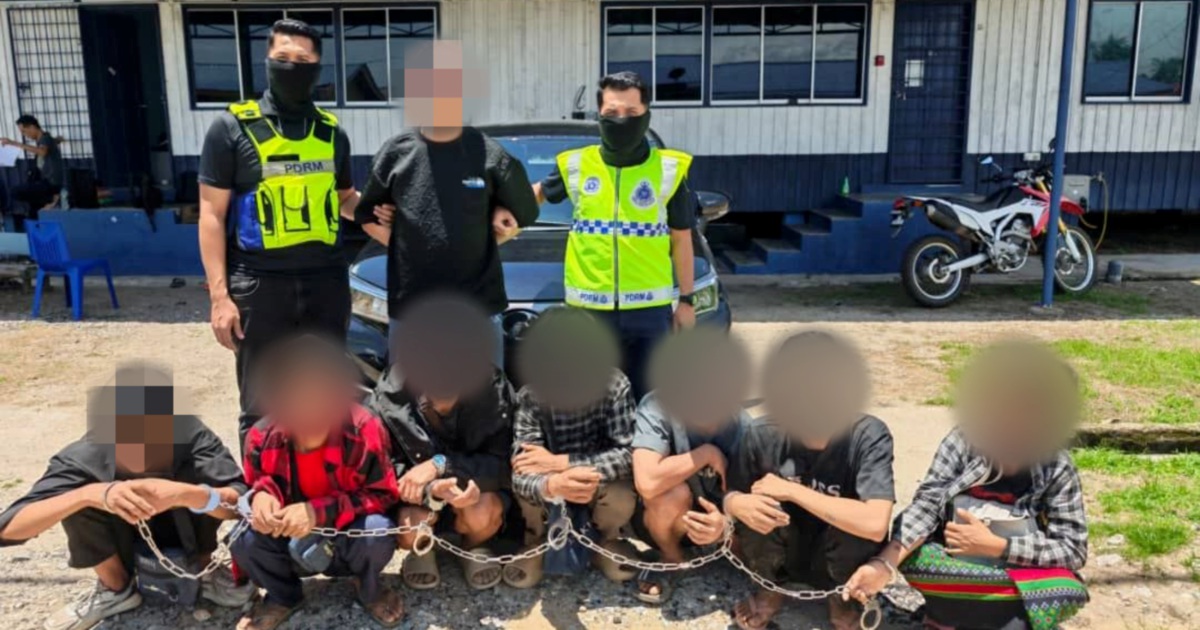
An early morning enforcement operation in Kota Baru has resulted in the arrest of eight individuals suspected of involvement in human trafficking and migrant smuggling operations. Among those detained is a Malaysian man believed to be a key operator in the network, who was caught transporting seven undocumented Myanmar nationals in a single vehicle. The operation underscores ongoing challenges faced by Kelantan authorities in combating organized smuggling networks that exploit vulnerable migrants seeking irregular entry into Malaysia.
The vehicle intercept represents a typical modus operandi in the region's migrant trafficking trade, where operators pack multiple undocumented persons into private transport for rapid movement through key transit routes. Kelantan's location as a border state makes it a critical corridor for illicit migration flows from Myanmar and Thailand into Malaysia's interior. Police discovered the seven Myanmar nationals during what authorities describe as an intelligence-led operation, suggesting that law enforcement has been tracking suspected smuggling activities in the area.
The arrest of a Malaysian national as the primary suspect indicates the involvement of local residents in facilitating migrant movements, a structural feature that complicates enforcement efforts. Malaysian citizens often serve as coordinators, drivers, and facilitators for smuggling networks, leveraging their freedom of movement and local knowledge. These domestic actors typically receive payment for each migrant successfully transported, creating financial incentives that perpetuate the illicit trade.
The Myanmar nationals recovered during the operation face an uncertain legal position. Undocumented migrants detained in Malaysia typically undergo immigration processing and may face detention while authorities determine their status and arrange deportation. However, Myanmar's ongoing internal conflict and the humanitarian situation has created complications for deportation processes, as some returning migrants face persecution or lack viable repatriation pathways.
Border trafficking remains a persistent security and humanitarian concern for Malaysian authorities. The country sits on major irregular migration routes from conflict-affected regions in South Asia and Southeast Asia, with migrants seeking economic opportunities or fleeing persecution. Kelantan, sharing a 600-kilometre border with Thailand, experiences disproportionate migrant transit activity compared to other Malaysian states.
The broader smuggling ecosystem involves multiple actors operating at different levels. International criminal networks coordinate border crossings and arrange initial transportation, while local facilitators like the arrested Malaysian man handle the dangerous final-mile delivery into populated areas. This layered structure makes comprehensive law enforcement challenging, as disrupting one network often simply creates opportunities for competing groups.
These arrest operations typically occur following intelligence gathering or community tip-offs. Police work closely with immigration authorities and border agencies to identify suspicious vehicle movements and known smuggling routes. The success of early morning raids depends on coordination between multiple agencies and real-time intelligence sharing, capabilities that have improved in recent years across Malaysian law enforcement.
The economic drivers behind migrant smuggling remain powerful. Smugglers typically charge migrants between RM1,500 and RM3,000 per person for transportation and documentation facilitation, generating substantial revenue from relatively low-risk transport operations. For Myanmar nationals fleeing economic hardship or political instability, these costs represent significant investments in seeking Malaysian employment opportunities.
Migrant smuggling carries serious legal consequences under Malaysian law. The Immigration Act and related statutes impose substantial penalties, including imprisonment and fines, for those convicted of transporting undocumented persons. Recent amendments have increased penalties to deter organized trafficking operations. However, the persistent profits and relatively dispersed organizational structure continue to attract new participants into the trade.
The incident reflects broader regional migration challenges affecting Malaysia alongside other Southeast Asian nations. Thailand, Cambodia, and Indonesia similarly face trafficking and smuggling pressures along their borders. Coordinated regional approaches, including information sharing agreements and joint enforcement operations, have become increasingly important for addressing transnational smuggling networks.
Police investigations into the eight arrested individuals will likely examine their roles within the broader smuggling organization, identify other participants in the network, and trace financial flows. Such investigations occasionally reveal connections to larger trafficking syndicates operating across Thailand, Myanmar, and Malaysia. Intelligence gathered may inform future enforcement operations targeting the smuggling infrastructure.

