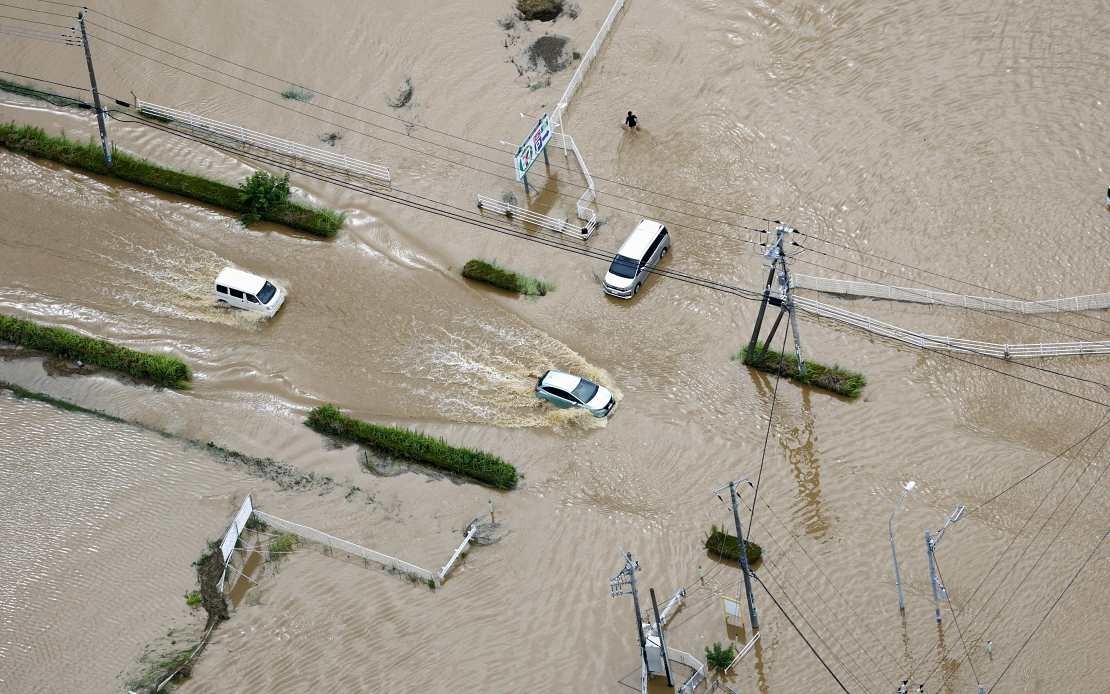
Eastern Japan endured an exceptional natural disaster on Thursday and Friday when Chiba Prefecture was battered by torrential downpours that shattered rainfall records and claimed eight lives across multiple municipalities. The catastrophic weather event underscores the increasing severity of extreme precipitation patterns affecting Japan and raises concerns for the broader Asia-Pacific region, including Southeast Asian nations that face similar meteorological vulnerabilities during monsoon seasons.
Local authorities confirmed that the death toll encompassed residents from five separate cities and towns within Chiba Prefecture: Chiba, Kashiwa, Ichikawa, Sakura, and Yachiyo. In addition to the fatalities, four individuals sustained injuries of minor severity. The incident represents a stark reminder of how rapidly weather events can overwhelm urban infrastructure and emergency response systems, even in developed nations with sophisticated disaster management capabilities.
The Japan Meteorological Agency documented an extraordinary precipitation event in Chiba City, where 348 millimetres of rainfall accumulated within a compressed 12-hour window ending at 1.40 am local time on Friday. To contextualise this staggering figure, meteorologists noted that this volume of rain represents approximately three times the typical monthly rainfall that Chiba City normally experiences throughout August, compressed into merely half a day. Such concentration of rainfall creates cascading hazards including flash flooding, landslides, and urban drainage system failures that cascade through densely populated areas.
The severity of the situation prompted Japan's meteorological authorities to implement their highest alert classification system. The JMA issued Level 5 emergency warnings for both heavy rain and landslide risks across portions of Chiba Prefecture, signalling extreme danger and urging immediate protective measures. These maximum-level alerts remained in effect until Friday morning, when meteorological conditions showed marginal improvement and warnings were subsequently downgraded to Level 4 or lower across the affected zones.
Despite the apparent stabilisation, weather officials maintained cautionary postures, advising residents and relevant agencies that additional rainfall remained a genuine possibility and vigilance must be sustained. This measured approach reflects the unpredictable nature of such weather systems, which can intensify or shift direction with limited advance notice. The persistence of forecaster warnings indicates that the danger window had not completely closed, and secondary hazards could still manifest as saturated ground conditions created instability risks.
Emergency management authorities documented substantial displacement of the civilian population in response to the unfolding crisis. As of 11 am on Friday, roughly 102,600 individuals remained under formal evacuation orders throughout Chiba Prefecture, indicating the scale of the threat posed to residential areas. These evacuation orders reflected the ongoing risks from inundation and terrain instability, requiring authorities to maintain temporary shelter and support operations for affected families removed from their homes.
The precipitation event extended its disruptive reach beyond residential zones into critical transportation infrastructure. Narita Airport, one of Japan's primary international gateways located within Chiba Prefecture, experienced severe operational paralysis as rail and bus services collapsed under the weather onslaught. Airport authorities documented approximately 7,000 passengers stranded overnight within terminal facilities, unable to depart or proceed with intended journeys. This transportation gridlock illustrates how concentrated rainfall events can cascade through interconnected infrastructure systems, creating secondary economic and logistical consequences.
For Malaysian and Southeast Asian observers, this incident carries instructive implications. The region's tropical and subtropical climate patterns generate comparable or more intense precipitation events during monsoon periods, yet many communities across Southeast Asia operate with considerably less robust early warning systems, evacuation protocols, and emergency infrastructure than Japan maintains. The 348-millimetre 12-hour rainfall that devastated Chiba Prefecture falls within the range of precipitation volumes that regularly affect parts of Malaysia, the Philippines, Thailand, and Indonesia during southwest and northeast monsoon seasons.
The Japanese response framework, while effective, still resulted in eight fatalities and mass displacement, suggesting that even advanced disaster management systems face fundamental limitations when confronting extreme weather. This reality underscores the necessity for Southeast Asian nations to continuously strengthen meteorological monitoring capabilities, improve early warning dissemination mechanisms, upgrade drainage and stormwater management infrastructure, and conduct regular evacuation exercises. Investment in these systems represents not merely bureaucratic procedure but potential life-saving intervention.
The Chiba Prefecture incident also illuminates the cumulative vulnerability created by urbanisation and climate dynamics. Densely developed areas with extensive impervious surface coverage—concrete, asphalt, rooftops—amplify flooding risks because rainfall cannot permeate ground layers and instead accumulates rapidly in urban channels. Southeast Asian cities experiencing rapid metropolitan expansion face analogous challenges, particularly in lower-lying areas and river valleys where catastrophic inundation becomes increasingly probable as climate variability intensifies.
Longer-term analysis suggests that extreme precipitation events may be increasing in frequency and intensity across temperate East Asia, a pattern with potential relevance for Southeast Asian climate projections. Scientific literature indicates that atmospheric warming amplifies the moisture-holding capacity of air masses, potentially concentrating heavier rainfall volumes within shorter timeframes. This mechanism could make events like the Chiba disaster more common rather than exceptional, necessitating adaptive infrastructure investments and community preparedness enhancements throughout the region.
As Japan's emergency services continued response operations in Chiba Prefecture, the incident remained ongoing, with recovery and investigation phases yet to commence. The human and economic costs would become clearer as assessment activities progressed, but the immediate lesson was unambiguous: extreme weather respects no borders or development levels, and preparation remains the most effective defence against such natural hazards.

