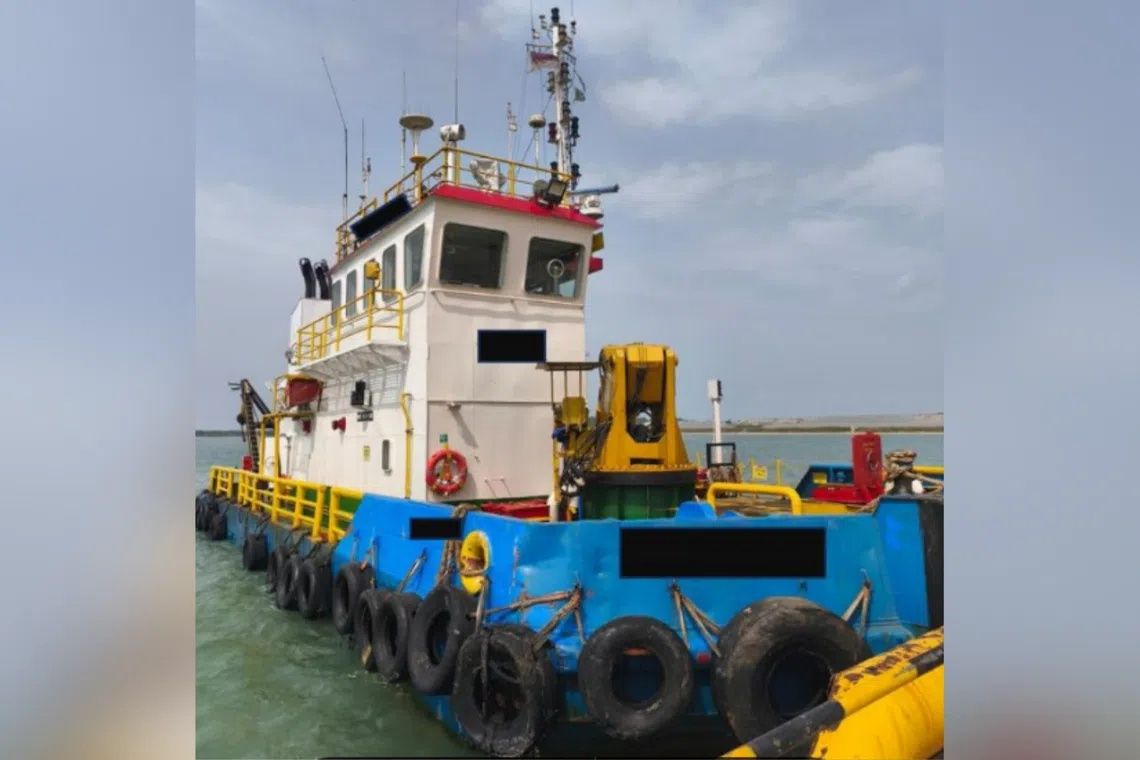
Eight crew members from a Singapore-registered tugboat are scheduled to appear before the courts on Friday, August 14, following their arrest on suspicion of unlawfully diverting marine gas oil for personal profit. The men, ranging in age from 25 to 54 years old, were taken into custody after a routine inspection by Police Coast Guard personnel in the early morning hours of August 13 in the maritime zone off Tuas.
The incident unfolded when coast guard officers boarded the vessel at approximately 1.05 AM for a standard security check in Singapore's territorial waters. What began as a routine inspection quickly revealed irregularities that pointed toward a deliberate scheme involving the ship's crew. The discovery set in motion a formal police investigation that would ultimately lead to charges against all eight individuals aboard the vessel at the time of the inspection.
According to preliminary findings released by the Singapore Police Force, the detained men—all working as crew members on the tugboat—had allegedly diverted marine gas oil valued at approximately S$10,570 from their employer's supplies. The misappropriation was carried out without authorization from the vessel's management or ownership. The stolen fuel was subsequently sold on the black market, with the proceeds divided among the conspirators for their personal financial benefit rather than any legitimate operational purpose.
This case highlights a recurring vulnerability within Singapore's shipping and maritime sector. The theft of marine fuel by vessel crew members represents a significant operational and financial risk for shipping companies, as such incidents erode both profitability and security protocols. The relatively modest value of the stolen fuel—S$10,570—suggests that these thefts may occur with regularity at lower levels without triggering major investigations, though this particular incident attracted coast guard attention during routine patrols.
The charges that prosecutors intend to pursue against all eight men carry substantial legal consequences. Each defendant faces an accusation of theft by a servant of property placed in the master's custody, a specific provision in Singapore law designed to address breaches of trust by employees who have direct access to employer assets. Conviction on this charge carries a possible sentence of up to seven years imprisonment, alongside monetary fines that could further penalize the offenders. The severity of potential punishment underscores the seriousness with which Singapore's legal system treats embezzlement and theft within regulated maritime industries.
The timing and nature of the arrests reflect intensifying enforcement efforts across Singapore's strategic shipping corridors. As a major global transshipment hub and regional maritime centre, Singapore faces constant pressure to maintain security and prevent smuggling, theft, and illicit trafficking within its waters. Port authorities and coast guard personnel conduct thousands of checks annually on vessels passing through Singapore's jurisdiction, yet the success rate in detecting theft schemes remains variable. This particular case represents one of the more straightforward detention scenarios, where officers were able to apprehend all suspects immediately upon discovery.
For regional stakeholders including Malaysia, the ramifications extend beyond Singapore's immediate interests. The Straits of Malacca and surrounding waters form a critical corridor for maritime commerce serving both nations and the broader Southeast Asian region. Any organized or systematic theft of marine fuel could potentially destabilize fuel supplies to regional ports and increase operational costs for shipping companies operating across the region. Malaysia's own port facilities in Johor and Sabah have similarly grappled with maritime crime, making this Singapore case instructive for enforcement planning.
The police statement following the arrests explicitly emphasized Singapore's determination to combat illegal maritime transactions, particularly those involving marine gas oil. Officials indicated that future enforcement operations will intensify, combining routine checks with targeted intelligence-led investigations to deter potential offenders. This posture reflects growing international concern about fuel theft in Asian waters, where organized syndicates have occasionally been implicated in large-scale operations. By publicizing successful prosecutions of smaller-scale theft rings, authorities seek to communicate zero-tolerance messaging to crew members throughout the maritime workforce.
For shipping companies operating in Singapore and Southeast Asia broadly, this case serves as a reminder of the importance of internal controls and crew vetting procedures. The ability of eight individuals to execute a coordinated theft scheme suggests potential lapses in supervision, inventory management, or crew accountability systems aboard the tugboat. Industry observers have long advocated for enhanced digital monitoring systems and real-time tracking of fuel supplies as preventative measures, though implementation costs remain prohibitive for many regional operators.
The August 14 court appearance will mark the formal transition from arrest and investigation into the judicial process. The prosecution will need to present evidence of the theft, the sale of stolen fuel, and the distribution of proceeds among the defendants. Defence representations will have opportunity to challenge the evidence or seek alternative explanations for the missing fuel. The outcome of these proceedings will likely establish precedent for future marine fuel theft cases prosecuted in Singapore courts, potentially influencing sentencing guidelines and enforcement approaches throughout the region.

