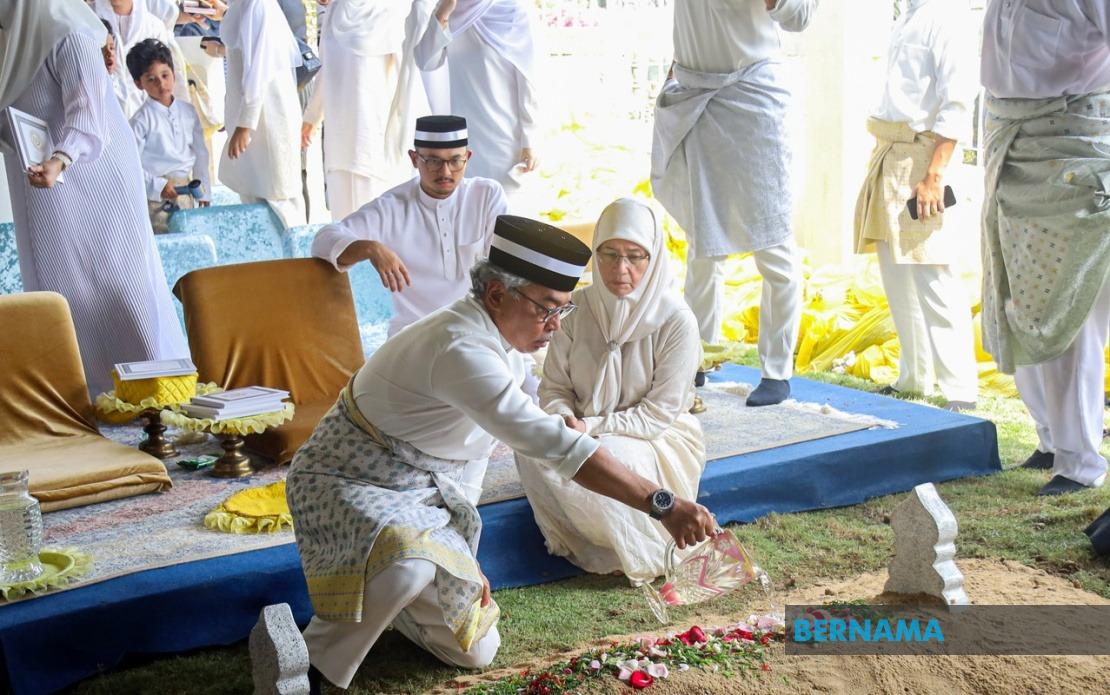
Tengku Datuk Seri Aishah, the elder sister of Pahang Sultan Al-Sultan Abdullah Ri'ayatuddin Al-Mustafa Billah Shah, was laid to rest at the Royal Mausoleum in Pekan on Wednesday, concluding a day of ceremonial observances befitting her royal status. The 69-year-old passed away at 9.25 pm the previous evening at a Kuala Lumpur hospital, with her final resting place chosen at the sacred grounds adjacent to Sultan Ahmad 1 Mosque in the state capital.
The funeral arrangements reflected the significance of Tengku Aishah's position within the Pahang royal household, with arrangements coordinated to transport her remains from the federal capital back to her home state with appropriate dignity. Initial funeral prayers took place at the Khalid bin Al-Walid Mosque along Jalan Padang Tembak in Kuala Lumpur before the body was transported via Subang Air Base to Pahang, underscoring the ceremonial importance accorded to members of the sultanate's immediate family.
Al-Sultan Abdullah and his consort Tengku Ampuan of Pahang Tunku Azizah Aminah Maimunah Iskandariah attended the burial proceedings, accompanied by the Tengku Mahkota of Pahang Tengku Hassanal Ibrahim Alam Shah. The presence of senior state figures, including Melaka Yang Dipertua Negeri Tun Mohd Ali Rustam and Pahang Menteri Besar Datuk Seri Wan Rosdy Wan Ismail, demonstrated the broader recognition of Tengku Aishah's standing within Malaysia's royal and political circles.
Following the morning prayers in the capital, the cortege arrived at Sultan Ahmad 1 Mosque in Pekan at 1.25 pm, where additional religious observances were conducted after the zuhur prayers. The timing and location of these ceremonies reflected Islamic protocols for royal funerals while maintaining the customary practices observed within Pahang's monarchical traditions. The involvement of multiple religious and state officials ensured that the proceedings honoured both the spiritual requirements and the ceremonial expectations surrounding the burial of a member of the royal family.
The Pahang Mufti Datuk Dr Asmadi Mohamed Naim led the recitation of Yasin, one of the most significant chapters of the Quran traditionally recited during Islamic funeral ceremonies. This was followed by tahlil, the repeated proclamation of Islamic faith, and prayers offered by the assembled mourners. Such religious observances form the cornerstone of Islamic burial practices in Malaysia, providing spiritual closure for family members and the broader community.
The interment itself was conducted at the Royal Mausoleum with full ceremonial honours, reflecting Tengku Aishah's royal lineage and her place within the Pahang sultanate's historical continuum. The Royal Mausoleum serves as the final resting place for members of the Pahang royal house, connecting Tengku Aishah to generations of her predecessors and establishing her legacy within the state's institutional memory. The choice of this location underscores the significance attributed to maintaining family connections even in death, a principle deeply embedded in Malaysian royal custom.
Following the conclusion of the burial rituals, Al-Sultan Abdullah and Tunku Azizah performed the traditional act of sprinkling rose water and scattering flowers upon the grave, a gesture that combines Islamic tradition with local royal ceremony. This personal involvement by the Sultan and his consort provided a poignant moment of familial farewell, witnessed by the assembled dignitaries and officials who had gathered to pay their respects throughout the day's proceedings.
The death of Tengku Aishah represents the passing of a member of a generation that witnessed significant chapters in Pahang's modern history. Her funeral arrangements demonstrate how Malaysia's royal institutions balance Islamic religious observance with elaborate ceremonial protocols that reflect both the spiritual and social dimensions of loss within the sultanate system. The coordinated efforts across multiple agencies and levels of government to facilitate the funeral proceedings highlight the interconnected nature of Malaysia's institutional frameworks, wherein state, religious, and ceremonial authorities collaborate to ensure that rites are conducted with appropriate solemnity.
For Pahang specifically, the passing of family members of the reigning Sultan invariably prompts reflection on succession, institutional continuity, and the role of the sultanate in contemporary Malaysian governance. The presence of both the Tengku Mahkota and various state officials suggested that the state was conscious of maintaining institutional stability and public assurance during a period of familial bereavement. Such occasions, while marking personal loss, also serve as opportunities for public reaffirmation of the constitutional and cultural frameworks within which the Pahang sultanate operates.
The funeral of Tengku Datuk Seri Aishah concluded a day of observances that began in the early hours in Kuala Lumpur and culminated in Pekan, with the journey itself forming part of the ceremonial farewell. The transport of her remains across state lines, the involvement of multiple religious officials, and the careful choreography of prayers and rituals all combined to create a funeral service that honoured both her personal significance to the Sultan and her broader importance to the Pahang state institution. As the mausoleum gates closed on Wednesday afternoon, another chapter of the Pahang royal family's contemporary history was marked, with Tengku Aishah now joining her ancestors in the soil of her homeland.

