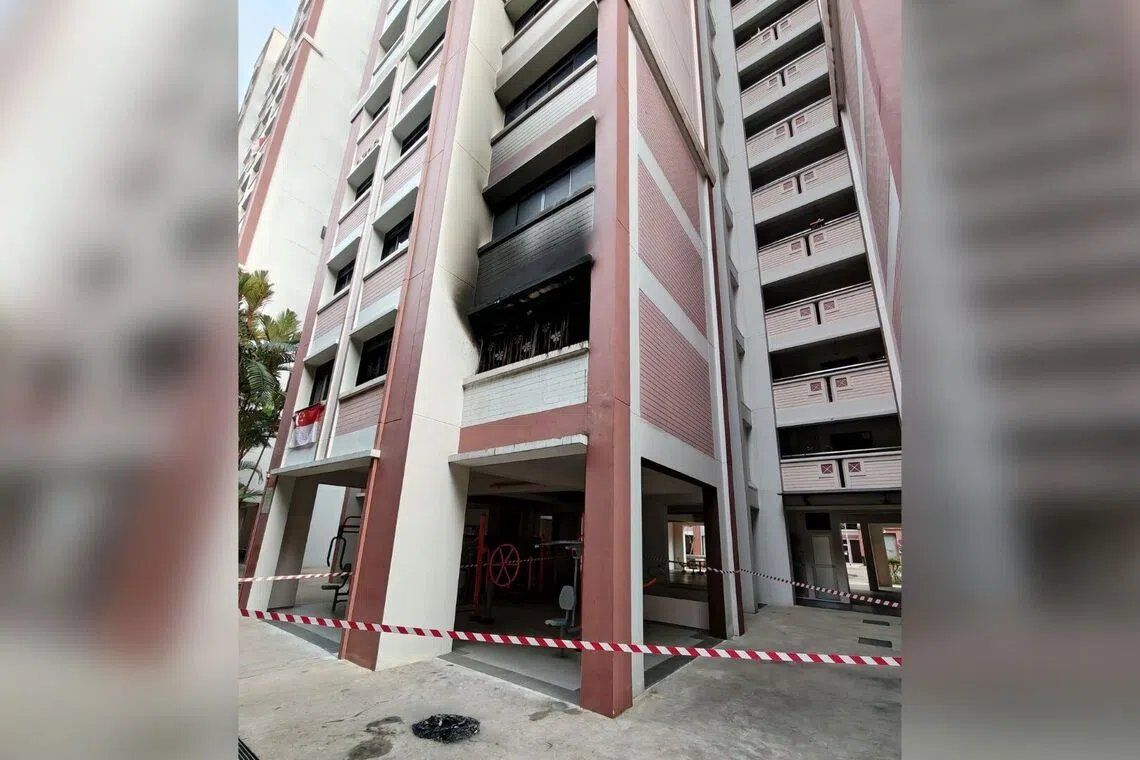
A residential fire in Singapore's Buangkok area early Thursday morning saw an elderly resident rushed to hospital after sustaining injuries during the incident. The Singapore Civil Defence Force responded to the blaze at Block 979B Buangkok Crescent just after 12.25am, where flames had engulfed the contents of a bedroom in a second-storey unit. Firefighters brought the situation under control using water jets, containing the damage to the single room and preventing spread to adjacent units—a critical outcome in high-density public housing where adjacent families live in close proximity.
The rapid response from emergency services prevented what could have been a more serious situation in the multistorey block. One resident was transported to Sengkang General Hospital for treatment of cuts sustained to his feet. According to Ang Mo Kio GRC Member of Parliament Victor Lye, who posted updates on social media later that morning, the injured man was an elderly resident who has since been discharged from the medical facility. The relatively swift discharge suggests the injuries, while requiring hospital assessment, were not severe.
What distinguished this incident, however, was the intervention of a young neighbouring resident whose quick thinking and decisive action may have prevented greater harm. An Institute of Technical Education student living in an adjacent unit responded immediately upon becoming aware of the emergency unfolding nearby. Rather than waiting for emergency personnel to arrive, the student deployed a fire extinguisher against the flames while simultaneously orchestrating an evacuation of the affected unit. In total, three residents were successfully led out of the burning flat by the courageous teenager, whose actions exemplify the kind of community vigilance that can make the difference in life-threatening situations.
Member of Parliament Lye acknowledged the student's heroic response in a Facebook statement posted around 1pm on Thursday, publicly recognising the swift action that undoubtedly assisted emergency responders and potentially prevented injury escalation. Such recognition serves an important social function, encouraging a culture of civic responsibility and mutual aid within residential communities. In Singapore's densely populated housing estates, where thousands of families live in close quarters, such neighbour-to-neighbour assistance often proves crucial during emergencies when minutes matter before professional responders arrive on scene.
Following the incident, both municipal and parliamentary authorities moved to provide support to the affected family. The local Residents' Network centre was made available as temporary accommodation for those displaced by the fire, offering a place of refuge while the family assessed their situation and next steps. However, the residents opted instead to remain with the neighbour who had assisted them during the emergency—a decision reflecting the bonds of community solidarity that emerged from the crisis. This arrangement, while informal, demonstrates how neighbourly relationships can provide immediate practical and emotional support in times of distress.
Parliament Member Lye made a personal visit to the affected unit to extend support and assess the family's immediate needs, emphasising the responsiveness of local political representatives to constituents' welfare. Such engagement reflects the expectations placed on elected members to move beyond legislative duties toward active community advocacy and crisis management. For Malaysian readers familiar with similar HDB-equivalent housing developments, this scenario will resonate as a reminder of the shared vulnerabilities inherent to multistorey residential living and the importance of fire prevention measures and neighbour networks.
The cause of the fire remains under formal investigation by authorities, with investigators likely examining electrical appliances, cooking equipment, or other potential ignition sources within the bedroom. Fire investigations in residential units typically focus on electrical faults, improperly stored flammable materials, or inadequately maintained heating devices—common culprits in domestic blazes across Southeast Asia. Preliminary findings may yield important safety lessons applicable to residents across similar housing complexes throughout the region.
This incident underscores several critical safety considerations for residents of high-rise housing estates throughout Southeast Asia. The rapid spread potential of fires in compact residential spaces means that early detection and swift evacuation remain paramount. Similarly, the availability and proper maintenance of fire extinguishers in common areas and units can prove decisive in containing small fires before they escalate. The heroic actions of the ITE student also highlight how basic fire safety training, accessible to teenagers through educational institutions and community programmes, can empower young people to respond effectively during emergencies.
For housing authorities and community organisers across the region, such incidents provide valuable reminders of the need for regular fire safety drills, accessible emergency equipment, and community education programmes. The interplay between professional emergency responders, individual citizens, and community networks in managing this incident offers a model of effective crisis response that extends beyond Singapore's borders. In Malaysia, where similar public housing developments accommodating hundreds of thousands of residents exist, such lessons carry particular relevance for improving residential safety protocols and fostering community preparedness networks.

