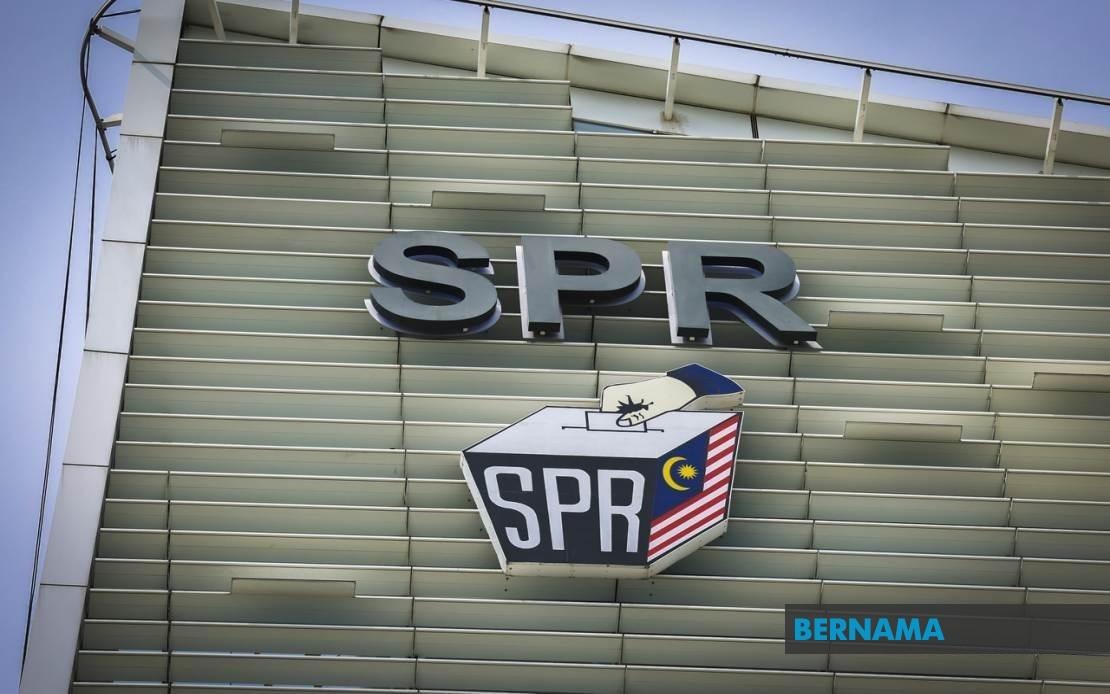
Malaysia's Election Commission has committed to examining a proposal that would grant postal voting rights to auxiliary police officers responsible for protecting the nation's strategic assets and critical infrastructure. Deputy Minister M. Kulasegaran, speaking in his capacity overseeing law and institutional reform matters within the Prime Minister's Department, confirmed the undertaking during parliamentary proceedings in Kuala Lumpur on August 3rd. The decision follows a formal motion tabled by Senator Datuk Salehuddin Saidin in the Dewan Negara, which highlighted an apparent gap in voting access for these security personnel compared to their counterparts in other law enforcement categories.
Kulasegaran indicated that any examination of the proposal would necessarily encompass operational considerations, existing legal frameworks, and the practical mechanics of conducting elections. The constraint facing auxiliary police differs markedly from that confronting ordinary voters; these officers must maintain continuous presence at designated facilities during polling days to ensure uninterrupted protection of essential national infrastructure. Releasing all auxiliary police simultaneously to exercise their voting rights would create a security vulnerability that authorities cannot reasonably accept. The challenge, therefore, lies in devising a mechanism that protects voting participation without compromising physical security at sites deemed critical to national functioning.
Currently, postal voting eligibility remains restricted to three established categories under existing regulations. Category 1A encompasses Election Commission personnel, election workers, members of the armed forces and regular police, and accredited media representatives actively engaged in election duties. Category 1B covers Malaysian citizens residing permanently abroad. Category 1C includes selected government department and agency staff required to work during polling day operations. Notably, auxiliary police officers fall outside these classifications despite performing security functions comparable to regular police personnel, a distinction that Senator Salehuddin sought to address through his parliamentary intervention.
The scale of the auxiliary police workforce underscores the significance of addressing this voting access disparity. Approximately 27,000 auxiliary officers serve across diverse sectors spanning multiple government ministries, statutory agencies, and government-linked companies. Their deployment extends throughout critical economic and infrastructure sectors including public transportation networks, aviation facilities, port operations, energy utilities, financial services, petroleum industries, and other designated essential services. This distributed workforce would face considerable practical difficulties if compelled to arrange leave coinciding with election days, particularly when concentrating time-off across such a large group could genuinely compromise security operations.
Senator Salehuddin's motion articulated the fundamental inequity underlying the current arrangement. Auxiliary police officers, despite executing security responsibilities functionally equivalent to their regular police colleagues, lack access to voting mechanisms available to other security personnel. This creates a scenario where substantial numbers of citizens employed in critical national roles effectively lose voting opportunities whenever election timing conflicts with duty assignments. The proposition that officers should simply request leave on polling day overlooks the operational reality facing employers managing 27,000 personnel dispersed across essential infrastructure; granting simultaneous leave to all would generate security gaps incompatible with public safety requirements.
The proposal advanced by Senator Salehuddin encompasses comprehensive examination involving multiple government agencies. Beyond the Election Commission, the Home Ministry and other relevant agencies would participate in a thorough review encompassing potential amendments to the Election (Registration of Electors) Regulations 1981. This regulatory framework would require modification to formally incorporate auxiliary police within eligible voter categories, necessitating coordination across administrative departments and electoral authorities. The complexity of implementing such changes explains Kulasegaran's emphasis on studying operational requirements alongside legal modifications.
Kulasegaran also referenced an alternative avenue for enhancing voting accessibility among auxiliary police and other voters generally. The Election Commission actively encourages citizens to transfer their voting constituency registration to their current residential location, a procedural option that can reduce voting obstacles. For auxiliary police officers based away from their registered constituencies, this administrative transfer could enable voting at more convenient locations. However, this solution addresses only the geographic dimension of voting access and does not resolve the fundamental scheduling conflict confronting officers required to work during polling days.
The parliamentary debate reflects broader tensions between electoral participation and operational requirements in contemporary democracies. As nations expand critical infrastructure requiring continuous staffing and security, questions inevitably arise regarding voting access for personnel whose essential duties might conflict with election-day voting windows. Malaysia joins other democracies grappling with mechanisms ensuring that security and public service personnel maintain voting rights whilst preserving operational continuity. The Election Commission's willingness to study this proposal demonstrates acknowledgment that existing frameworks may require refinement to accommodate evolving workforce structures.
The motion's successful tabling during the Dewan Negara's Adjournment Speech session marked a procedural milestone of its own significance. Dewan Negara President Datuk Awang Bemee Awang Ali Basah noted that this represented the inaugural government administrative matter debated through this parliamentary mechanism since the procedure's introduction in 2022 under Senate Standing Order 16. The procedural development itself reflects institutional evolution, providing senators with enhanced capacity to raise substantive governance matters requiring executive response.
For Malaysian electoral governance, the auxiliary police voting question emerges at an opportune moment of institutional reflection. Democratic systems periodically reassess mechanisms ensuring inclusive participation across diverse population segments. The 27,000 auxiliary officers represent a defined constituency whose legitimate voting interests align with broader democratic values whilst creating genuine operational challenges. Resolution may ultimately involve combining postal voting expansion with regulatory amendments, creating pathways for staggered or alternative voting windows enabling security personnel to participate without compromising protection obligations.
The Election Commission's commitment to studying this proposal suggests movement toward greater electoral inclusivity, though outcomes remain uncertain pending comprehensive review. Success would require balancing competing imperatives: expanding democratic participation rights whilst maintaining operational capacity across critical national infrastructure. The upcoming examination by election authorities, in coordination with the Home Ministry and relevant agencies, will determine whether Malaysia can devise mechanisms satisfying both democratic principles and practical security requirements, potentially establishing precedent for other nations confronting similar governance challenges.

