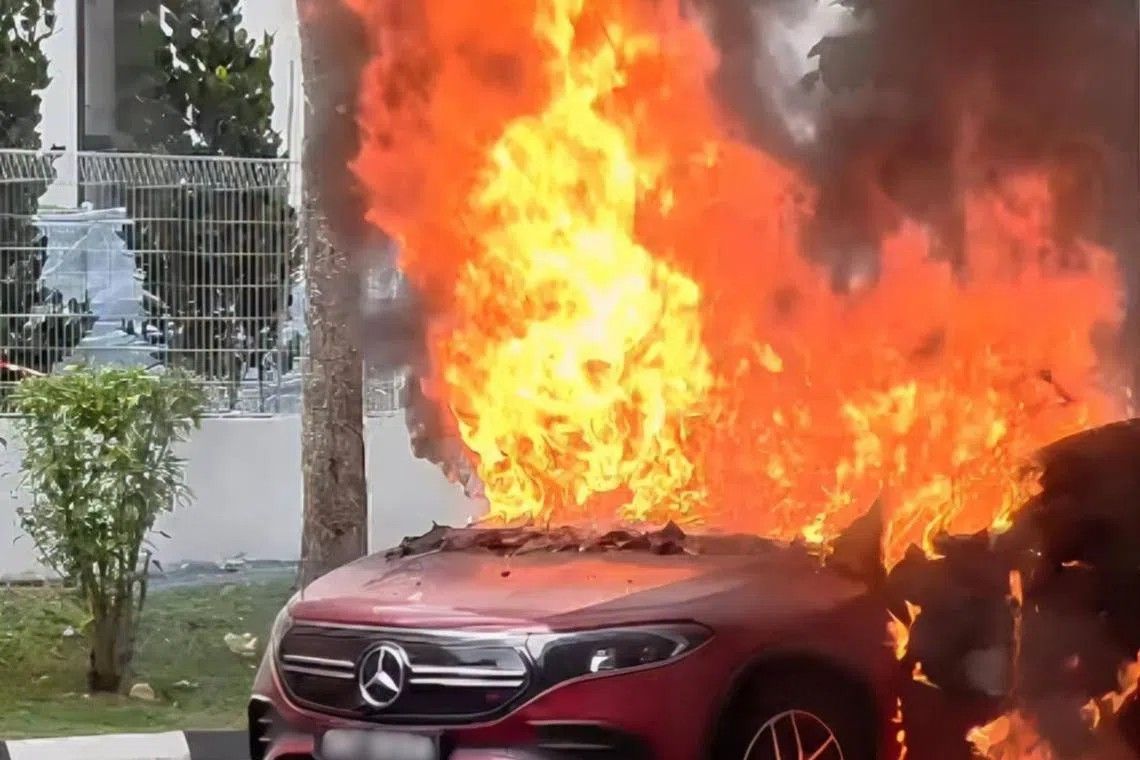
A parked electric vehicle erupted in flames outside a multi-storey carpark in Woodlands on the morning of July 21, prompting a swift response from the Singapore Civil Defence Force that prevented any casualties in what has become an increasingly common concern among EV owners across the region. The fire broke out near the entrance of the carpark at Block 548 Woodlands Drive 44, close to the Vista Point residential area, at approximately 10.10am, with SCDF personnel arriving to contain the blaze before it could spread to adjacent vehicles or structures.
The incident unfolded as the vehicle's driver was attempting to exit the carpark when she detected an acrid burning odour emanating from the engine compartment. Acting on her instincts, she immediately pulled the car to the side and observed thick smoke billowing from beneath the vehicle. The initial signs suggested a catastrophic failure deep within the vehicle's architecture, leading her to seek immediate assistance from nearby security personnel stationed at the carpark entrance.
According to the driver's account shared with Shin Min Daily News, the flames originated in the confined space positioned between the driver and front passenger seats—a location that coincides precisely with where the vehicle's battery pack is typically housed in most modern EV designs. This detail is significant for understanding the nature of such incidents, as lithium-ion battery failures represent one of the most serious failure modes in electric vehicles, often resulting in rapid thermal runaway once initiated.
Security guards stationed at the carpark responded immediately to the driver's distress call, attempting to suppress the emerging flames using conventional fire extinguishers kept on the premises. However, their efforts proved insufficient to contain a battery-driven fire, which burns at substantially higher temperatures than conventional vehicle fires and often reignites after appearing to be extinguished. Recognising the escalating danger and fearing an imminent explosion that could cause serious injury or property damage, the guard and driver made the prudent decision to establish a safe perimeter around the vehicle and immediately contacted emergency services.
Firefighters arrived and decisively suppressed the conflagration using a single water jet, demonstrating the effectiveness of professional-grade firefighting equipment against such incidents. The rapid containment prevented the situation from deteriorating further and ensured no bystanders or emergency personnel suffered injuries during the response. SCDF has launched a formal investigation into the underlying cause of the battery failure, though initial assessments suggest the fire originated from the battery system itself rather than from electrical components or fuel-related issues as would occur in conventional vehicles.
Visual evidence captured after the incident paints a stark picture of the fire's intensity. Photographs reveal the vehicle's interior consumed entirely by charring, with the dashboard warped and distorted beyond recognition, and the support structures of the seats now exposed skeletal frames. This level of destruction underscores the extreme heat generated by lithium-ion battery thermal events, which can exceed 900 degrees Celsius in severe cases. The vehicle was eventually towed away from the scene at approximately 12.15pm, with authorities retaining it for comprehensive forensic examination.
This incident adds to growing concerns across Southeast Asia regarding EV safety, particularly as the region's electric vehicle adoption accelerates in response to climate commitments and government incentives. Singapore, along with Malaysia and other neighbouring nations, has witnessed a dramatic surge in EV registrations over recent years, yet the supporting infrastructure for battery-fire management remains in development. Most conventional fire departments throughout the region are only beginning to adapt their protocols and training to address the unique challenges presented by thermal battery events.
The particular vulnerability exposed by this incident—battery placement beneath passenger seating—reflects a design compromise endemic to many EV models seeking to maximise interior space and maintain centre-of-gravity balance. Engineers must balance safety considerations against market demands for interior room, a tension that occasionally resolves unfavourably when manufacturing defects or early-life battery degradation occurs. Manufacturers routinely conduct thermal stability testing, yet real-world conditions and unforeseen failure modes continue to generate occasional incidents that demand urgent attention.
For Malaysian drivers and potential EV buyers observing this incident from neighbouring territory, the event serves as a reminder of the importance of rigorous vehicle maintenance schedules and manufacturer compliance. Malaysian authorities, including Suruhanjaya Pengangkutan Darat, must ensure that EV approval standards and post-sale monitoring protocols remain sufficiently stringent to catch early warning signs of battery degradation. The incident also highlights the necessity for carpark operators throughout Malaysia and Singapore to maintain accessible fire suppression equipment and train personnel in EV-specific emergency procedures.
While the absence of injuries in this particular incident represents a fortunate outcome, it underscores the critical importance of driver awareness and rapid response. Owners who detect unusual burning smells, visible smoke, or abnormal battery temperature warnings should immediately cease operation and contact emergency services rather than attempting internal diagnostics or remedial measures. The driver's decisive action in this case undoubtedly prevented a potentially catastrophic outcome for herself and others sharing the carpark facility.
As electric vehicle penetration continues accelerating throughout the region—with Malaysia, Singapore, and other Southeast Asian nations setting ambitious EV adoption targets—such incidents will likely occur with greater frequency unless manufacturers, regulators, and infrastructure operators proactively strengthen safety frameworks. The investigation into this Woodlands fire will provide valuable data for understanding battery failure mechanisms and informing future safety improvements across the industry.

