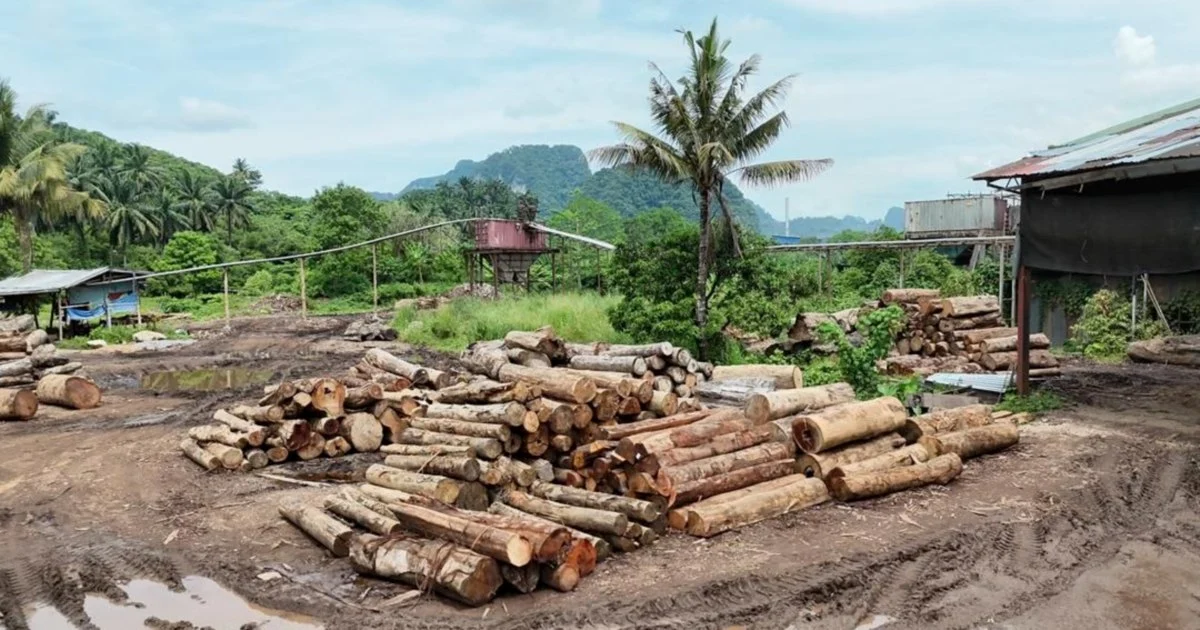
The Government of Malaysia's forestry enforcement division has intensified efforts to combat illegal timber extraction along the east coast, detaining a total of eleven individuals during simultaneous operations conducted across Kelantan and Terengganu. Among those apprehended were four Indonesian nationals, suggesting the involvement of cross-border networks in what authorities characterise as organised illegal logging activities. The enforcement action also resulted in the seizure of substantial quantities of timber and associated machinery, with the confiscated items valued collectively at RM2.43 million.
The timing of these coordinated raids reflects growing concerns about the scale and sophistication of timber smuggling networks operating within the region. Kelantan and Terengganu have long been identified as focal points for illegal extraction, given their proximity to state forests, vast timber reserves, and porous land borders with Thailand and Indonesia. The presence of Indonesian nationals among those detained underscores how timber trafficking has evolved into a transnational enterprise, with operators leveraging cross-border dynamics to obscure supply chains and complicate enforcement efforts across multiple jurisdictions.
The involvement of four foreign workers suggests an organised structure wherein international labour is deployed to carry out extraction and processing work whilst management and logistics remain opaque. This pattern has been documented elsewhere across Southeast Asia, where illegal logging rings employ foreign workers to shield themselves from certain legal liabilities whilst maintaining operational flexibility. The inclusion of machinery seizures alongside timber hauls indicates that authorities have successfully disrupted not merely stockpiles but also the mechanised infrastructure enabling large-scale operations, representing a more comprehensive intervention than simple confiscation of raw materials.
For Malaysia's forestry authorities, these operations demonstrate a tactical shift toward intelligence-led enforcement. Rather than responding reactively to reports of felling or transport, the coordinated nature of the raids suggests advance planning and likely information from multiple sources, including tip-offs from local communities, monitoring of machinery movements, or cross-agency coordination with customs and border agencies. The success in apprehending individuals across two states simultaneously indicates that enforcement agencies are mapping networks rather than addressing isolated incidents.
The RM2.43 million valuation is significant not merely as a headline figure but as a marker of the economic incentive driving illegal activity. International timber markets remain robust, with premium hardwoods commanding high prices in export destinations across Asia and beyond. For trafficking networks, even modest volumes translated into consistent supply chains can generate substantial profits, particularly when operational costs—often borne by underpaid workers and minimal environmental compliance—are minimal. The forfeiture of this stock represents a direct economic blow to those networks, though it remains unclear whether these operations represent a single trafficking ring or multiple independent actors.
For regional policymakers, the east coast enforcement operations highlight persistent vulnerabilities in forest governance despite decades of regulatory frameworks. Malaysia's Forest Rules and timber regulations establish comprehensive licensing and extraction standards, yet implementation across large forest estates remains challenging given terrain, limited personnel, and the sophistication of those evading detection. The reliance on periodic enforcement spikes rather than continuous monitoring suggests that sustained resource allocation to forestry protection remains insufficient in some quarters.
The detention of eleven individuals creates immediate investigative opportunities. Interrogation of apprehended suspects typically yields intelligence regarding supply chains, customer networks, transportation routes, and financial flows supporting these operations. Such information can enable second-phase enforcement actions targeting middlemen, processors, and export facilitators who sit further up the value chain. In trafficking networks, those handling raw materials often occupy junior positions with limited knowledge of broader operations, yet even incremental intelligence can incrementally degrade network capabilities over time.
The cross-border dimension warrants particular attention given Malaysia's membership in regional enforcement frameworks. Bilateral cooperation with Indonesia and Thailand, facilitated through ASEAN channels and bilateral agreements, remains essential for sustained suppression of logging networks. The apprehension of Indonesian nationals creates a channel for judicial cooperation and information exchange that may illuminate how timber from Malaysian forests reaches processing facilities or markets in Sumatra or Kalimantan, networks that have been extensively documented by environmental monitoring organisations.
Broader economic context matters as well. Legitimate timber operators across Malaysia have faced price pressures and import competition, which indirectly incentivises illegal alternatives that bypass licensing costs and comply less stringently with environmental standards. The enforcement actions, whilst vital, operate at the enforcement margin; they address symptoms rather than structural factors that make timber smuggling economically rational for certain actors. Sustainable forestry pricing, strengthened domestic processing capacity, and premium markets for legally certified timber remain longer-term strategic levers that complement enforcement.
From a Southeast Asian perspective, the Kelantan and Terengganu operations form part of a broader pattern of enforcement intensification across the region. Vietnam, Thailand, and Indonesia have similarly conducted high-profile timber seizures and arrests, often targeting transnational networks. The fact that Malaysian authorities can coordinate rapid multi-state operations suggests institutional capacity for enforcement, yet the persistence of trafficking indicates that such operations must be sustained and scaled further if they are to meaningfully constrain illegal extraction.
The implications for Malaysian readers extend beyond forestry policy to environmental governance more broadly. Illegal logging degrades forest cover, destabilises ecosystems, reduces state revenue from legitimate forestry leases, and creates unfair competition for law-abiding timber operators. The eleven individuals detained and the RM2.43 million in seized assets represent tangible consequences of enforcement, yet the ultimate measure of success lies in whether operations of this scale become increasingly rare, or whether they persist as periodic disruptions to an otherwise thriving illegal sector.

