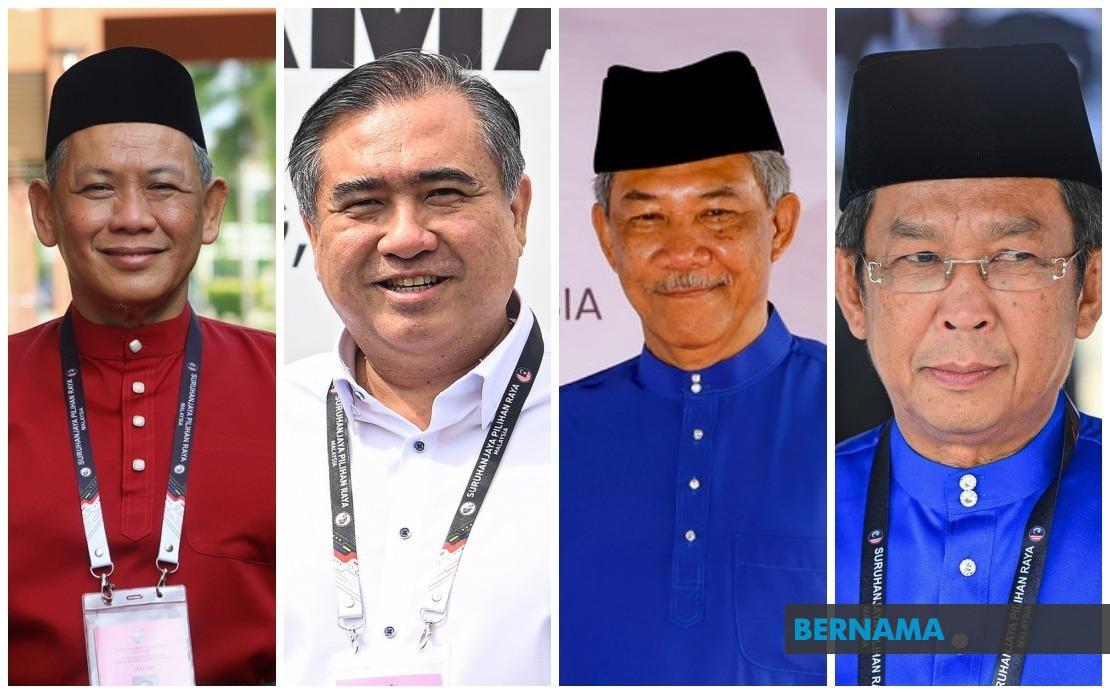
The 16th Negeri Sembilan state election is shaping up to be a considerably tougher contest than anticipated for several heavyweight politicians, with none of the major party luminaries assured straightforward victories when voters head to the polls on August 1. The state has become a genuine battleground where incumbent advantage no longer guarantees comfort, and party affiliation alone appears insufficient to shield candidates from determined opposition.
Perhaps the most closely scrutinised race involves Datuk Seri Aminuddin Harun, who combines the roles of Pakatan Harapan chairman and caretaker Menteri Besar. His contest for the Linggi seat represents a three-way fight against the incumbent Datuk Mohd Faizal Ramli of Barisan Nasional and Bersatu's Datuk Zamri Md Said, complicating what might otherwise have been a straightforward retention bid. As PKR vice-president, Aminuddin carries significant political weight, yet the fragmentation of the opposition vote through Bersatu's intervention introduces genuine electoral uncertainty into what was previously considered PH's territory.
In Chennah, another contest drawing considerable attention pits Datuk Seri Anthony Loke, the DAP secretary-general and Transport Minister, against Siow Kong Choon, fielded by Barisan Nasional and leading the MCA Youth wing. Despite DAP's unbroken control of the constituency since 2013, Loke cannot assume an effortless path forward. The challenge from BN suggests a concerted effort to recapture ground the coalition has not held for a full decade, testing whether ministerial status translates into electoral invulnerability.
The Rantau battleground presents perhaps the most striking narrative. Datuk Seri Mohamad Hasan, serving simultaneously as UMNO deputy president and Foreign Minister, confronts Dr Azizul Hakim Mahdi representing Pakatan Harapan. The demographic disparity—Mohamad's seventy years against a substantially younger opponent—amplifies the symbolic dimensions of their contest. Known colloquially as Tok Mat, Mohamad has represented Rantau continuously since 2004, making his tenure a defining feature of UMNO's hold on the constituency. Yet PH's decision to field a younger candidate suggests deliberate strategic calculation about electoral preferences in the state.
Another significant struggle develops in Pertang, where incumbent Datuk Seri Jalaluddin Alias of UMNO confronts both Mohd Umry Abdul Khois from Pakatan Harapan and Bersatu's Mohd Faizal Fadli Mohd Idrus. Jalaluddin's continuous representation since 2013 has previously afforded him considerable security, yet the three-way contest mirrors a broader pattern where established incumbents face mounting pressure from consolidated opposition efforts and Bersatu's intervention in traditional BN strongholds.
The contest in Nilai exemplifies the complexity shaping several races. Incumbent J. Arul Kumar, the DAP national deputy chairman contesting for Pakatan Harapan, navigates an exceptionally crowded field comprising Datuk Lai Chien Kong from Barisan Nasional, Datuk V. Saravana Kumar representing Bersatu, Berjasa's Zamani Ibrahim, and independent candidate Omar Mohd Isa. With five serious contenders dividing the vote, no candidate can assume comfortable victory, and strategic messaging becomes paramount as each faction competes for differentiation within an increasingly fragmented electorate.
Similarly intricate circumstances develop in Sri Tanjung, where incumbent Dr G. Rajassekaran of Pakatan Harapan faces an equally crowded slate including A. Achutan from Barisan Nasional, independent candidates Saravanan Arumugam and Islah Wahyudi Zainudin, and Bersatu's Leevineshwaraan Murugan. At merely twenty-three years old, Murugan represents the youngest candidate across the entire state election, potentially injecting generational considerations into what might otherwise be straightforward contests among established figures.
The overall candidate distribution across Negeri Sembilan reflects the increasingly fragmented political landscape characterising Malaysian electoral competition. One hundred and three candidates contest for thirty-six state seats, with Pakatan Harapan fielding the full slate of thirty-six candidates, Barisan Nasional presenting twenty-five contenders, Bersatu entering twenty-four candidates, and Perikatan Nasional contributing eleven aspirants. Additional representation comes from Berjasa, ASLI, PSM, and independent candidates, each fragmenting support in ways that fundamentally alter traditional two-coalition dynamics.
This proliferation of candidates—particularly Bersatu's substantial presence—reshapes electoral mathematics throughout the state in consequential ways. Rather than straightforward contests between established coalitions, voters increasingly encounter three, four, or five-way races where vote-splitting becomes a dominant strategic consideration. Candidates who might have comfortably won under previous configurations face genuine uncertainty when opposition forces splinter across multiple contestants and platforms.
The nomination period concluded on July 18, officially commencing the fourteen-day campaign phase extending through July 31, with early voting scheduled for July 28 and general polling occurring August 1. This compressed timeline means parties possess limited capacity for sustained grassroots mobilisation, potentially advantaging candidates with pre-existing name recognition and established support networks—yet even such advantages appear insufficient to guarantee success given the competitive intensity across multiple constituencies.
For Malaysia's political trajectory, the Negeri Sembilan election carries significance extending beyond the state level. The performance of premier politicians like Aminuddin, Loke, and Mohamad Hasan provides consequential indicators regarding whether ministerial portfolios confer electoral advantages, whether Bersatu's intervention fundamentally alters coalition calculations, and whether Malaysian voters increasingly prioritise local considerations over national party affiliation. The state's results could substantially inform expectations for future electoral cycles across the federation and influence coalition dynamics within parliament itself.

