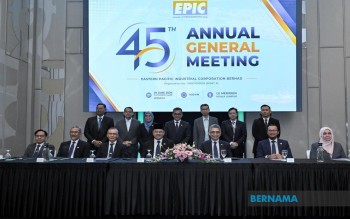
Eastern Pacific Industrial Corp Bhd (EPIC) has unveiled an aggressive five-year growth roadmap aimed at nearly doubling its revenue to RM700 million and expanding its net asset value to RM1 billion by the end of this decade. The ambitious targets, outlined in the company's EPIC Strategic Business Plan 2025-2030, reflect management confidence in sustained expansion across its core oil and gas operations, port management ventures, and emerging renewable energy initiatives. The integrated solutions provider, which serves Malaysia's petroleum and maritime sectors, is positioning itself for accelerated growth following a year of exceptional financial performance that has reinforced investor confidence in its strategic direction.
The company's financial results for the year ended December 31, 2025, underscore the momentum driving this expansion strategy. EPIC reported net profit of RM20.6 million, representing a 24 percent increase from RM16.6 million in the preceding year, while revenue reached a record RM411.9 million compared to RM403.8 million previously. This trajectory of consistent growth since 2022 provides a solid foundation for management's 2030 projections, which envision revenue climbing 70 percent from current levels while net asset value increases by approximately 43 percent. Group chief executive officer Dr Ts Muhtar Suhaili indicated that the performance demonstrates EPIC's capacity to execute expansion initiatives while maintaining profitability, a critical factor for stakeholder confidence in achieving longer-term objectives.
The company's recent financial gains derive from multiple operational drivers that management expects will persist and intensify throughout 2026 and beyond. The acquisition of Rahar Niaga Sdn Bhd contributed meaningfully to revenue growth, while newly secured contracts with Petronas—particularly the Pan Malaysia Maintenance, Commissioning and Modification and Hook-Up and Commissioning agreement—have bolstered the order book. Additionally, increased offshore rig arrivals and higher cargo volumes through EPIC's port facilities have generated incremental revenues. These factors collectively demonstrate the company's successful diversification within the energy and maritime sectors, reducing reliance on any single revenue stream and positioning EPIC to weather sector-specific volatility.
EPIC's current contract pipeline reflects substantial future revenue visibility, with approved contract values in its oil and gas division ranging between RM1.3 billion and RM1.5 billion. While actual earnings depend on the issuance of specific work orders and purchase orders by clients, this pipeline provides meaningful confidence that revenue targets remain achievable provided market conditions remain stable. The geographic diversification of this contract portfolio—spanning Terengganu where EPIC maintains significant operational infrastructure, the southern Peninsular Malaysia region encompassing Pengerang and Melaka, and increasingly Sabah—demonstrates the company's penetration beyond its traditional eastern coastal base.
Management expects 2026 will deliver another record-breaking revenue year, supported by the maturation of recently secured Petronas contracts and the anticipated continuation of existing project work. The confidence expressed by Dr Muhtar, made during the company's 45th annual general meeting, reflects management's conviction that the operating environment for integrated oil and gas service providers remains favourable despite global energy transition uncertainties. For Malaysian investors tracking the region's energy sector, EPIC's projected performance provides a potential indicator of broader activity levels within Malaysia's upstream and downstream petroleum industry.
Renewable energy represents a critical growth vector within EPIC's 2030 strategy, reflecting the company's recognition that Malaysia's energy sector is undergoing structural transformation toward cleaner generation sources. EPIC is actively pursuing participation in a hybrid hydro-solar project at Kenyir alongside its parent company, Terengganu Inc, positioning itself to capture emerging opportunities in this expanding segment. Success in renewable energy tendering could open entirely new revenue streams and enhance the company's relevance to future-focused energy sector clients, particularly as environmental considerations increasingly influence procurement decisions across the Malaysian energy value chain.
Beyond Malaysia's borders, EPIC's board has mandated management to pursue selective expansion into neighbouring Asian markets as part of its 2030 growth strategy. This regional aspiration reflects a recognition that Malaysian oil and gas service providers possess considerable experience and technical capabilities that regional peers seek, particularly in Southeast Asia where hydrocarbon exploitation remains economically significant. While West Asian opportunities are under assessment, management acknowledges that geopolitical complexities in that region necessitate a cautious approach. This measured international expansion strategy suggests EPIC is prioritizing near-term, lower-risk opportunities in regional markets while maintaining optionality for higher-return West Asian ventures should circumstances stabilize.
A significant development in EPIC's Borneo penetration occurred when the company, through subsidiary EPIC OG Sdn Bhd, established a collaboration agreement with Begas Energy Sdn Bhd to provide project management services for a Terminal Turnaround, Maintenance and Modification contract in Sabah. This partnership exemplifies EPIC's strategy of leveraging collaborative relationships to establish operational footholds in new geographic markets, particularly in resource-rich regions like Sabah and Sarawak where petroleum infrastructure remains substantial. Such arrangements enable EPIC to build local relationships and operational experience while managing the capital requirements and execution risks associated with independent market entry.
The company's strategic emphasis on integrated solutions across oil and gas, ports, and renewables reflects a sophisticated understanding of Malaysia's evolving energy landscape. Rather than remaining narrowly focused on traditional petroleum services, EPIC is positioning itself as a diversified energy and maritime infrastructure services provider. This positioning should enhance the company's resilience to sector-specific downturns while improving visibility to clients managing complex, multi-faceted energy transition challenges. For Malaysian investors, EPIC represents an exposure to both legacy energy infrastructure optimization and emerging renewable energy opportunities.
Achieving the 2030 targets will require EPIC to successfully execute multiple simultaneous initiatives while maintaining operational discipline and financial prudence. Contract execution risks, geopolitical uncertainties affecting regional expansion, renewable energy policy changes, and broader energy market dynamics will all influence outcomes. Nevertheless, the company's demonstrated financial execution, growing contract pipeline, and management's confidence in market opportunities suggest that the targets, while ambitious, reflect realistic ambitions grounded in current market conditions and EPIC's operational capabilities. For stakeholders monitoring Malaysia's energy services sector, EPIC's strategic roadmap offers important insights into how local companies are positioning themselves for sustainable growth during the global energy transition.

