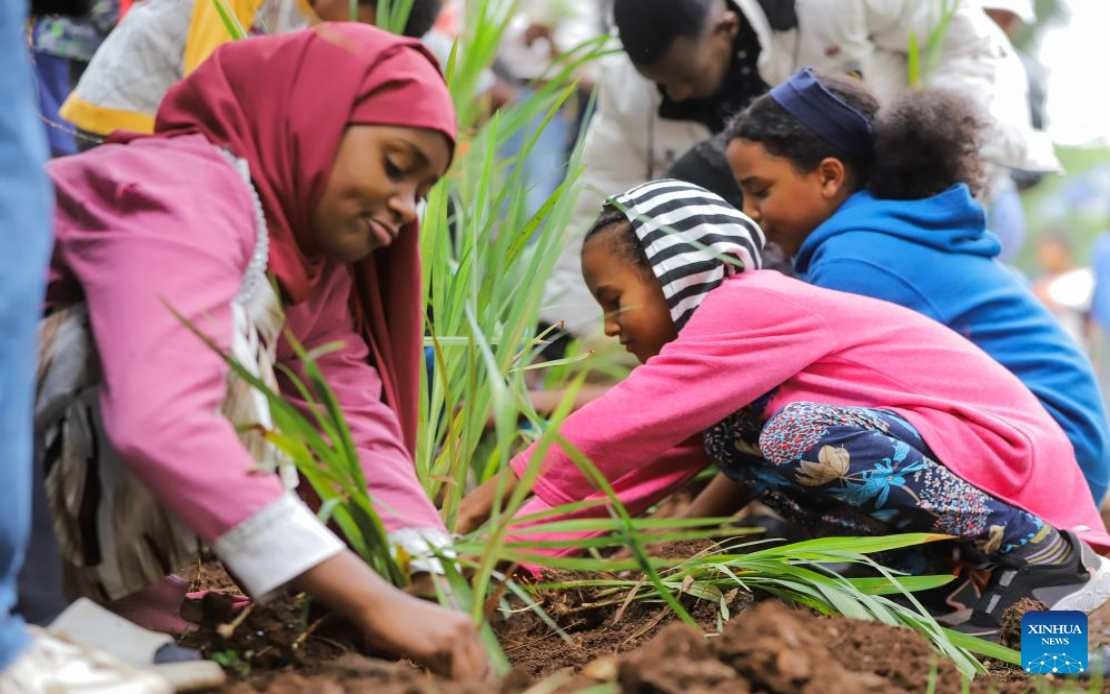
Ethiopia has orchestrated one of the world's largest environmental mobilisation efforts, bringing together millions of citizens, healthcare workers, schoolchildren and international residents to plant an unprecedented 800 million tree seedlings across the country in a single day. The nationwide campaign represents the latest chapter in the government's high-profile Green Legacy Initiative, a reforestation programme conceived by Prime Minister Abiy Ahmed that has become central to the country's development strategy since its inception in 2019.
The scale of Ethiopia's commitment to environmental restoration cannot be overstated. By adding more than 8 billion seedlings throughout the current rainy season, the East African nation is steadily moving towards its overarching target of planting 50 billion trees since the initiative's launch five years ago. This trajectory reflects a deliberate policy choice to address the severe deforestation that has historically characterised much of the Ethiopian landscape, where pressures from population growth, agricultural expansion, and energy demands have diminished forest cover significantly over decades.
Participants from across Ethiopian society demonstrated the grassroots nature of this environmental agenda. A thirteen-year-old named Edilawit Legesse, planting in the Alembank neighbourhood outside Addis Ababa, marked her third consecutive year of involvement in the annual campaign, embodying a generational commitment to environmental stewardship. Similarly, healthcare professionals took part in coordinated planting efforts near Entoto Mountain, with one nurse expressing determination to personally plant ten trees alongside 34 colleagues from her hospital. These individual stories reveal how the initiative has transcended top-down governance to become a genuinely participatory national movement.
Prime Minister Abiy has framed the annual one-day planting spectacle as emblematic of national unity and collective purpose. His public statements emphasise the initiative as a moment when Ethiopians from diverse backgrounds and professions unite around a shared environmental vision. By characterising the effort as creating "a lasting legacy for generations to come," the government positions environmental restoration not merely as climate adaptation but as a moral imperative tied to national identity and intergenerational responsibility. The messaging underscores how environmental policy can serve broader nation-building objectives in a country navigating complex political transitions.
The Green Legacy Initiative addresses multiple interconnected development challenges simultaneously. Restoring degraded landscapes combats soil erosion, a persistent problem in regions vulnerable to drought and food insecurity. Expanding forest cover enhances carbon sequestration, contributing to climate resilience in a nation increasingly exposed to climatic variability. Biodiversity conservation protects ecosystems that support livelihoods dependent on natural resources. Simultaneously, the programme creates employment opportunities in nurseries, planting operations, and ecosystem monitoring, aligning environmental restoration with economic development imperatives.
For Southeast Asian policymakers observing Ethiopia's approach, several lessons emerge regarding environmental governance at scale. The integration of environmental objectives with nationalist narratives and public participation demonstrates how large-scale ecological projects can generate political legitimacy whilst addressing genuine environmental deficits. Ethiopia's willingness to set quantifiable targets and organise systematic campaigns around specific timelines contrasts with more incremental approaches elsewhere in the developing world. The involvement of healthcare workers, educators, and other public sector employees suggests how governments can leverage existing institutional structures to mobilise populations for environmental objectives.
The initiative also reflects evolving global climate politics and the pressure on developing nations to demonstrate concrete climate action. Ethiopia's positioning of itself as an environmental leader through the Green Legacy Initiative enhances its diplomatic standing in international climate negotiations whilst justifying domestic resource allocation to environmental programmes. In a region where deforestation remains rampant, Ethiopia's explicit commitment to reversing this trend through measurable action sets a regional precedent, potentially influencing neighbouring countries' own environmental policies.
However, the long-term success of such programmes depends on factors beyond the spectacle of single-day planting campaigns. Survival rates for newly planted seedlings, quality of site preparation, adequacy of post-planting maintenance, and security of land tenure all determine whether these millions of trees mature into functioning forests. Historical reforestation efforts worldwide have sometimes foundered on these implementation challenges, with survival rates falling dramatically after initial planting without sustained institutional commitment and adequate funding.
The Ethiopian government's framing of this initiative as an eight-year consistent effort, as Abiy noted in his social media statement, suggests sustained institutional commitment rather than ephemeral enthusiasm. The annual cycle of campaigns, with targets specified for each rainy season, indicates planning infrastructure designed to maintain momentum. Yet questions remain regarding the adequacy of resources allocated to monitoring, maintenance, and protection of planted areas against competing land uses and environmental pressures.
For Malaysian observers, Ethiopia's approach offers insights into how environmental policy intersects with development aspirations in the Global South. Like Malaysia, Ethiopia faces pressures to balance economic growth with environmental conservation. However, Ethiopia's chosen strategy emphasises mass mobilisation and nationalist framing of environmental action, contrasting with approaches in some Southeast Asian contexts that emphasise market mechanisms or technological solutions. The explicit linking of tree-planting to national identity and generational legacy resonates across cultures whilst serving practical environmental objectives.
The Green Legacy Initiative also demonstrates how environmental programmes can serve as vehicles for social cohesion in countries navigating political transitions. By creating spaces where citizens from different regions, ethnicities, and professions work together toward tangible environmental improvements, such initiatives can foster shared purpose and collective efficacy. In Ethiopia's context, where political fragmentation and regional tensions have historically challenged national unity, environmental mobilisation through tree-planting offers relatively depoliticised common ground for collective action.
Looking forward, the success of Ethiopia's reforestation ambitions will depend on whether the momentum generated by annual mass campaigns translates into institutional practices ensuring seedling survival and forest establishment. The participation of millions reflects public receptiveness to environmental action when framed as national priority. Whether this translates into voting behaviour, resource protection, and long-term behavioural change remains an open question. Nonetheless, Ethiopia's experiment in large-scale environmental mobilisation provides valuable empirical evidence for how governments can coordinate public participation in environmental restoration whilst advancing development objectives.

