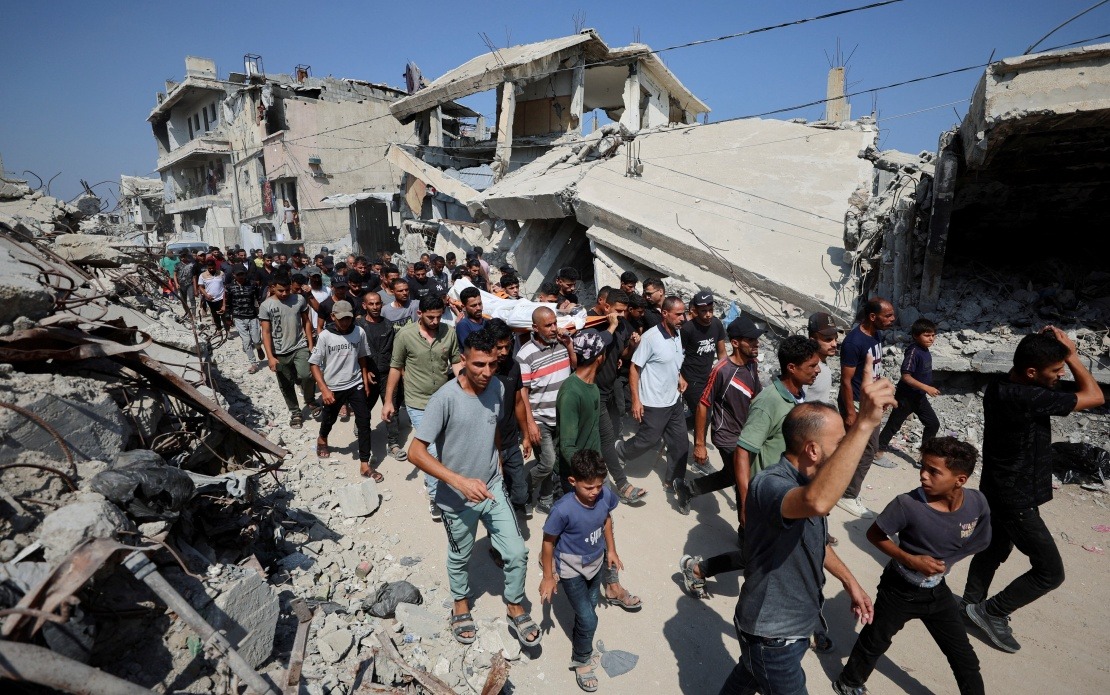
The European Union has escalated its criticism of Israeli settlement policies, issuing a formal statement through its external affairs machinery to express alarm at recent decisions by Israel to channel substantial new funding into expanding Jewish communities across the occupied West Bank. The move represents the bloc's latest effort to signal its opposition to what Brussels views as destabilising actions that compound an already fraught Israeli-Palestinian conflict and diminish prospects for eventual peace negotiations based on a two-state framework.
Through its European External Action Service, the EU cautioned that Israel's approval of significant funding allocation for settlement expansion would deepen the entrenchment of Jewish communities in strategically sensitive zones of the West Bank territory. Beyond simply consolidating existing settlements, the funding mechanism threatens to accelerate a process that the bloc characterises as systematically fracturing Palestinian territorial contiguity and isolating Palestinian population centres from one another. This geographical fragmentation, according to the EU's assessment, creates conditions conducive to amplified human rights transgressions and exacerbates vulnerabilities faced by Palestinian communities already struggling under restrictions on movement and resource access.
The statement issued by European officials also reaffirmed the EU's refusal to recognise municipal status granted by Israel to Givat Ze'ev, a settlement situated in the West Bank. This particular position reflects a broader European stance that views Israel's administrative reorganisation of occupied territories as an attempt to normalise settlement presence and entrench control over land claimed by Palestinians. By declining to acknowledge such municipal designations, the EU aims to signal that it views these administrative measures as lacking legal legitimacy under international law.
Brussels has consistently maintained its posture that territories captured by Israel during the June 1967 war remain under occupation rather than representing legitimate Israeli territory. This foundational position, aligned with successive United Nations Security Council resolutions including Resolution 242, forms the bedrock of European diplomatic engagement on the Palestinian issue. The EU's refusal to recognise Israeli sovereignty claims over these areas represents a principled stance that distinguishes its approach from certain other international actors and underscores the bloc's commitment to what it views as rules-based international order.
For Southeast Asian observers, including Malaysian policymakers, the EU's stance reflects how Western powers continue to navigate the Israeli-Palestinian dispute through the prism of international law and established diplomatic frameworks. Malaysia, with its significant Muslim population and vocal support for Palestinian self-determination, has historically aligned more closely with positions emphasising Palestinian rights. The EU's language around human rights violations and territorial integrity resonates with Malaysia's own rhetoric regarding respect for international law and opposition to territorial occupation.
The European position carries implications beyond rhetorical significance. The EU represents a major trading bloc and source of foreign investment, and its non-recognition of settlements can translate into practical consequences for Israeli entities operating in these territories. Goods produced in settlements face potential labelling requirements and import restrictions in EU markets, creating economic pressure alongside diplomatic censure. Such mechanisms make the EU's criticism more than symbolic condemnation.
Israel's settlement expansion policies have long constituted a flashpoint in international diplomacy, with the activity widely viewed by the international community as incompatible with genuine peace negotiations. Each expansion of settlements mathematically reduces the contiguous territory available for an eventual Palestinian state, rendering the demographic mathematics of two-state coexistence progressively more complicated. The EU's concern that these measures undermine the viability of two-state solutions reflects this mathematical reality rather than mere rhetorical flourish.
The statement's call for Israel to cease settlement expansion, halt the formalisation of outposts, desist from unilateral land appropriation, and refrain from demolitions and forced evictions encompasses the full spectrum of actions the EU views as prejudicial to Palestinian interests. This comprehensive enumeration signals that Brussels does not view these as isolated incidents but rather as components of a systematic policy that requires fundamental reversal. The intensity and specificity of the EU's language suggests escalating frustration with the trajectory of Israeli policy.
For Malaysia and other Southeast Asian nations with significant Palestinian diaspora communities and historical ties to Palestinian causes, the EU's interventions provide international legitimacy for their own diplomatic positions. When a major global economic bloc articulates concerns about settlement expansion, it validates the arguments of regional governments that have long emphasised the incompatibility of such policies with peace prospects. This alignment of international opinion, even if not determinative of practical outcomes, influences the normative framework within which the conflict is discussed internationally.
The EU's criticism also reflects internal European politics and values. Multiple member states maintain strong constituencies concerned with Palestinian rights, and the bloc's statements partly reflect domestic political pressures alongside principled positions on international law. Nevertheless, this domestic foundation for the EU's stance ensures that European criticism of Israeli settlement policies remains consistent rather than ephemeral, providing a durable international counterweight to Israeli policy trajectories.
Looking forward, the question remains whether European economic pressure and diplomatic censure will prove sufficient to alter Israeli settlement calculations. Previous EU criticism has failed to reverse expansion trends, suggesting that absent more robust consequences or changed strategic calculations by Israeli leadership, the EU's admonitions may represent principled but ultimately ineffective international opposition. For Southeast Asian governments seeking to contribute constructively to Israeli-Palestinian peace efforts, understanding the depth of European concern about settlements provides context for broader international diplomatic coordination.
The EU's latest statement underscores that settlement expansion remains the central impediment to European support for Israeli policy positions within multilateral forums. Until Israel demonstrates willingness to constrain or reverse settlement activities, the bloc will likely maintain its critical posture, potentially complicating Israeli diplomatic relations with a significant economic power. For the broader international community, including Malaysia, these European interventions remind all parties that settlement expansion continues to occupy central importance in the contentious debate over the future of Israeli-Palestinian coexistence.

