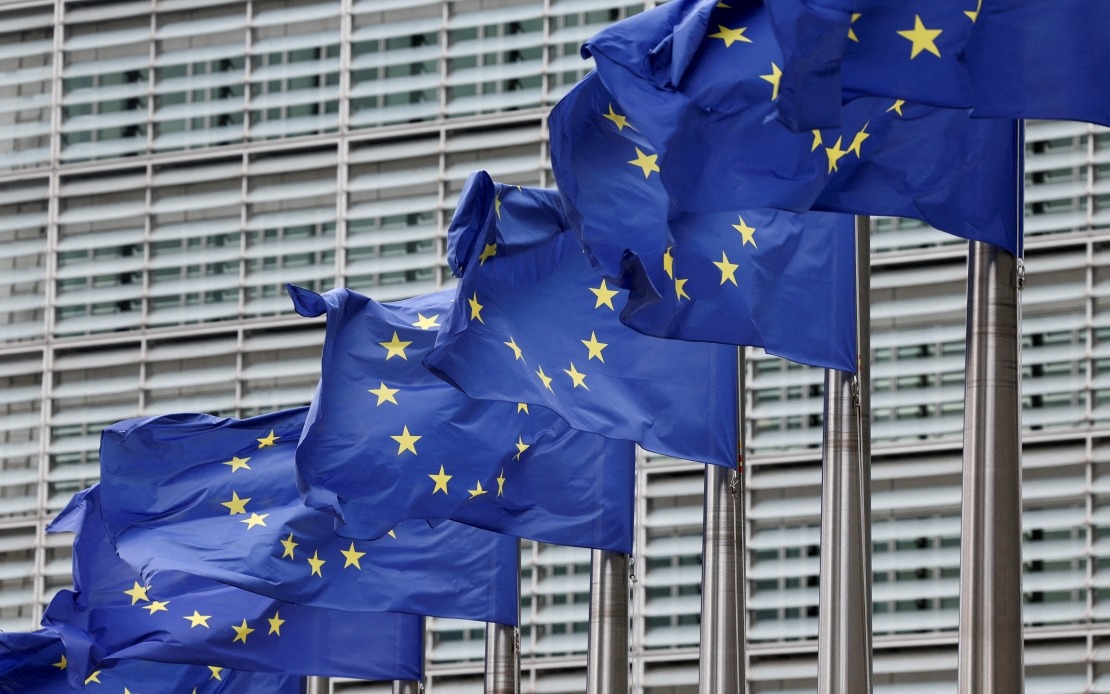
European Union foreign ministers gathered in Brussels on Monday to address escalating tensions in West Asia, with Israeli settlement expansion in the occupied West Bank emerging as a contentious focal point of diplomatic debate. The meeting represented a critical juncture for the bloc's approach toward Middle Eastern geopolitics, particularly as deepening divisions between member states threaten to undermine unified EU foreign policy on the issue.
The European Commission had prepared a comprehensive menu of potential measures ahead of the consultations, ranging from import restrictions to outright bans on goods originating from Israeli settlements. These options were designed to give member states flexibility in crafting a response proportionate to their individual concerns about settlement policy. Yet the existence of multiple pathways to action masked a more fundamental disagreement about whether sanctions were warranted at all, and if so, at what level of severity.
The coalition favouring robust action centered on Spain, Ireland and Belgium, which have maintained consistent vocal opposition to settlement expansion and the broader occupation policies they view as violations of international law. These nations have repeatedly called for the EU to adopt a unified hardline stance that extends beyond diplomatic protest to concrete economic consequences. Their advocacy reflects growing domestic political pressure within their respective countries, where civil society organisations and left-leaning political movements have intensified campaigns demanding divestment and trade restrictions targeting Israeli entities involved in settlement construction and maintenance.
Countering this momentum, Germany and several other member states have resisted escalation, citing concerns about the effectiveness and unintended consequences of sanctions. Berlin's position reflects its historical sensitivity to Middle Eastern conflicts and a preference for diplomatic channels over punitive economic measures. This cautious approach also carries commercial considerations, as Germany maintains substantial trade relationships with Israel across multiple sectors, and expanded sanctions could create friction with important commercial partners.
The procedural complexity surrounding potential sanctions adds another layer of difficulty to negotiations. Should member states classify any trade restrictions as formal foreign policy sanctions, a unanimous vote among all 27 EU nations would be mandatory—a threshold that Germany's opposition would immediately render impossible to achieve. Alternatively, if reframed as trade measures rather than sanctions, a qualified majority would suffice, requiring backing from 15 member states representing at least 65 percent of the bloc's total population. This technical distinction has become strategically important, with different camps potentially pushing for classification approaches that favour their preferred outcome.
The stakes extend beyond the immediate settlement question, as the EU's inability to forge consensus on Israeli policy could foreshadow broader difficulties in projecting unified influence across Middle Eastern affairs. Regional actors increasingly view the bloc's internal divisions as weakness, potentially encouraging more assertive positions by various parties to the conflict. For Malaysia and other Southeast Asian nations monitoring EU foreign policy developments, the bloc's fractious approach underscores the challenges even well-resourced multilateral organisations face in generating coherent responses to intractable international disputes.
Beyond the Palestinian question, the Brussels meeting tackled several other pressing geopolitical matters requiring urgent attention. Ministers were expected to deliberate on ongoing developments surrounding Iran, which remains a critical flashpoint in regional stability. The Russian invasion of Ukraine also featured prominently on the agenda, with consensus building around additional sanctions targeting Russian individuals, organisations and entities. However, uncertainty persisted regarding whether an expansive new sanctions package encompassing substantial trade restrictions could overcome member state hesitations and secure formal adoption.
The inclusion of Ukrainian Foreign Minister Andrii Sybiha for informal consultations represented an effort to centre Kyiv's perspective within EU deliberations on Ukraine strategy. Ukraine's direct participation in these discussions underscores the interconnected nature of contemporary international crises, where Middle Eastern tensions, Russian aggression and European security concerns increasingly influence one another and demand coordinated multilateral responses.
For Southeast Asian observers, the EU's struggle to maintain unity on sanctions and foreign policy matters carries instructive lessons. Regional organisations like ASEAN face similar challenges in generating consensus among diverse member states with competing strategic interests and bilateral relationships with major powers. The European experience demonstrates that institutional maturity and economic integration do not automatically eliminate the obstacles to coordinated external action when fundamental values or strategic interests diverge significantly among partners.
The outcome of the Brussels meeting would likely set the trajectory for EU policy on Israeli settlements for months ahead. A failure to achieve consensus on enhanced sanctions would effectively preserve the status quo, potentially emboldening those settlement expansion advocates who view EU divisions as tacit permission. Conversely, even limited new measures would signal the bloc's determination to make economic costs meaningful for continued settlement policies, even if falling short of what Spain, Ireland and Belgium had advocated.
Looking forward, the persistent difficulty in achieving member state unity on Middle Eastern policy suggests the EU may increasingly rely on individual national actions and subnational initiatives—including municipal divestment campaigns and corporate pressure campaigns—rather than formal institutional sanctions. This fragmentation, while reflecting genuine democratic contestation within Europe, diminishes the collective leverage the bloc might otherwise exert as a unified actor in regional disputes.

