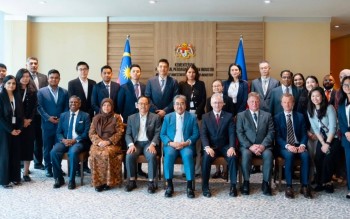
A significant European business delegation comprising over 70 representatives from more than 25 companies has just concluded a round of strategic meetings with Malaysian government officials, signalling robust confidence in the country's economic direction and reform agenda. The three-day engagement, which ran from August 4 to 6 in Kuala Lumpur, underscores the persistent appetite among European investors and business leaders to deepen ties with Malaysia across multiple sectors, even as both regions navigate evolving global trade dynamics and sustainability imperatives.
Chris Humphrey, executive director of the EU-ASEAN Business Council, characterised the visit as an opportunity for member companies to gain direct insight into Malaysia's policy trajectory from senior government decision-makers. This high-level access proved invaluable for clarifying regulatory frameworks and demonstrating tangible backing for Malaysia's transformation agenda, which has become increasingly central to the country's appeal to international investors. The delegation's engagement with the Economy Ministry yielded detailed briefings on ongoing reform packages, allowing European firms to better understand the scope and timeline of Malaysia's structural initiatives. Simultaneously, the European representatives seized the opportunity to affirm their organisations' commitment to supporting Malaysia's environmental ambitions, including the green transition, sustainable development frameworks, circular economy models, and digital modernisation efforts.
Finance-related discussions formed a critical component of the delegation's agenda, with substantive conversations at the Finance Ministry covering capital formation mechanisms, tax considerations, and government procurement protocols. The positive tenor of these exchanges reflects broader confidence in Malaysia's investment climate at a time when many multinational corporations are reassessing their regional strategies. According to Humphrey, officials and business leaders exchanged views on improving the overall business environment, with particular emphasis on how European financial expertise and capital could complement Malaysia's development objectives. This dialogue proves especially timely given the need for innovative financing solutions to support Malaysia's twin priorities of economic growth and environmental sustainability.
Central to the delegation's itinerary were meetings with key economic policymakers including Bank Negara Malaysia Governor Datuk Seri Abdul Rasheed Ghaffour, Investment, Trade and Industry Minister Datuk Seri Johari Abdul Ghani, and Economy Minister Akmal Nasrullah Mohd Nasir. These high-profile interactions underscored the Malaysian government's receptiveness to European engagement and its desire to maintain robust dialogue channels with significant trading partners and investors. The subsequent day brought conversations with Natural Resources and Environmental Sustainability Minister Datuk Arthur Joseph Kurup, Deputy Finance Minister Liew Chin Tong, and Energy Transition and Water Transformation Secretary-General Datuk Seri Mad Zaidi Mohd Karli, indicating that environmental and energy concerns occupy prominent positions in bilateral discussions.
The delegation's scheduled meetings with the Malaysian Investment Development Authority, Royal Malaysian Customs Department, and representatives from agriculture, transport, digital, health, and tourism portfolios reveal the breadth of European commercial interests in Malaysia. Customs modernisation emerged as a particularly significant agenda item, with the delegation keen to collaborate on streamlining clearance procedures and advancing digital transformation of customs operations. Beyond efficiency gains, both sides identified combating illicit trade, particularly in tobacco products, as an area warranting joint effort. This convergence of interests demonstrates how trade facilitation and regulatory cooperation can advance mutual objectives while strengthening the bilateral relationship.
Healthcare represents another frontier for European-Malaysian collaboration, with European businesses expressing readiness to explore how their expertise and products might address Malaysian healthcare requirements. Humphrey highlighted the enthusiasm among delegation members to examine innovative financing approaches for healthcare delivery, ensure adequate medicine availability, and promote preventive self-care initiatives. This sector-specific engagement illustrates how bilateral partnerships extend beyond traditional goods and services trade into addressing fundamental development challenges.
Malaysia's geographic positioning, robust infrastructure networks, well-educated workforce, and natural resource endowments continue to position the country as a magnet for European capital and expertise. These structural advantages have sustained investor interest even amid global economic uncertainties and shifting geopolitical alignments. For European companies seeking to maintain or expand Southeast Asian footprints, Malaysia offers a compelling combination of stability, connectivity, and growth potential that few regional competitors can match.
The trajectory of Malaysia-EU free trade agreement negotiations constitutes perhaps the most significant outcome of the delegation's visit, with both sides demonstrating concrete commitment to finalising the pact by 2027. The agreement has already progressed through four negotiating rounds, with a fifth scheduled for September 21-25 in Brussels and a potential sixth round before year-end. Humphrey expressed confidence that sufficient momentum exists to conclude negotiations within the next twelve months, ahead of the formal 2027 target. Such an outcome would represent a watershed moment for bilateral commerce, providing European and Malaysian enterprises with preferential market access and certainty that would facilitate long-term investment planning.
The magnitude of existing commercial ties underscores the stakes involved in FTA negotiations. The EU ranks among Malaysia's five largest trading partners, with 2025 bilateral trade in goods valued at €48.9 billion, comprising €30.3 billion of Malaysian exports and €18.6 billion of EU exports to Malaysia. This substantial two-way flow generates employment and supports livelihoods across both economies. Beyond merchandise trade, European investment stock in Malaysia reached €33.1 billion in 2024, reflecting decades of sustained European business commitment to the Malaysian market. A comprehensive free trade agreement would lower transaction costs, reduce tariff barriers, and provide institutional frameworks for deepening this relationship further.
For Malaysian policymakers, the delegation's positive reception and expressed enthusiasm carry important implications. The willingness of major European corporations to engage constructively with Malaysian officials, coupled with their optimistic assessments of the investment climate, validates reform efforts and suggests that international confidence in Malaysia's direction remains strong. This positive sentiment can translate into tangible investment flows, technology transfers, and knowledge-sharing arrangements that amplify the benefits of Malaysia's own development initiatives. Conversely, maintaining this momentum requires continued commitment to institutional strengthening, regulatory clarity, and adherence to the reform agenda that attracted European interest in the first instance.
The broader Southeast Asian context adds further significance to Malaysia-EU engagement. As the EU recalibrates its Asia-Pacific strategy and diversifies supply chains away from traditional concentrations, Southeast Asian economies including Malaysia stand positioned to capture increased investment and trade flows. Malaysia's success in attracting sustained European interest could strengthen the entire region's negotiating position with major economic blocs and enhance ASEAN's collective influence on global economic governance questions. The delegation's visit thus represents not merely bilateral business engagement but rather a manifestation of deepening structural economic ties that will likely shape regional development patterns for years to come.

