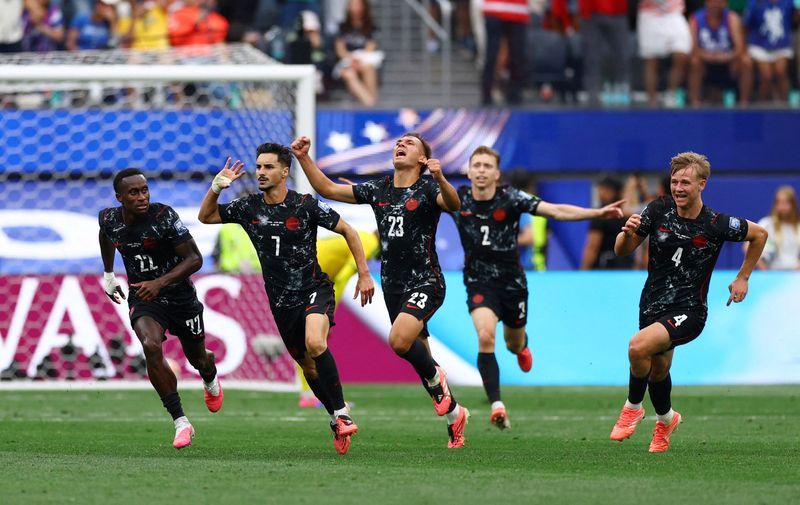
Stephen Eustaquio's well-struck finish from the edge of the penalty area in the 92nd minute delivered Canada a momentous 1-0 victory over South Africa on Sunday, marking the co-host nation's maiden passage into the World Cup's final 16. The dramatic strike at Los Angeles Stadium in Inglewood, California, arrived at the culmination of an increasingly tense encounter that had appeared destined for extra time and possibly a penalty shootout. Eustaquio received possession near the South Africa box and unleashed a powerful drive that found the net past diving goalkeeper Ronwen Williams, igniting scenes of celebration among Canada's supporters who filled the stadium.
Canada's journey to this breakthrough moment carries particular significance for the football-loving nation. Having qualified for the World Cup on three previous occasions, they had never progressed beyond the group stage until this tournament. The victory represented not merely a technical advancement through the competition but a watershed moment for Canadian football. Coach Jesse Marsch acknowledged the team's resilience throughout the match, noting they had created opportunities but struggled with the clinical finishing that separates winners from losers at football's highest level. The breakthrough goal, when it finally arrived, vindicated the squad's perseverance and tactical discipline across the full ninety minutes.
The match itself unfolded as a cautious, low-scoring affair typical of knockout football where mistakes prove costly. Canada fashioned several openings during the first half, most notably from a corner kick that created a goalmouth scramble shortly before the interval. Moise Bombito's header forced South Africa's Aubrey Modiba into an emergency clearance off the goal line, while Tajon Buchanan's follow-up effort struck the goalkeeper's chest. These chances suggested Canada possessed the capability to break through, yet execution remained wanting until Eustaquio's intervention in stoppage time.
Controversial refereeing decisions punctuated the first-half proceedings. When Canadian fullback Richie Laryea tumbled inside the South Africa penalty area, Canada's players and bench staff demanded a penalty decision. However, following a Video Assistant Referee review, the referee declined to award the spot kick, drawing vociferous protests from the Canadian contingent and prompting head coach Marsch to continue his objections as the teams departed for the interval. Such moments can deflate a team's momentum, yet Canada demonstrated sufficient character to maintain their focus and intensity.
The second half witnessed a more controlled South African approach, suggesting that Hugo Broos's side had adopted a containment strategy centring on disrupting Canada's rhythm rather than pursuing aggressive attacking play. This tactic, whilst perhaps understandable from a defensive perspective, ultimately left South Africa too passive when they required a goal. Canada generated another opportunity when Tani Oluwaseyi's shot found the goalkeeper, setting up Jonathan David for a header that Mbekezeli Mbokazi heroically blocked. The pattern of Canada creating chances without converting them until the final moments painted a portrait of a team destined to break through eventually.
For Southeast Asian and Malaysian viewers, Canada's advancement offers an intriguing quarter-final prospect. They will face either the Netherlands or Morocco on July 4 in Houston, with the winner progressing to the semi-finals. The Canadian squad's composition and playing style, developed largely within the North American football context, represents a different aesthetic from traditional football powerhouses. Their success carries implications for how teams from non-traditional football regions approach World Cup competition, suggesting that tactical organisation, team cohesion, and efficient preparation can prove decisive even against more celebrated opponents.
Eustaquio's match-winning moment drew particular significance from the circumstances surrounding Canada's participation. The co-hosts had been forced to travel to California for their first knockout encounter, having completed their group stage campaign in Canadian cities. This represented their first match outside home territory in the tournament, and they managed this with merely three days' recovery following a disappointing 2-1 defeat to Switzerland in their final group assignment. The physical and psychological demands of such circumstances could have undermined their performance, yet they demonstrated sufficient mental fortitude to withstand South Africa's resistance and ultimately prevail.
South Africa's World Cup journey, whilst ultimately unsuccessful, represented a breakthrough of sorts for the African nation. They reached the knockout rounds for the first time in their fourth World Cup appearance, suggesting a gradual improvement in African football's competitiveness at the global stage. Yet their exit proved tame, with limited attacking ambition and insufficient urgency when seeking an equaliser against a Canadian team that seemed vulnerable at various points. The team's display illustrated how cautious, defensive football frequently produces disappointing outcomes when matched against opponents willing to take calculated risks.
Coach Hugo Broos, the 74-year-old Belgian manager who led South Africa into the knockout stages, indicated this represented his final World Cup. His comments suggested a willingness to step aside after fulfilling what he considered his primary objective of elevating South African football's World Cup performance. Broos's tenure demonstrated that coaching at the international level involves navigating not merely tactical considerations but also the expectations and pressures unique to individual nations' football cultures.
Canada's progression marks a significant moment for the tournament's host nation, validating their investment in the tournament infrastructure and domestic football development. Malaysian and Southeast Asian football observers will note that Canada's success demonstrates how improved strategic planning, consistent player development, and competent coaching can elevate a nation's performance relatively rapidly. The team's breakthrough, achieved through perseverance and a dramatic moment of individual quality, encapsulates the unpredictability and drama that makes football's global championship compelling to audiences worldwide.
The quarter-final matchup awaiting Canada presents a formidable challenge, as both the Netherlands and Morocco represent established footballing nations with considerable pedigree. Nevertheless, Canada's passage into the final 16 represents tangible evidence of their development as a football nation and provides their supporters with a narrative of achievement extending beyond their co-hosting responsibilities.

