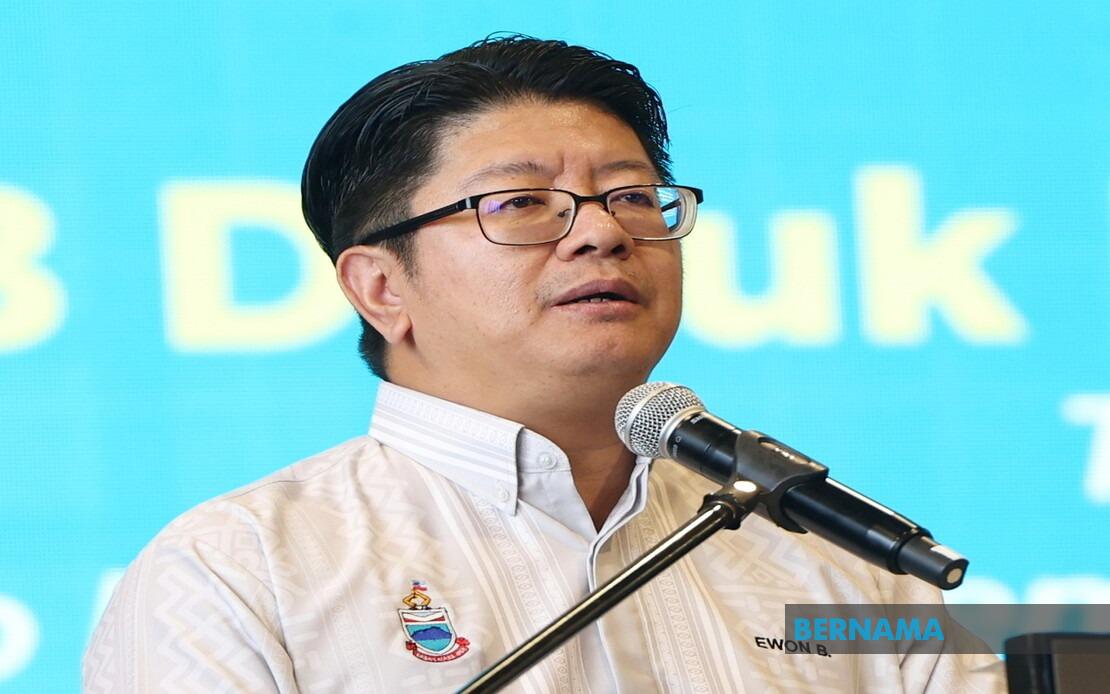
Datuk Ewon Benedick and Datuk Donald Peter Mojuntin have secured another term leading the United Progressive Kinabalu Organisation (UPKO), maintaining their roles as president and deputy president respectively after proceedings at the party's 17th triennial delegates conference in Penampang. The unopposed election results reflect the leadership's continued backing within the Sabah-based political outfit, which forms a key component of the ruling Gabungan Rakyat Sabah (GRS) coalition in Malaysia's eastern state.
The leadership hierarchy remained substantially intact, with five vice-presidential positions similarly unchallenged. Jairaiaz Joseph, Datuk Wong Thien Fook, Datuk Pangiran Lalung, Datuk Basari Sarikun, and Datuk Dr Laurentius Nayan Ambu all retained their roles, underscoring organizational stability within the party. This continuity suggests broad consensus among UPKO delegates regarding the party's strategic direction and senior management's performance during the preceding three-year cycle.
During his closing remarks at the conference, Ewon emphasized that the party had conducted its internal democratic processes fairly and that the results reflected the genuine will of the assembled delegates. He framed the election outcome as validation of the leadership's vision rather than a mere retention of power, positioning the reconfirmation as an affirmation of the party's trajectory and future plans. His measured approach to addressing the unopposed nature of the contest sought to reinforce party unity rather than dwelling on the absence of competitive races.
Ewon articulated a responsibility that extends beyond UPKO's internal management, outlining how the newly confirmed leadership intends to channel party resolutions and positions to Sabah's political establishment. With Datuk Seri Hajiji Noor serving as Chief Minister and GRS chairman, UPKO's leadership role involves acting as a conduit for grassroots concerns and organizational policy preferences to the state administration. This framework demonstrates how component parties within coalition arrangements maintain distinct identities while operating within broader governmental structures.
The party president highlighted the critical function that UPKO's elected representatives will play in legislative forums, whether in Parliament or the Sabah State Legislative Assembly. By articulating party positions during debates and policy discussions, these representatives ensure that UPKO's distinct voice remains audible within the GRS coalition and the broader political discourse. This legislative advocacy becomes particularly significant given Sabah's pivotal position in Malaysia's political landscape and the state's particular economic and social priorities.
Beyond the senior echelon, several party wings experienced leadership transitions that reflect generational and organizational evolution within UPKO. Carlye Lajimin assumed the UPKO Youth chief position, partnering with newly elected deputy chief Newbaxter Tibin to steer the party's younger membership base. These appointments signal efforts to ensure that youth engagement remains a organizational priority and that the next generation of party leaders receives appropriate platforms for development and influence.
In the women's wing, Mohina Sidom retained her position as UPKO Women chief while Lomiti Jahan entered the leadership structure as deputy chief. This pairing combines experience with fresh perspectives within a crucial demographic bloc that constitutes a significant portion of the party's membership and voting base. The elevation of Lomiti Jahan represents the party's commitment to nurturing female leadership talent within its organizational framework.
The party's Young Generation wing, a distinct category potentially targeting professionals and early-career members, welcomed Emmanuel Atin as chief and Alison Chan as deputy chief. These appointments reflect recognition that UPKO's organizational reach extends across multiple demographic segments requiring targeted engagement strategies and leadership representation. The proliferation of party wings and their respective leadership teams demonstrates how modern Malaysian political parties operate as complex organizational structures serving diverse constituent groups.
Cyclical leadership elections such as UPKO's triennial process provide opportunities for parties to assess organizational direction, address internal dynamics, and prepare for upcoming electoral cycles. The 2026-2029 term ahead will encompass the transition toward Malaysia's next general election cycle, making the confirmation of experienced leadership particularly significant. Ewon and his team will oversee critical decisions regarding coalition dynamics, candidate selection, and policy positioning during a period likely to involve considerable political activity.
The uncontested nature of the major party positions contrasts with dynamics in other Malaysian political organizations that frequently experience competitive internal elections. While interpretations of such outcomes vary—reflecting either consensual leadership or potential suppression of alternatives—UPKO's structure suggests delegates viewed the incumbent team as the appropriate choice for the organization's immediate future. The outcomes provide the party with a clear mandate and unified leadership capable of decisive action on both state and national levels.

