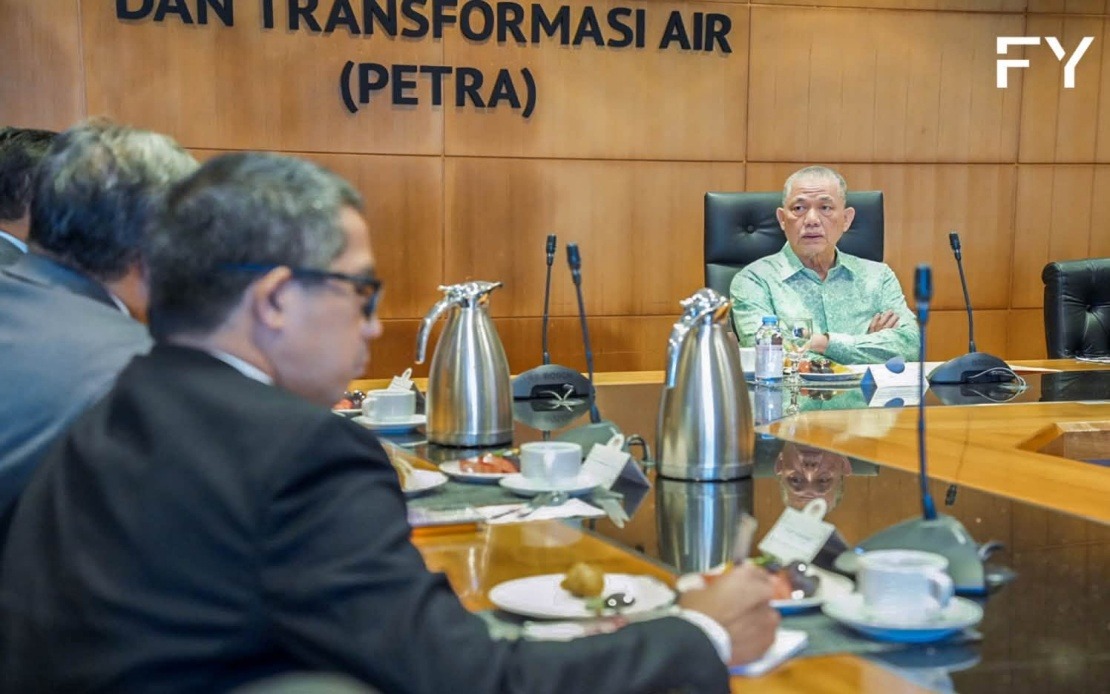
Deputy Prime Minister Datuk Seri Fadillah Yusof has tasked Malaysia's diplomatic network with a broader mandate to actively seek partnerships and commercial opportunities in their respective countries, signalling a shift towards more strategically-minded representation abroad. Speaking during a Putrajaya meeting with six freshly appointed ambassadors, Fadillah emphasised that Malaysia's missions must move beyond traditional diplomatic functions to become catalysts for economic engagement and nation-branding efforts.
The minister, who also oversees the Energy Transition and Water Transformation portfolio, outlined expectations that Malaysian envoys should prioritise promoting domestic goods, courting foreign investment, and positioning Malaysia as an attractive destination for business and development partnerships. This guidance reflects the government's emphasis on harnessing diplomatic channels for economic advancement—a recognition that soft power and commercial interests are increasingly intertwined in contemporary international relations.
The gathering brought together the newly appointed Malaysian ambassadors to Indonesia, Vietnam, Mexico, Italy, Morocco, and Azerbaijan. These appointments span strategically important regions: the ASEAN neighbourhood through Indonesia and Vietnam; emerging markets in North Africa and the Caucasus; and Latin America, each representing distinct opportunities for Malaysian commercial and political engagement. The choice of these specific diplomatic postings suggests the government is prioritising relationships across multiple continents rather than concentrating purely on Asia-Pacific affairs.
Muzafar Shah Mustafa's appointment to Jakarta places experienced diplomacy at the heart of ASEAN coordination, given Indonesia's size and influence. Vietnam's strategic location and growing economic integration with Malaysia made the Jamal Sharifuddin Johan posting equally significant. Simultaneously, the ambassadorial appointments to Mexico, Italy, Morocco, and Azerbaijan indicate Malaysian ambitions to strengthen relationships beyond its traditional sphere, potentially opening new trade corridors and political alliances.
During his remarks, Fadillah specifically discussed how Malaysia's energy transition strategy intersects with diplomatic missions abroad. He highlighted the National Energy Transition Roadmap (NETR) as a centrepiece of governmental policy and shared Malaysia's vision of becoming a regional green energy leader within ASEAN. This alignment between energy policy and diplomatic promotion suggests the government intends to leverage international missions as vehicles for advancing the renewable energy agenda—potentially attracting green technology partnerships and investment.
The ministry's emphasis on energy transition carries implications for Malaysia's positioning in global climate discussions and renewable energy markets. By tasking ambassadors with promoting this agenda, the government appears intent on consolidating Malaysia's reputation as a serious participant in the green energy transition, a critical consideration as international capital increasingly flows toward sustainable development initiatives. This could enhance Malaysia's attractiveness to ESG-conscious investors and climate-focused international partnerships.
Fadillah's discussion of economic diplomacy underscores recognition that Malaysia's development depends significantly on external partnerships and investment flows. Traditional trade relationships remain important, but the emphasis on attracting investment and promoting Malaysian products suggests the government views diplomatic missions as strategic assets in competitive global markets. This reflects broader patterns among middle-income nations attempting to upgrade their economic structures and position themselves advantageously within global value chains.
The Deputy Prime Minister's call for enhanced strategic cooperation also suggests awareness of geopolitical realignments affecting Southeast Asia. With major powers competing for influence and trade relationships becoming increasingly contested, Malaysia appears determined to maximise its diplomatic utility by actively cultivating ties across multiple regions and economic blocs. The geographic spread of the six ambassadorial postings reflects this multi-aligned approach rather than exclusive focus on any single region.
For Malaysian readers and businesses, this directive carries practical implications. Ambassadors operating under these new expectations may become more proactive in identifying trade opportunities, facilitating business connections, and providing market intelligence to Malaysian companies seeking international expansion. Malaysian exporters and investors could benefit from enhanced official support for their commercial ventures abroad, though success will depend on ambassadors' capacity to balance diplomatic duties with business promotion.
The congratulatory remarks extended to the new envoys emphasised dedication and excellence, suggesting Fadillah views these appointments as critical to executing Malaysia's broader developmental strategy. By publicly outlining expectations during this courtesy meeting, the Deputy Prime Minister established a clear performance framework and demonstrated that diplomatic service has evolved into an explicitly economically-focused endeavour within the current administration's framework.
Looking forward, the effectiveness of this ambassadorial cohort in delivering "meaningful outcomes and greater benefits" will largely determine whether Malaysia's diplomatic network becomes genuinely transformative for the nation's commercial and strategic interests. The diversity of their postings offers opportunities to build relationships across continents while advancing shared priorities around energy transition and sustainable development—positioning Malaysia as a forward-thinking nation balancing diplomatic engagement with economic pragmatism.

