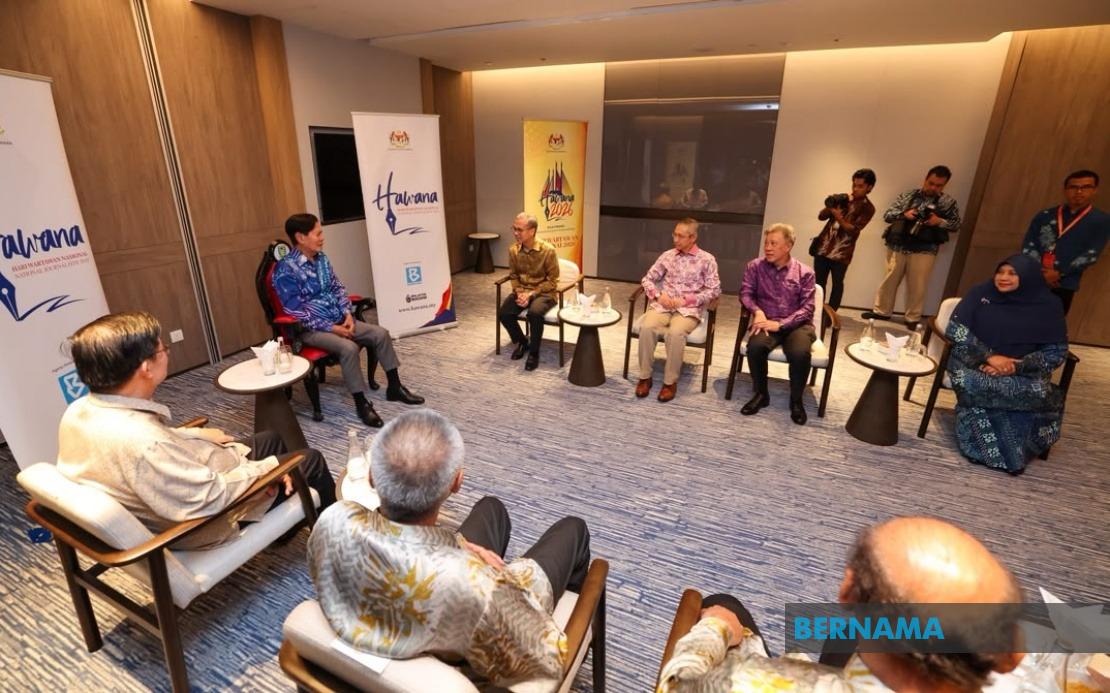
Malaysia's Communications Minister Datuk Fahmi Fadzil has issued a clarion call for media organisations across Southeast Asia to forge stronger collaborative ties in their fight against the proliferation of false information and distorted narratives. Speaking at a state government dinner in Butterworth hosted alongside the National Journalists' Day (HAWANA) 2026 celebration, Fahmi emphasised that cross-border partnerships and the systematic exchange of knowledge among regional newsrooms have become essential to safeguarding the integrity of the information ecosystem across ASEAN.
The appeal arrives at a moment when digital platforms have dramatically accelerated the speed at which unverified claims and deliberately misleading content spread across borders. Fahmi articulated a vision of journalism as a foundational institution—one that requires constant renewal in an age of information saturation and narrative competition. He stressed that media outlets fulfil a crucial intermediary function by translating complex policy decisions into public understanding and by connecting citizens to factual accounts of events that shape their lives and communities. Without robust journalistic practice anchored in verifiable facts and ethical standards, he suggested, societies risk fragmenting into echo chambers of competing falsehoods.
The minister's remarks underscore a growing anxiety across the region about the destabilising effects of misinformation on political stability and public trust in institutions. Southeast Asia, with its diverse populations, multiple languages, and complex geopolitical dynamics, remains particularly vulnerable to coordinated disinformation campaigns that exploit cultural and political fault lines. By advocating for enhanced media collaboration, Fahmi implicitly acknowledged that no single nation can effectively counter this challenge acting in isolation. The proposed framework of shared best practices and collective knowledge-building reflects an understanding that journalism standards, fact-checking methodologies, and verification protocols developed in one country can inform and strengthen news operations elsewhere in the region.
The HAWANA 2026 celebration itself signals Malaysia's commitment to elevating the status and professional standards of journalism at a national level. The event, hosted in Penang under the patronage of Governor Tun Ramli Ngah Talib and Chief Minister Chow Kon Yeow, convened senior government officials, media executives, and representatives from fellow ASEAN communications ministries. This convergence of state and media leadership demonstrates the Malaysian government's recognition that journalists function as strategic partners in national development rather than mere observers or critics of policy. Bernama, the Malaysian National News Agency, played a central coordinating role, with chairman Datuk Seri Wong Chun Wai and chief executive officer Datin Paduka Nur-ul Afida Kamaludin present to reinforce the agency's commitment to raising professional standards.
Fahmi's framing of media responsibility extends beyond a narrow focus on combating false information. He positioned journalism as a connective tissue within democratic and developmental frameworks, binding policymakers to implementers and events to public comprehension. This broader characterisation suggests that the minister views the challenges facing regional journalism not merely as technical problems to be solved through fact-checking tools or AI-powered verification systems, but as fundamental questions about how societies maintain shared understanding and collective purpose. When information flows faster than ever before and when multiple contradictory narratives compete for public attention, the role of trustworthy journalism becomes paradoxically more critical even as it becomes more difficult to sustain.
The emphasis on regional collaboration carries particular significance for Malaysia, which has experienced its own struggles with coordinated disinformation campaigns targeting elections, communal harmony, and institutional legitimacy. The country's multi-ethnic and multi-religious composition makes it susceptible to falsehoods designed to inflame sectarian tensions or undermine confidence in democratic institutions. By fostering tighter bonds with regional media partners, Malaysian news organisations gain access to broader networks for verifying information, identifying patterns of coordinated inauthentic behaviour, and understanding how disinformation narratives propagate across borders. Similarly, Malaysian journalists can contribute their own institutional knowledge and regional expertise to strengthen the capacity of their counterparts in other ASEAN nations.
Penang's selection as the host jurisdiction for this celebration reflects the state's positioning as a centre of media activity and communications innovation within Malaysia. The state government's willingness to organise and support the event demonstrated, according to Fahmi, a high regard for the media's societal role. This public endorsement from senior state officials—including the governor and chief minister—sends a powerful signal that journalism remains valued at the highest levels of governance, even as media organisations worldwide face economic pressures and declining trust. The event thus functioned both as recognition of journalists' contributions and as a platform for renewing commitments to professional excellence during an era of unprecedented challenge.
The gathering included key figures from Malaysia's communications bureaucracy and major media houses, reflecting the breadth of stakeholder engagement required to address misinformation at scale. Datuk Abdul Halim Hamzah, the Communications Ministry's secretary-general, and other senior officials participated alongside commercial media representatives, underscoring that combating falsehood demands coordination between public institutions, private news organisations, and regulatory bodies. The presence of ASEAN Communications Ministers' representatives at the dinner further illustrated the regional dimension of the initiative—a recognition that Southeast Asian governments and media sectors share common vulnerabilities and can benefit from coordinated responses to shared threats.
Looking ahead, Fahmi's call for strengthened ASEAN media collaboration will likely manifest through several practical mechanisms: formal protocols for cross-border fact-checking, shared databases of identified disinformation narratives, joint training programmes to build journalist capacity, and regional forums for discussing emerging threats to information integrity. Malaysia, as chair or active participant in various ASEAN communications channels, may find itself in a position to champion these initiatives and help coordinate regional responses. The infrastructure for such collaboration already exists in the form of regular ministerial meetings and various media associations, but deepening and formalising these connections represents the logical next step.
The underlying message conveyed at the HAWANA 2026 celebration reflects a maturing recognition across Southeast Asia that information warfare and coordinated disinformation constitute strategic threats comparable to traditional security challenges. By framing media collaboration as essential to regional peace, stability, and prosperity, Fahmi positioned journalism not as a luxury or optional democratic accessory but as fundamental infrastructure for functioning societies. For Malaysian readers and the broader regional audience, this signals that governments increasingly understand the stakes involved in maintaining professional journalism standards—and that they are beginning to invest resources and political capital in supporting these efforts. The challenge now lies in translating these rhetorical commitments into concrete institutional changes that can meaningfully enhance journalists' ability to verify information and counter false narratives at the pace and scale demanded by modern digital environments.

