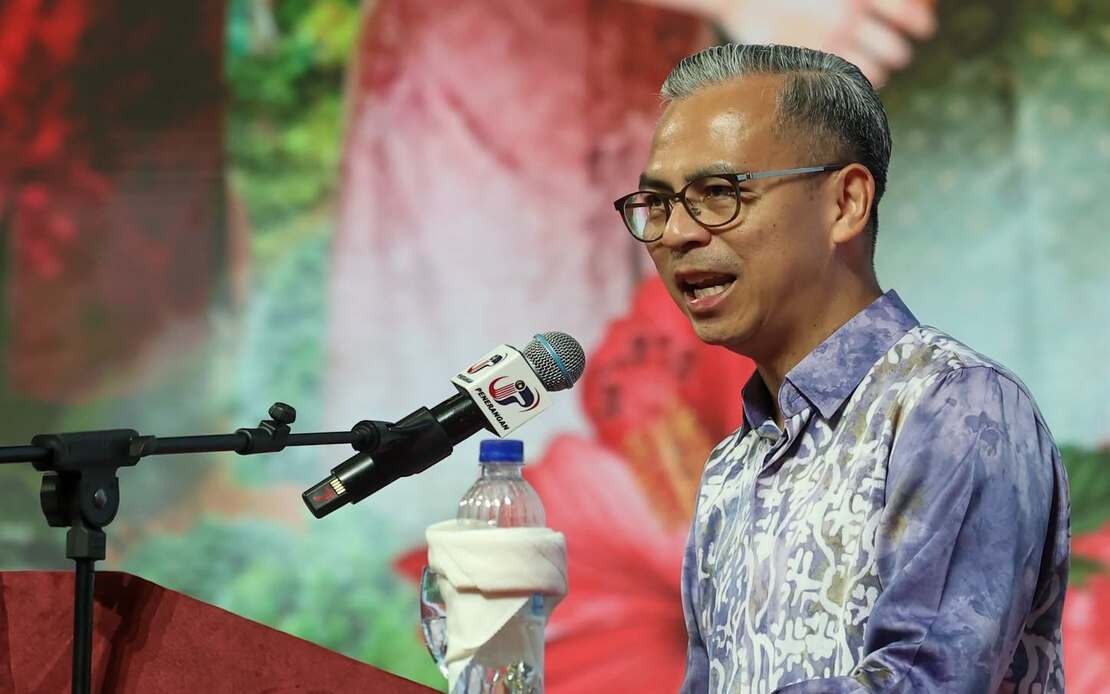
Communications Minister Datuk Seri Fahmi Fadzil has thrown his official backing behind 'Aku Berjanji', the newly unveiled anthem for next year's National Day and Malaysia Day commemorations, praising its centring on themes of collective purpose and patriotic commitment. Faizal Tahir's composition and performance debuted publicly at the launching of the 2026 National Month and Fly the Jalur Gemilang Campaign held in Ipoh on July 19, with Fahmi subsequently acknowledging the achievement through social media. The minister's endorsement signals government alignment with the creative direction chosen for what will be Malaysia's largest patriotic celebrations in the coming year.
The song's prominence within official festivities reflects a deliberate strategy to harness Malaysia's cultural and entertainment sectors in advancing national messaging. By enlisting an artist of Faizal Tahir's standing—whose work has previously resonated across the region—the government appears intent on connecting patriotic observance with contemporary popular culture. This approach contrasts with traditional formulaic approaches to national celebrations and represents an evolving understanding of how music and creative expression shape public sentiment around national identity. The choice of an established performer with regional credibility suggests consideration of reaching younger demographics and ensuring the campaign's resonance beyond conventional state ceremony.
Fahmi's particular emphasis on the song's unity messaging speaks to ongoing efforts by Malaysia's political establishment to reinforce cohesion narratives at a time when the nation navigates complex social and political dynamics. The minister explicitly highlighted how 'Aku Berjanji' embodies values of togetherness alongside patriotic devotion, suggesting these concepts occupy central importance within government communication strategies heading into 2026. The prominence given to these themes in official remarks indicates they will likely feature prominently throughout the broader National Month campaign, positioning unity not merely as abstract aspiration but as practical civic imperative.
Prime Minister Datuk Seri Anwar Ibrahim's presiding over the campaign launch underscores the administration's investment in these celebrations as significant political and cultural moments. The presence of top-level leadership at the Ipoh event demonstrated the seriousness with which the government regards the 2026 commemorations, lending weight to the accompanying cultural initiatives. For Malaysians across different states and communities, such high-profile launches typically signal the beginning of intensified patriotic activity and preparation, with the theme song serving as an accessible entry point for broader public participation.
Beyond the artistic dimension, Fahmi's communications carry practical directives for public conduct surrounding national symbols. His call for Malaysians to display the Jalur Gemilang with appropriate pride and proper maintenance addresses observable gaps in how the flag is sometimes treated in public spaces. The minister's acknowledgment that flag displays occasionally suffer from neglect or mishandling reflects awareness of real challenges in maintaining symbolic dignity across the country's diverse landscape, where standards of civic maintenance vary considerably. His emphasis on proper installation and condition suggests previous instances where flags have been displayed in damaged or disrespectful states, necessitating explicit reminder of appropriate treatment.
Particularly noteworthy is Fahmi's cautionary remarks regarding artificial intelligence-generated imagery of the Jalur Gemilang. This guidance addresses an emerging challenge posed by rapid AI advancement and democratised image generation tools, which can inadvertently or intentionally produce distorted or incorrect representations of national symbols. The minister's highlighting of this concern reflects recognition that digital-age threats to symbolic integrity operate differently from traditional ones. Unintentional errors in AI-generated flag imagery—such as incorrect colours, proportions, or orientations—could indeed undermine public respect for the emblem, particularly if such images circulate widely across social media platforms where verification remains inconsistent.
The timing of these directives ahead of 2026 celebrations positions the government proactively rather than reactively, establishing standards for public behaviour and digital conduct before large-scale festivities commence. By articulating expectations now, officials attempt to prevent scenarios where widespread inappropriate flag treatment or symbolic distortion might otherwise mar commemorative events. This preemptive approach suggests lessons learned from previous occasions when national symbols have been mishandled or disrespected, either through negligence or deliberate transgression.
For Malaysian society more broadly, Faizal Tahir's song and its government endorsement represent a cultural articulation of national values at a juncture when Malaysia continues processing its pluralistic identity and political direction. The investment in creative expression as a medium for unity messaging reflects confidence that art and music can bridge divides more effectively than political rhetoric alone. Whether 'Aku Berjanji' achieves its intended resonance will depend partly on its musical merits and partly on how authentically Malaysians across different communities perceive its message reflecting their own experiences and aspirations.
The 2026 celebrations will serve as a significant barometer of national sentiment and social cohesion, with cultural elements like the official theme song functioning as important markers of collective identity. Fahmi's statement, while seemingly routine governmental acknowledgment, carries implicit messaging about what the administration deems crucial to emphasise as Malaysia approaches the midway point of its third decade as an independent nation. The combination of artistic excellence, patriotic messaging, and practical guidance regarding civic conduct reveals a multifaceted approach to national commemoration that moves beyond ceremonial tradition into deliberate nation-building through culture.

