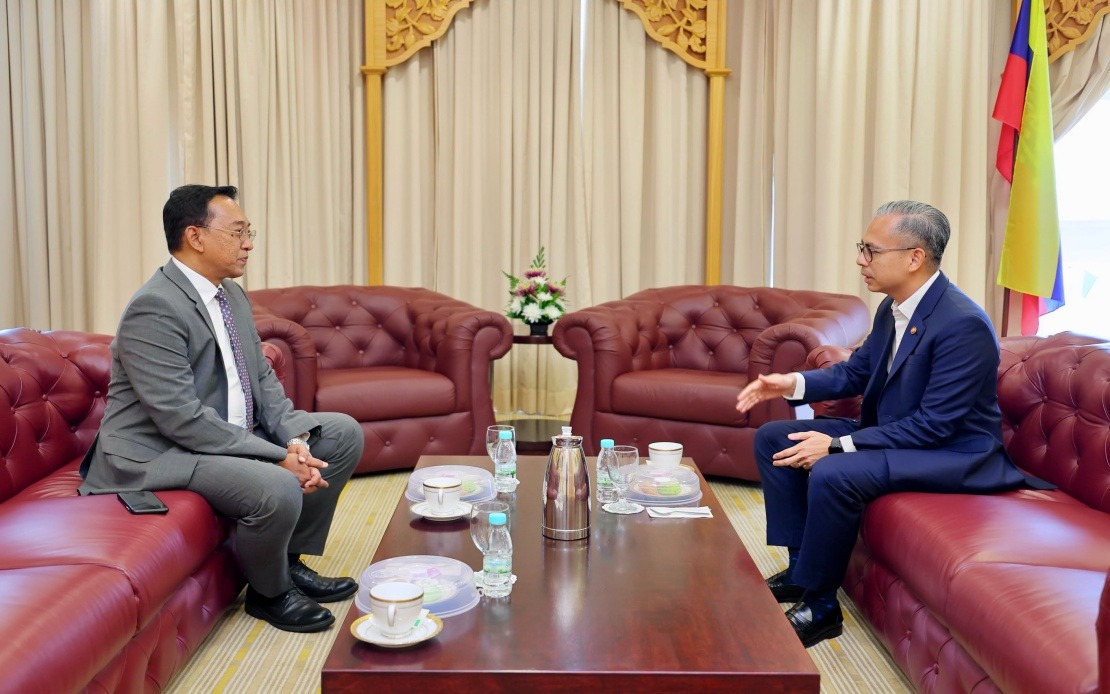
Communications Minister Datuk Fahmi Fadzil received a courtesy visit from Malaysia's Ambassador to Lebanon Anwar Udzir in Kuala Lumpur on July 1, marking an important moment for the ministry's engagement with the diplomatic service. The meeting underscores the government's commitment to maintaining robust channels of communication between domestic leadership and Malaysia's overseas representatives, particularly as the nation continues to navigate complex international affairs across multiple regions.
During the meeting, both officials discussed ways to deepen their working relationship and exchanged perspectives on developments that bear significance for Malaysia's interests on the world stage. Such engagements are customary protocol when ambassadors take up new postings, serving as occasions for ministers to brief envoys on national priorities and to receive firsthand accounts of conditions in their respective missions. The dialogue between Fahmi and Anwar Udzir reflected the broader government effort to ensure alignment between Kuala Lumpur's foreign policy objectives and the practical work of its diplomatic missions across the globe.
Anwar Udzir's appointment as Ambassador to Lebanon carries particular weight given Lebanon's strategic position in the Middle East and its historical ties to Malaysia's diverse population. He received his letter of appointment from His Majesty Sultan Ibrahim, King of Malaysia, on May 18, 2026, formally embarking on what promises to be a consequential posting. The timing of such appointments is never coincidental; Lebanon's current political landscape and its importance as a hub for regional connectivity make the ambassadorial role increasingly vital for advancing Malaysian interests in the Levantine sphere and maintaining diplomatic presence in an area of ongoing regional importance.
Fahmi expressed his confidence in Anwar Udzir's capability to represent Malaysia effectively in Beirut, conveying best wishes for success in the ambassador's tenure. The minister's public acknowledgement of the appointment through a Facebook post signals the government's recognition of the significance of Malaysia's diplomatic footprint in the Middle East. Such high-profile visibility also demonstrates how modern Malaysian governance seeks to keep the public informed about international relations matters, moving beyond traditional diplomatic channels to embrace social media as a means of communicating state priorities.
The two officials' prior working relationship provided a strong foundation for their meeting. Fahmi noted that he had first encountered Anwar and his team when they collaborated on organising the Asia-Pacific Telecommunity Ministerial Meeting held in Tokyo, Japan, during the previous year. This previous collaboration highlighted Anwar's competence in managing complex multinational events and demonstrated his capacity to work across different sectors and jurisdictions. Such prior contact between officials often proves invaluable when they subsequently interact in different capacities, as it establishes mutual understanding and respect based on demonstrated capability.
The Asia-Pacific Telecommunity connection is particularly noteworthy given Malaysia's own role as a regional technology and communications hub. Communications infrastructure and digital connectivity have become central to Malaysia's regional positioning, particularly as Southeast Asian nations accelerate their digital transformation initiatives. Anwar's involvement in the Tokyo ministerial meeting suggests he understands the intersections between technical cooperation, diplomatic engagement, and economic interests—competencies that will serve Malaysia well as he engages with Lebanese counterparts on matters ranging from cultural exchange to potential business partnerships.
Lebanon, despite its current economic and political challenges, remains an important outpost for Malaysia's diplomatic presence. The country serves as a cultural and intellectual centre for the Arab world, hosts a significant diaspora from various nations, and maintains connections to regional institutions and actors. Malaysia's diplomatic mission there contributes to the broader Southeast Asian engagement with the Middle East, a region that will likely become increasingly important for trade, investment, and security cooperation as global geopolitical alignments continue to shift.
The courtesy call also reflects diplomatic protocol that strengthens institutional relationships within Malaysia's government structure. By receiving Anwar formally and publicly acknowledging his appointment, Fahmi demonstrates that the Communications Ministry views Lebanon as a priority posting deserving ministerial-level attention. This sends implicit signals to both the diplomatic service and to international observers about where Malaysia intends to focus its engagement efforts in the coming period.
Looking forward, Anwar Udzir's tenure as Ambassador will likely involve navigating Lebanon's complex domestic situation while advancing Malaysian interests in bilateral and multilateral forums. The ambassador will serve as a crucial link between Malaysian policymakers and Lebanese institutions, providing intelligence, facilitating business connections, and representing Malaysia's values and interests in regional debates. His prior success in coordinating international events suggests he brings organisational capability and diplomatic acumen to what remains a challenging post requiring careful navigation of Lebanon's internal politics and its position within broader Middle Eastern dynamics.

