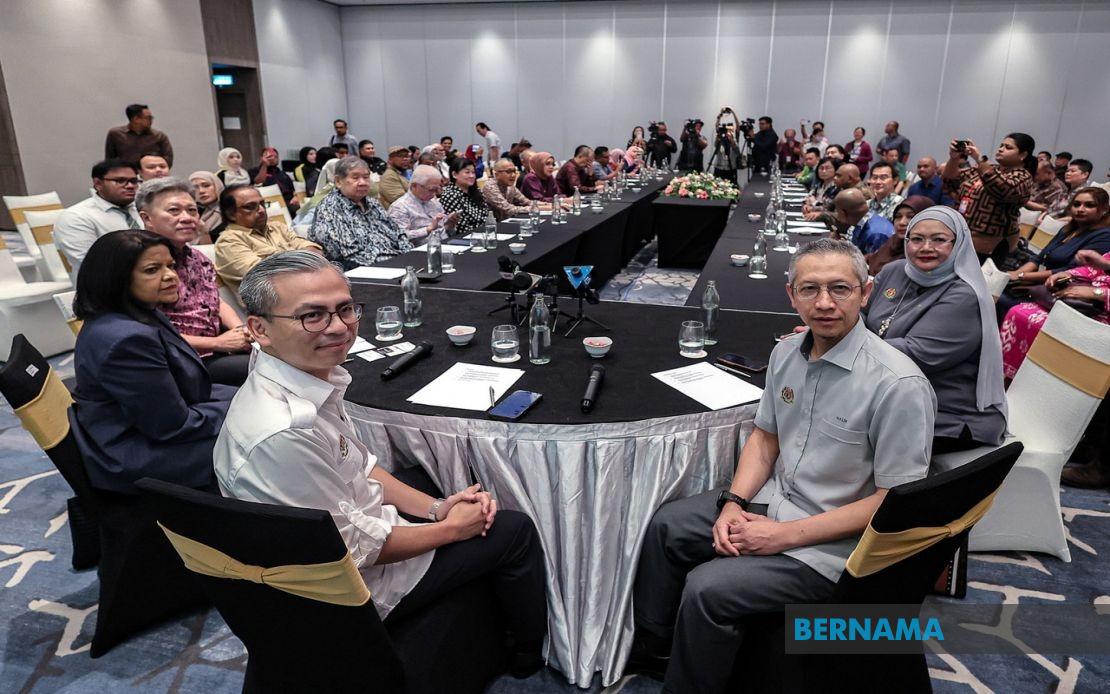
Communications Minister Datuk Fahmi Fadzil unveiled an initiative to institutionalise dialogue between the government and the media through structured retreats at future National Journalists' Day (HAWANA) celebrations. The proposal emerged during a two-hour exchange at HAWANA 2026 in Butterworth, signalling an attempt to formalise what has historically been ad-hoc engagement between the Communications Ministry and newsroom leaders. By anchoring these sessions to an annual event, the ministry aims to create a predictable framework for addressing industry concerns at the highest political level.
The retreats would operate as feedback mechanisms allowing journalists and media executives to submit proposals directly to government through a coordinated process overseen by the Malaysian Media Council (MMC). Rather than scattered representations to individual officials, this centralised approach would consolidate industry voices on substantive matters ranging from legislative amendments to long-term sector sustainability. For Malaysia's media professionals, already navigating complex regulatory environments and shifting business models, such structured channels offer potential pathways to influence policymaking that affects their livelihoods and editorial independence.
Fahmi's proposal reflects broader recognition within government circles that the media industry faces mounting economic pressures that require collaborative problem-solving. The Communications Ministry has identified a particularly acute challenge: mainstream media organisations produce content distributed across social media platforms without capturing any financial benefit. This dynamic has accelerated the decline of traditional revenue streams precisely as production costs remain stable or increase. By creating formal retreat sessions, the ministry signals willingness to tackle these structural issues rather than viewing them as market forces beyond government purview.
The proposed involvement of MMC in coordinating retreat logistics demonstrates an attempt to involve industry self-regulatory bodies as intermediaries rather than relying solely on government-media communication channels. This approach potentially insulates the process from accusations of direct state manipulation while ensuring government remains responsive to documented industry concerns. MMC chairman Tan Sri Nallini Pathmanathan's presence at the dialogue alongside media leaders suggested buy-in from the council itself, though the extent of MMC's independent influence remains a question for observers monitoring press freedom.
The government's stated readiness to engage social media platforms on behalf of the media industry represents a significant intervention point. Fahmi indicated the ministry would facilitate discussions between Malaysian media outlets and social media companies regarding financial arrangements for content distribution. While Malaysia lacks the regulatory leverage of larger markets like the European Union, which imposed the Digital Services Act, such government mediation could potentially unlock commercial arrangements between local publishers and global platforms. However, success would depend on the degree to which government pressure actually translates into favorable terms for Malaysian news organisations.
The timing of this initiative, rolled out at a journalists' day celebration, carries symbolic weight. By positioning government as attentive to media sector challenges, Fahmi's administration appears to cultivate a collaborative narrative around media-government relations at a moment when trust between institutions has eroded in many countries. For Malaysian journalists, this represents an opening to articulate systemic grievances, though the translation of feedback into actionable policy change remains uncertain. Previous government commitments to media industry support have sometimes produced limited tangible outcomes.
Regional context suggests this proposal aligns with broader Southeast Asian trends toward government-orchestrated dialogue with media rather than adversarial relationships. Countries including Indonesia and Thailand have experimented with structured engagement mechanisms, though their effectiveness in protecting press independence has been contested. Malaysia's approach, emphasising the MMC as a coordinating entity rather than relying on direct government-newsroom conversations, attempts to navigate this tension between dialogue and autonomy.
The retreat sessions would provide platforms for discussing amendments to existing legislation affecting media operations, including the Communications and Multimedia Act and the Broadcasting Act. Media organisations have long sought clarifications and modifications to regulations they argue are outdated or restrictive. Formalised annual retreats could accelerate legislative review processes, though government adoption of specific industry-proposed amendments would ultimately depend on cabinet-level political calculations. The Communications Ministry's capacity to champion media-supported reforms within broader government structures would significantly influence outcomes.
For Malaysia's smaller and independent media outlets struggling against resource constraints, these retreats offer opportunities to articulate concerns that larger established organisations might already raise through separate channels. The retreat framework, if genuinely open to diverse media voices rather than dominated by mainstream players, could surface issues affecting journalism's economic viability across the sector. Questions remain whether the process will include alternative media or be weighted toward historically prominent news organisations with existing political relationships.
The proposal also suggests tackling sustainability issues affecting journalism quality and investigative reporting. Media outlets worldwide have reduced investigative capacity as revenues contracted, potentially limiting watchdog functions. If retreat sessions successfully connect economic concerns to journalism standards and public interest goals, they might generate government support mechanisms—from tax incentives to advertising support to direct grants—that other countries have implemented. Malaysia's government could examine such approaches, though budget allocations would reflect broader political priorities.
Implementation details remain undetermined. Frequency, formal structure, confidentiality arrangements, and mechanisms for converting feedback into policy action all require clarification. The ministry's reliance on MMC for coordination raises questions about whether the council has sufficient resources and independence to manage a genuinely inclusive process. Clear protocols distinguishing government consultation from co-option would strengthen the initiative's credibility among media practitioners sceptical of state engagement.
Looking forward, these retreats could establish whether Malaysian government genuinely views the media industry as a sector requiring partnership rather than regulation. The proposal's substance will ultimately be judged by whether government demonstrates responsiveness to documented industry concerns through legislative amendments, financial mechanisms, or regulatory relief. Southeast Asian media observers will watch closely to determine whether this initiative represents meaningful institutional reform or largely symbolic gesture.

