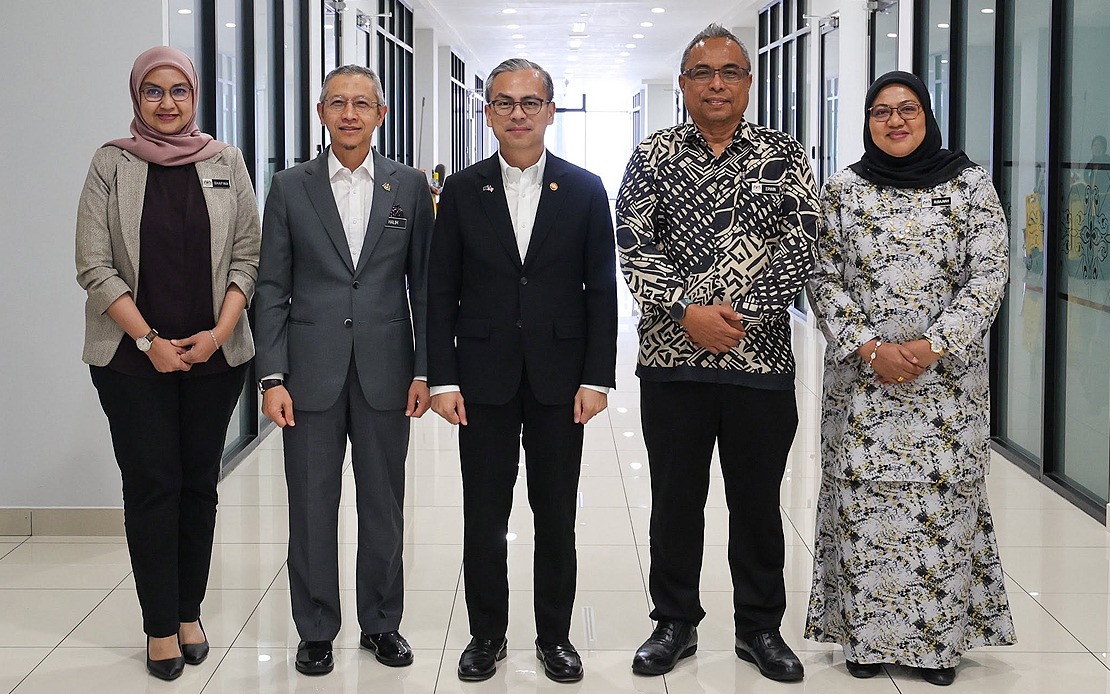
Communications Minister Datuk Fahmi Fadzil has congratulated Erwin Khairul Ahmad on his appointment as the new director-general of the Information Department (JaPen), marking a significant transition in Malaysia's public information infrastructure. The appointment, unveiled through the Public Service Department (JPA), represents a shift in leadership at a critical juncture as the government navigates evolving information dissemination strategies in an increasingly digital landscape.
Acknowledging the broader reorganisation at JaPen, Fahmi also extended his congratulations to Wan Saidatul Shafina Mohd Amin, who takes on the role of deputy director-general overseeing digital content—a position that underscores the department's strategic pivot toward digital-first communications. The emphasis on digital content leadership reflects broader global trends in government communications, where online platforms have become essential channels for reaching diverse audiences and combating misinformation.
In his remarks, Fahmi articulated expectations for the incoming leadership team, emphasising the importance of sustained dedication, informed decision-making, and institutional commitment. His message centred on reinforcing JaPen's foundational mission: functioning as an efficient conduit through which government information reaches Malaysian citizens with clarity and effectiveness. This framing suggests that the ministry views the leadership transition as an opportunity to revitalise the department's operational focus and public engagement mandate.
The formal presentation of appointment letters to both Erwin Khairul and Wan Saidatul Shafina was conducted by Tan Sri Wan Ahmad Dahlan Abdul Aziz, the director-general of the Public Service Department, underlining the procedural significance of these appointments within Malaysia's civil service hierarchy. Such ceremonies typically signal institutional confidence in the appointees and provide a platform for reaffirming organisational values and strategic direction.
Parallel to welcoming new leadership, Fahmi extended formal recognition to Julina Johan, the departing director-general, acknowledging her tenure through expressions of gratitude for her service, professional commitment, and substantive contributions to JaPen's development. Transitions in senior government positions often carry implicit lessons; the minister's public appreciation suggests that Johan's leadership period yielded outcomes the ministry values and wishes to preserve. Such acknowledgment also sets a constructive tone for organisational continuity, important when institutional memory and established processes risk disruption during handovers.
The timing of this leadership transition occurs as governments across Southeast Asia reassess their information management strategies in response to digital transformation, polarised media environments, and the challenge of ensuring public trust in official communications. JaPen's evolution, particularly through its new emphasis on digital content leadership, positions Malaysia within this regional conversation about how state institutions can remain relevant and credible information sources in fragmented media ecosystems.
The appointment of Wan Saidatul Shafina specifically to oversee digital content suggests deliberate structural recognition that online platforms—social media, news portals, government websites, and emerging digital channels—require dedicated strategic attention separate from traditional broadcast and print operations. This reflects lessons learned globally about the distinct challenges of digital audience engagement, content moderation, and rapid response to evolving information environments.
For Malaysian stakeholders monitoring government communications strategy, these appointments signal continuity in institutional commitment to public information delivery while potentially indicating readiness for operational or strategic adjustments under new management. The Information Department remains central to how citizens receive official narratives about policy, governmental activities, and national developments, making leadership quality at this institution particularly consequential for public understanding and democratic engagement.
The broader administrative context—change in senior civil service positions within communications infrastructure—carries implications for how information flows between government and citizens, how digital platforms are leveraged for public outreach, and ultimately, how effectively official narratives compete for attention in saturated information environments. Both incoming leaders inherit an institution navigating substantial challenges around digital misinformation, platform fragmentation, and public confidence in official sources, making their strategic vision during this transition period potentially consequential for Malaysian public communications over the coming years.

