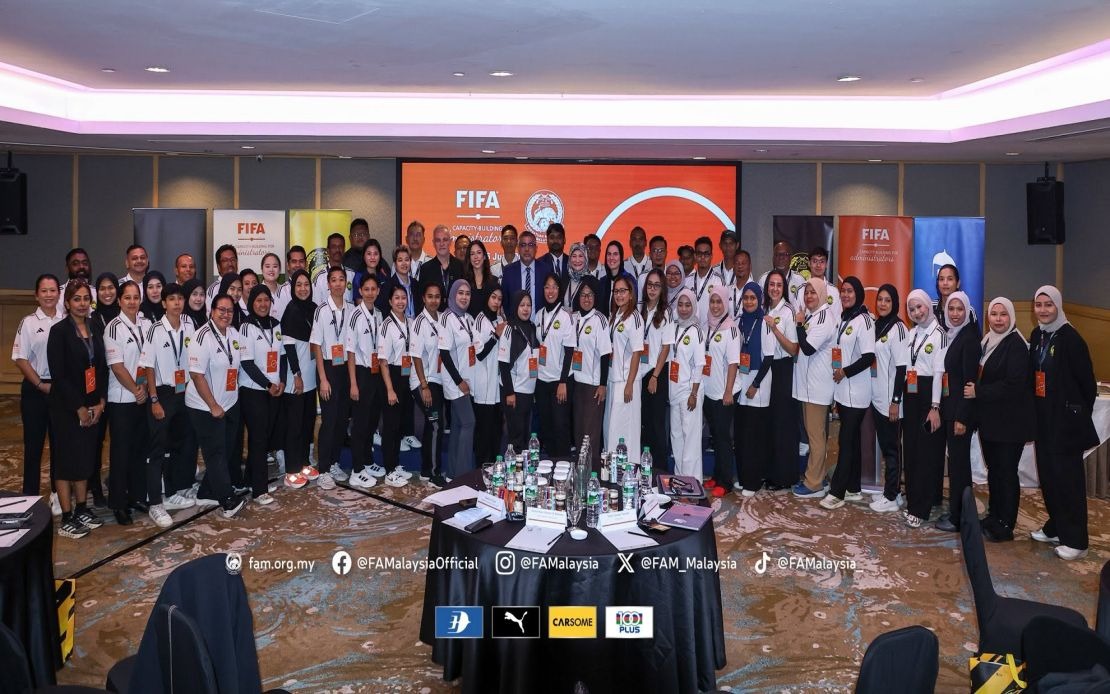
The Football Association of Malaysia has embarked on a strategic initiative to fortify the administrative backbone of women's football nationwide, recognising that sustainable development requires more than just on-pitch talent. The FIFA Capacity-Building For Administrators 2026 programme, which commenced in June, represents a deliberate shift in FAM's approach to women's football development—one that acknowledges the critical role of well-trained managers and administrators in creating a professional, resilient ecosystem.
The four-day training initiative, conducted in partnership with FIFA and spearheaded by Women's Football Development Experts Safia Abdeldayem and Pema Choden Tshering, brings international best practices directly to Malaysian administrators. Rather than treating women's football development as purely a technical matter confined to coaching and player training, FAM has recognised that the administrative layer demands equal attention and investment. This distinction is important for Southeast Asia, where women's football governance often lags behind playing development.
The curriculum delivered during the programme encompasses four essential pillars designed to modernise how women's football is managed at all levels. Participants engage with modules on Women's Leadership, ensuring that decision-making structures throughout the sport reflect contemporary governance standards. A dedicated module on Women's Competition examines how leagues and tournaments are structured, funded, and promoted—areas where many Asian associations still operate with outdated frameworks. The Club and Players' Rights component addresses the legal and contractual dimensions that protect athletes and organisations alike, while Strategic Planning equips administrators with tools to align their teams' objectives with long-term sustainable growth.
FAM's emphasis on empowering administrators stems from a broader recognition within Asian football that women's sport requires distinct management approaches. The traditional pathways used for men's football—which benefit from decades of established infrastructure, media engagement, and sponsorship networks—simply do not exist for women. Teams require managers and administrators who understand these specific challenges and can build structures suited to developing women's participation from grassroots to elite levels. By investing in administrative capacity now, FAM is laying groundwork that will support exponential growth as women's football gains prominence across Malaysia.
The presence of senior FAM officials at the programme's launch underscores institutional commitment to this initiative. Datuk Noor Azman Rahman, FAM's secretary-general, along with Datuk Suraya Yaacob—who holds significant positions in both AFC and FIFA women's structures—sent a clear signal that women's football administration carries the same weight as other portfolio areas. Soleen Al-Zoubi, FAM's Women's Football Technical Director, represents the technical continuity that ensures administrative improvements align with coaching standards and player development philosophies.
The timing of this programme aligns with critical moments in Malaysian and Southeast Asian women's football trajectories. Several regional nations are investing heavily in women's football infrastructure ahead of tournaments and championship qualifiers. Malaysia, positioning itself as a serious competitor in regional competitions, recognises that having professionally trained administrators gives teams competitive advantages off the field—better player contracts, more effective sponsorship management, superior competition organisation, and clearer pathways for young players.
For team managers specifically, the programme addresses a substantial gap in professional development. In many Malaysian clubs, management positions emerge through circumstance rather than formal preparation. Managers may inherit roles without structured training in contemporary best practices, leaving them ill-equipped to handle contractual negotiations, competition regulations, or strategic planning. This programme provides them with frameworks used by established football nations, potentially elevating the professionalism of club operations across the country.
Women's football administration in Malaysia also intersects with broader governance issues affecting women's participation in sports. Effective administrators who understand gender-specific barriers—scheduling conflicts for working mothers, safety and transportation concerns, facility access—can design competitions and support systems that actively remove obstacles to participation. This preventive approach to administration is more sophisticated than simply waiting for interested players to emerge; it acknowledges that participation rates reflect not just player talent but institutional choices made by administrators.
FAM's public commitment to expanding women's leadership in football administration also carries cultural significance across Malaysia's diverse communities. Visible women leaders in football administration normalise female participation in sports governance and demonstrate pathways for Malaysian women to advance into decision-making positions. As programme participants return to their clubs and state associations, they become ambassadors for more inclusive administrative cultures.
The international scope of this training—delivered by FIFA experts using frameworks applied globally—ensures Malaysian administrators operate to world standards. Rather than developing isolated, locally-specific approaches, participants learn methodologies aligned with those used in advanced women's football nations. This standardisation facilitates international cooperation, makes Malaysian clubs more professional partners for regional and global engagement, and provides Malaysian players with familiar structures if they pursue opportunities abroad.
FAM's framing of this initiative as supporting FIFA's global women's football development agenda positions Malaysia within international efforts rather than merely addressing domestic concerns. This positioning has practical benefits: FIFA resources, technical expertise, and network connections become available to Malaysian administrators. Simultaneously, Malaysia contributes to global women's football development by creating a stronger regional hub, potentially influencing AFC-wide standards.
Looking forward, the success of this programme will largely depend on how participants implement learning within their respective organisations. Structural change requires sustained commitment beyond the four-day training. FAM's challenge will be providing continued support, creating accountability mechanisms, and fostering peer networks where administrators can share experiences and solutions. Equally important is ensuring that this initiative reaches beyond elite teams to include administrators at club and state levels, where foundational infrastructure is built.
The programme ultimately reflects a sophisticated understanding of women's football development: that sustainable growth requires integrated investment across technical, administrative, and governance dimensions. By prioritising administrator development, FAM signals that women's football in Malaysia is transitioning toward a more professional, systematic approach where success on the field reflects institutional excellence off it.

