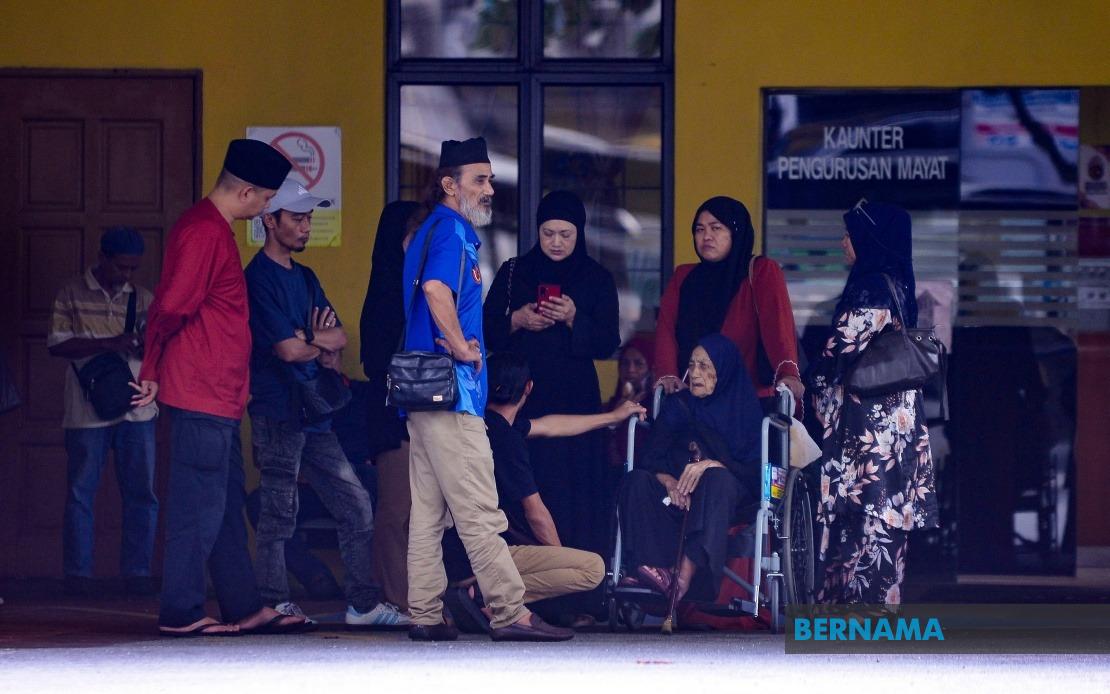
A relative of the victims in a fatal collision involving a Malaysian Immigration Department lorry at Maju Junction has publicly called for a comprehensive and transparent investigation, citing concerns that the vehicle may have breached traffic regulations at the moment of impact. Mohd Nadzri Razali, 69, brother-in-law of the deceased Shaik Mohd Firdaus Shaikh Yahya, expressed his determination to pursue justice for the three family members killed in the early morning incident on Jalan Sultan Ismail, while also advocating for the recovery of his injured sister currently hospitalized in Kuala Lumpur.
According to Mohd Nadzri, he was informed that the Immigration Department lorry allegedly proceeded through a red traffic light at the accident site, a critical detail that could fundamentally influence the legal and safety conclusions drawn from the incident. Speaking from his home in Taman Aman Fasa 2, Mambang Di Awam, he emphasized that clarifying these circumstances would be essential to establishing accountability and preventing similar tragedies. His appeal reflects the broader frustration felt by accident victims' families when official vehicles are involved in high-impact collisions, particularly when government operations may have contributed to loss of life.
Mohd Nadzri's sister, Norhayati Razali, aged 55, remains confined to the Intensive Care Unit at Kuala Lumpur Hospital, where medical staff continue to monitor her progress following the crash. He noted that while she had regained consciousness, her condition remained fragile, and the family harboured hopes of transferring her to either Hospital Ipoh or Teluk Intan to continue her recovery closer to their Perak community. The prospect of her discharge remained uncertain, dependent entirely on how her injuries responded to treatment in the coming weeks.
The tragedy compounded existing grief within the family, as Mohd Nadzri revealed that the household had only recently mourned the loss of another member on May 30 of this year. The sudden and catastrophic loss of three relatives at once—husband, two daughters, and the severe injury of the surviving spouse—represents an almost incomprehensible shock to the extended family unit. The last occasion Mohd Nadzri had seen his sister and her immediate family was approximately two weeks before the collision, when they had travelled together to visit the graves of departed relatives in Teluk Bakong, Ayer Tawar, a poignant reminder of the transience of life that now resonates with tragic prescience.
The collision itself occurred shortly after 1 am when an empty Isuzu Black Maria lorry operated by the Immigration Department was en route from the Kuala Lumpur Immigration Office to Chow Kit, where officers were scheduled to conduct a law enforcement operation targeting undocumented migrants. The vehicle was equipped with beacon lights and an active siren at the time it allegedly entered the Maju Junction intersection. Under normal circumstances, emergency vehicles displaying such warning signals are afforded certain procedural allowances at traffic intersections, yet the incident raises fundamental questions about whether those protocols were appropriately executed or whether they created a false sense of invulnerability among the vehicle's occupants.
A Proton Saga travelling in a perpendicular direction had the benefit of a green traffic signal authorizing its passage through the intersection. The driver of the Saga appears to have had no opportunity to prevent the collision, as the rapid and unexpected appearance of the larger lorry left insufficient time for evasive action. The impact of the two vehicles proved catastrophic, with the heavy Immigration Department lorry subsequently skidding violently across the intersection, its trajectory and momentum carrying it directly into a group of pedestrians and a parked Inokom Matrix multi-purpose vehicle.
Three members of the pedestrian family perished at the accident scene: Shaik Mohd Firdaus Shaikh Yahya, his 25-year-old daughter Siti Nor Sazlin, and his 12-year-old daughter Siti Darwisyah Auni. Their mother, Norhayati Razali, sustained severe injuries that necessitated immediate hospitalization and ongoing intensive care. The deaths of a father alongside two children of such different ages—one emerging into adulthood, the other still in early secondary education—represent an irreplaceable loss to the extended family and their community. The investigation, now proceeding under Section 41(1) of the Road Transport Act 1987, will examine whether the Immigration Department's operational procedures and the individual decisions made by the lorry's occupants fell below the required standards of care and compliance with traffic law.
The incident occurs within a context of ongoing public debate across Malaysia regarding the accountability of government agencies and their vehicles in traffic incidents. Families and civil society organizations have increasingly scrutinized whether official status or emergency authorization creates disparities in how such collisions are investigated and adjudicated. The Maju Junction case has already attracted attention for these broader governance questions, beyond the specific tragedy befalling this household. Transparent investigation and proportionate accountability will be crucial not only for the family's sense of justice but also for public confidence in the integrity of official inquiries.
Mohd Nadzri confirmed that all three deceased family members would be laid to rest together in a single grave at the Muslim Cemetery in Kampung Air Hitam Labu, Kampar, reflecting the family's desire to keep the victims spiritually united even in death. This burial arrangement underscores both the cultural values and the practical and emotional needs of the bereaved relatives navigating the immediate aftermath of mass loss. The family's positioning of their appeal for transparency within the framework of Islamic principles and community responsibility demonstrates how grief and the pursuit of justice intertwine within Malaysian society, transcending individual suffering to touch broader concerns about road safety, institutional accountability, and the protection of ordinary citizens.

