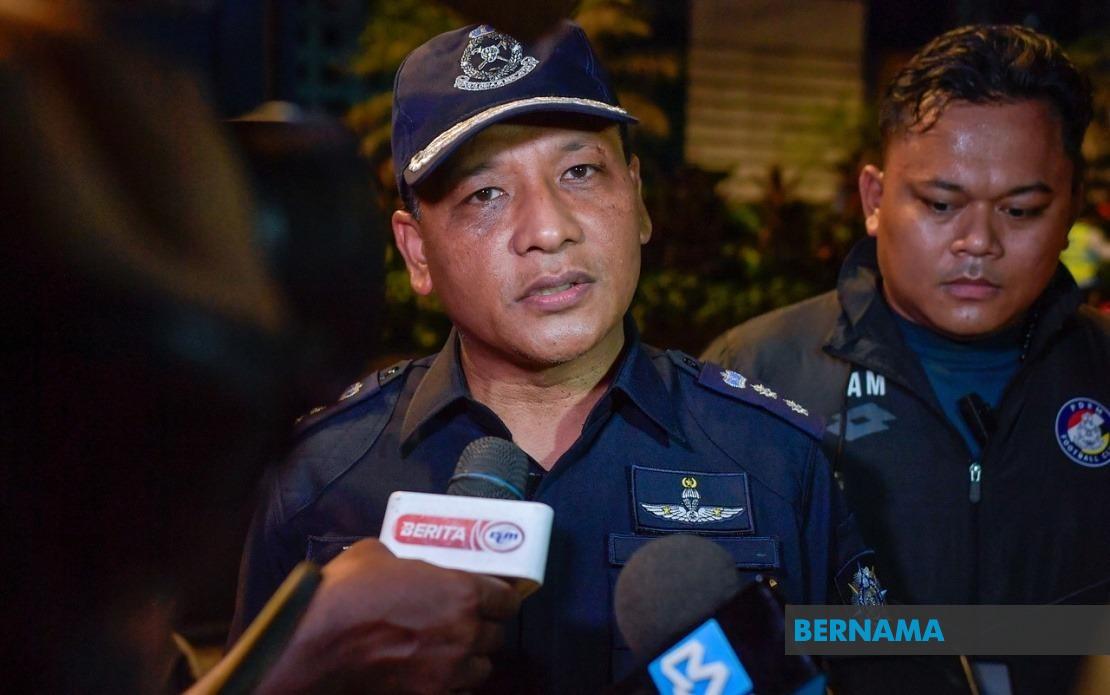
Three members of the same family were killed and another critically injured in a tragic pre-dawn collision on Jalan Sultan Ismail in Kuala Lumpur early Wednesday when an Immigration Department truck crossed a red light and struck their vehicle. The investigation dossier into the incident will be forwarded to the Attorney General's Chambers on Thursday, according to a statement from the Kuala Lumpur Traffic Investigation and Enforcement Department. The decision to refer the case follows consultations between traffic police and the Kuala Lumpur Prosecution Director, signalling the beginning of the formal process that could result in criminal charges against those involved.
The deceased have been identified as Shaik Mohd Firdaus Shaikh Yahya, 53, and his two daughters, Siti Nor Sazlin, 25, and Siti Darwisyah Auni, 12. His wife, Norhayati Razali, 55, remains in intensive care at Kuala Lumpur Hospital battling serious injuries sustained in the collision. The identities of those injured underscore the randomness of the tragedy, with a family outing ending in devastating loss in mere seconds.
According to the traffic police investigation, the Immigration Department vehicle—commonly referred to as a "Black Maria" and used for detention and transport operations—was heading towards Chow Kit to conduct enforcement activity against suspected illegal immigrants when the crash occurred around 1 am. The empty truck proceeded through the junction despite the traffic signal displaying red, with its emergency beacon and siren activated. This action placed the vehicle on a collision course with a Proton Saga that was lawfully traversing the intersection while its traffic light showed green.
The impact between the two vehicles was significant enough to cause the truck to lose directional control and veer off its intended path. The errant truck subsequently struck multiple targets as it careened across the roadway, hitting the family members and also colliding with a Inokom Matrix. This sequence of events highlights how a single moment of traffic non-compliance can trigger a catastrophic chain of consequences affecting multiple parties and vehicles.
Both the Immigration Department truck driver and the operator of the Proton Saga have been remanded in custody for one day pending further investigation, according to ACP Mohd Zamzuri Mohd Isa, the chief of the Kuala Lumpur Traffic Investigation and Enforcement Department. The case is being pursued under Section 41(1) of the Road Transport Act 1987, which addresses dangerous or careless driving that results in injury or death. This statutory framework provides the prosecutorial foundation for potential charges once the Attorney General's office reviews the complete investigation file.
The incident raises critical questions about emergency vehicle protocols in urban environments. While emergency vehicles are often granted certain privileges and exemptions to respond swiftly to operational demands, those privileges come with heightened responsibility to ensure public safety. The activation of beacon and siren does not automatically grant a vehicle the right to disregard traffic signals, particularly in built-up areas where pedestrian and vehicular traffic is substantial even at early morning hours.
For the Attorney General's Chambers, the investigation file will be evaluated by the Head of the General Crime and Public Order Division, with the prosecution director and investigating officer presenting the case. Their assessment will determine whether criminal charges are warranted and at what level of culpability. This judicial review process is designed to ensure that prosecutorial decisions rest on solid evidentiary foundations and legal merit rather than administrative momentum.
The tragedy resonates particularly in Malaysia, where road safety remains a persistent public health concern. Fatal traffic incidents involving government vehicles carry additional weight politically and publicly, as they involve public servants operating publicly-owned assets. The circumstances—a government vehicle running a red light during an authorized operation—create a complex narrative that will likely attract significant public and media scrutiny throughout the legal process.
For the family affected by this tragedy, the loss is immediate and irreversible. The decision to refer the investigation to the Attorney General's office marks the transition from administrative fact-finding to the formal criminal justice system. What follows will determine accountability and potentially influence future protocols governing emergency vehicle operations in similar circumstances. The path forward for those responsible will be charted by legal professionals examining evidence, precedent, and statutory obligations in the coming weeks.
The investigation's conclusion and subsequent prosecutorial decisions may also prompt broader discussions within the immigration enforcement community and traffic safety agencies about operational procedures, driver training, and the balance between enforcement urgency and public safety imperatives. How this case is ultimately resolved will send important signals about accountability when government operations result in civilian casualties.

