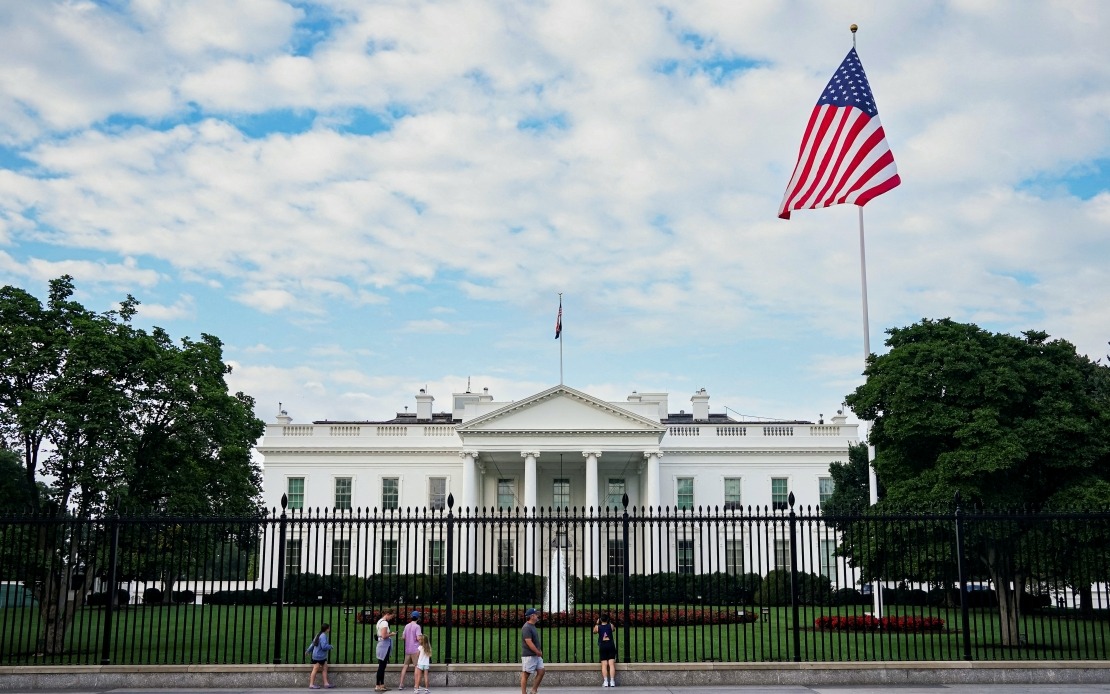
American law enforcement agencies have successfully prevented what officials describe as a coordinated attack targeting a high-profile Ultimate Fighting Championship event held at the White House on Sunday to commemorate President Donald Trump's 80th birthday and the 250th anniversary of the United States. The Federal Bureau of Investigation announced the disruption on Tuesday through a statement by FBI Director Kash Patel, marking a significant security operation that took place over several days leading up to the event.
Authorities became aware of the potential threat on June 10, prompting an immediate coordinated response across multiple law enforcement agencies spanning the National Capital Region. The scope of the investigation quickly expanded beyond initial intelligence, revealing what officials characterised as a sophisticated plot involving individuals positioned outside Washington, D.C. By Monday, five individuals had been taken into custody, though investigators identified a substantially larger network of approximately 23 people suspected of involvement in planning or supporting the alleged attack.
According to details reported by Fox News and cited by law enforcement officials, the alleged scheme involved multiple coordinated components designed to cause maximum disruption and casualty. The primary tactic reportedly centred on deploying explosive-laden drones to strike buildings located near the event venue, with the intention of triggering a mass evacuation. Organisers and security planners feared that such an incident would create chaotic crowd movements that could be exploited for further violence. Intelligence suggested that a sniper team had been pre-positioned in advance to target evacuating crowds, indicating a level of tactical planning that extended beyond spontaneous violence.
The scope of the alleged conspiracy extended even further, with investigators uncovering plans for what they described as a "second wave" of attackers. This secondary phase purportedly involved an armed assault on the White House gates, designed to capitalise on the confusion and security disruption caused by the initial drone and sniper attack. The multi-layered nature of the alleged plot reflects increasing sophistication in how potential threat actors conceptualise large-scale attacks against high-profile US government targets and events.
The White House UFC event itself represented an unprecedented application of the iconic presidential residence as a venue for commercial entertainment. The decision to hold a major cage-fighting spectacle on the South Lawn generated considerable legal and political controversy. Two Virginia residents mounted a formal challenge in federal court, arguing that hosting the event violated established protocols and presented unacceptable security risks. However, a federal judge in the US District Court for the District of Columbia declined to issue a blocking order on Friday, allowing security preparations to continue and the event to proceed as scheduled.
Despite the foiled plot, the event proceeded with approximately 4,000 spectators in attendance on Sunday. The successful security operation ensured that guests and participants could enjoy the spectacle without knowledge of the threat that had been neutralised behind the scenes. This outcome reflects the dual challenge facing US security services: preventing attacks while maintaining operational secrecy to avoid public alarm.
For Malaysian observers, this incident illustrates broader patterns of security concern affecting major democracies and high-profile events worldwide. Malaysia's own experience hosting international sporting and political events requires comparable threat assessment and coordination between multiple security agencies. The detailed nature of the alleged plot—involving drones, explosives, and coordinated teams—represents the type of transnational security challenge that affects nations across different continents and political systems.
The foiled attack must be understood within the context of escalating political violence across the United States. Earlier in April, a man armed with multiple weapons forced his way through a security checkpoint at the White House Correspondents' Dinner and faced charges related to an alleged assassination attempt against the president. These incidents reflect a troubling trajectory of security incidents targeting the highest echelons of American government and associated high-profile gatherings. Each successful interdiction provides law enforcement with tactical intelligence and operational experience, yet the frequency of detected plots raises concerns about the broader security environment.
The investigation's identification of 23 individuals suggests that the conspiracy extended well beyond the five people taken into immediate custody. This larger network likely included people with varying degrees of involvement, ranging from core planners to peripheral supporters or associates. Law enforcement agencies will continue developing cases against these individuals, with charges potentially ranging from conspiracy to violent extremism depending on specific evidence of their involvement and intent.
The successful dismantling of this alleged plot required coordination across federal agencies, including the FBI and multiple law enforcement partners. Such interagency cooperation represents a strength of the American security establishment, though the existence of the threat itself demonstrates ongoing vulnerabilities. The sophistication of the alleged plan—particularly the integration of drone technology with ground-based assault tactics—reflects how evolving technologies create new attack vectors that security services must continuously adapt to counter.
For Southeast Asian governments grappling with their own security challenges, the American experience underscores the importance of proactive threat intelligence gathering, rapid information sharing between agencies, and sustained investment in counter-terrorism capabilities. Malaysia, as a nation hosting significant regional political and commercial events, maintains comparable threat assessment requirements and security coordination mechanisms. The incident also highlights how global security concerns transcend national borders, with potential attack planning often involving networked individuals across multiple jurisdictions.