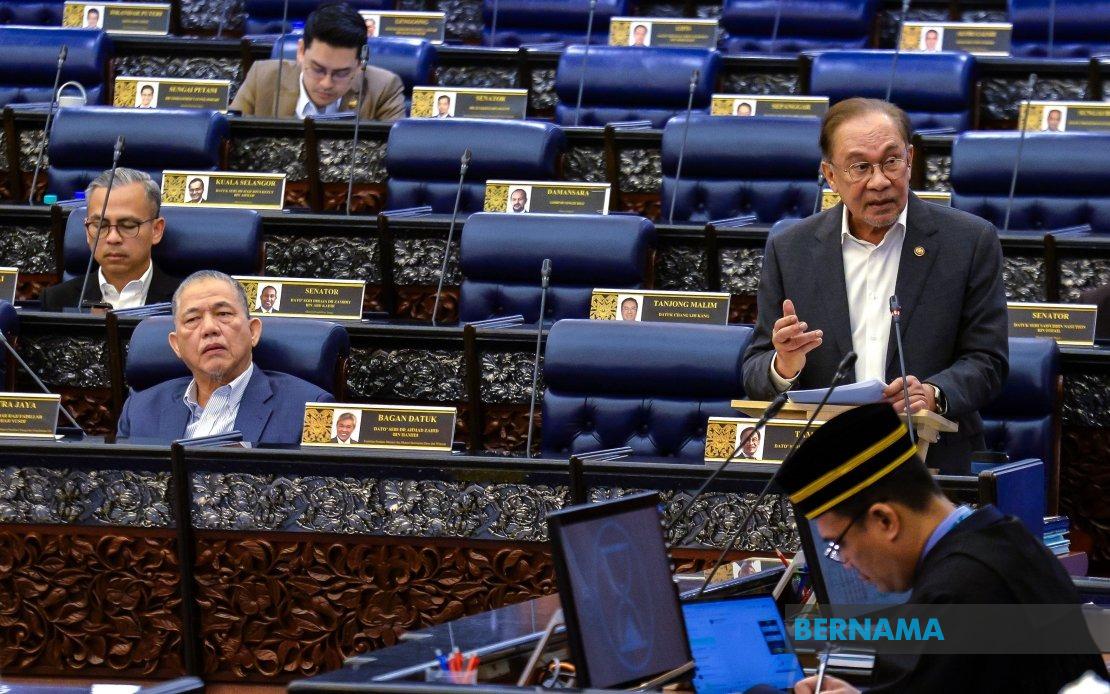
Prime Minister Datuk Seri Anwar Ibrahim moved to settle a longstanding debate over fairness in federal funding distribution, asserting that the allocation formula prioritises state development requirements and population welfare above tax collection records. Speaking during parliamentary questioning in Kuala Lumpur on June 30, he revealed that nearly all states receive more from federal coffers than they contribute through taxation, with only Selangor and Penang generating greater tax revenues than their federal allocations. This framework, Anwar emphasised, represents a deliberate policy choice to address inequality and regional disparities across the nation.
The Prime Minister's intervention came in response to concerns raised in the Dewan Rakyat about whether federal disbursements to state administrations adequately reflect their revenue contributions or adequately support their development agendas. Datuk Seri Doris Sophia Brodi, representing GPS-Sri Aman, questioned whether the allocation system was sufficiently transparent and equitable, particularly whether the MADANI Government had improved transparency in how funds are distributed among states. Her query reflected broader public scrutiny of how federal resources flow to different regions, a perennial source of tension in Malaysian federalism where wealthier states sometimes feel shortchanged in absolute terms while poorer states argue allocation increases remain inadequate.
Anwar explicitly rejected characterisations that certain states face deliberate neglect or marginalisation under the current administration's allocation framework. Instead, he positioned federal spending as a needs-based redistribution mechanism designed to reduce regional development gaps. The government, he explained, conducts assessments of urgent infrastructure and social priorities within each state and calibrates federal disbursements accordingly. This approach assumes that a state generating lower tax revenue often faces greater poverty incidence, inadequate infrastructure, and more acute service delivery challenges, all of which justify higher proportional federal investment.
The Prime Minister detailed several categories of spending that guide allocation decisions across states. Flood mitigation projects feature prominently, reflecting Malaysia's vulnerability to seasonal inundation in many regions. The Pan Borneo highway upgrade represents a long-term infrastructure commitment designed to improve regional connectivity and economic integration across East Malaysia. New road networks, water drainage systems, and sanitation upgrades address fundamental development deficits in less urbanised areas. Poverty eradication programmes and educational facility development also shape the allocation calculus, as these investments directly improve living standards and human capital development in underserved communities.
In comparative terms, Anwar drew attention to increased allocations under the MADANI Government for three states traditionally identified as economically lagging: Kedah, Terengganu, and Kelantan. He asserted that these states have received higher federal funding under the current administration than under previous governments. This claim carries significance given that these three states represent important political constituencies and have historically experienced slower economic growth than coastal peninsular states. By highlighting enhanced allocations to these regions, Anwar sought to demonstrate that the MADANI administration actively directs resources toward addressing regional inequality rather than perpetuating historical imbalances.
The allocation methodology reflects a philosophical tension inherent in federal systems: whether resources should flow according to revenue generation or according to need. Malaysia has long adopted a needs-based approach, recognising that purely revenue-based distribution would concentrate federal resources in already-prosperous areas and perpetuate regional disparities. This principle underpins social policy across developed democracies, though implementation always sparks debate about whether the formula adequately captures need or whether distributional decisions reflect political considerations.
For Malaysian readers and policymakers, the Prime Minister's comments underscore that the federal government views redistribution as a legitimate policy instrument for bridging development gaps between regions. However, the remarks also suggest that tensions persist regarding allocation transparency and whether states perceive their funding levels as commensurate with their needs. States like Perak, Pahang, or Perlis, while receiving more federal funds than their tax contributions would suggest, may still feel that allocations are insufficient relative to their geographic size, population, or infrastructure deficits.
Selangor and Penang's position as net contributors to federal finances rather than net recipients highlights the revenue concentration challenge facing Malaysia's fiscal federalism. These two states generate sufficient economic activity and formal sector employment to produce tax revenues exceeding their federal allocations. Nevertheless, both states require ongoing federal investment in transport, infrastructure, and social services to support their large and growing populations. The fact that even developed states require federal support despite positive revenue balances demonstrates that allocation decisions necessarily involve complex trade-offs between efficiency, equity, and fiscal sustainability.
The parliamentary exchange also reflects evolving political dynamics in Malaysia following recent electoral changes. GPS, the Gabungan Parti Sarawak, represents Sarawak's interests in federal parliament, and Doris Sophia Brodi's question likely reflected regional concerns about whether East Malaysian states receive proportionate development investment. Federal allocation formulas for Sabah and Sarawak have historically incorporated special provisions recognising their constitutional status and geographic isolation, though these provisions remain subjects of negotiation and periodic adjustment.
Looking forward, Anwar's emphasis on needs-based allocation suggests the government will maintain its current distribution framework despite ongoing criticism. The MADANI administration appears committed to justifying allocations through enumeration of specific projects and programmes rather than adopting pure revenue-sharing models. This approach requires sustained investment in demonstrating that federal funds produce tangible improvements in beneficiary states. Transparency regarding allocation criteria and project outcomes will become increasingly important as states and the public demand clearer evidence that federal disbursements translate into improved infrastructure, service delivery, and economic opportunities. The sustainability of this allocation philosophy depends partly on whether developed states accept that federal redistribution serves national cohesion while poorer states perceive allocations as genuinely addressing their development deficits.

