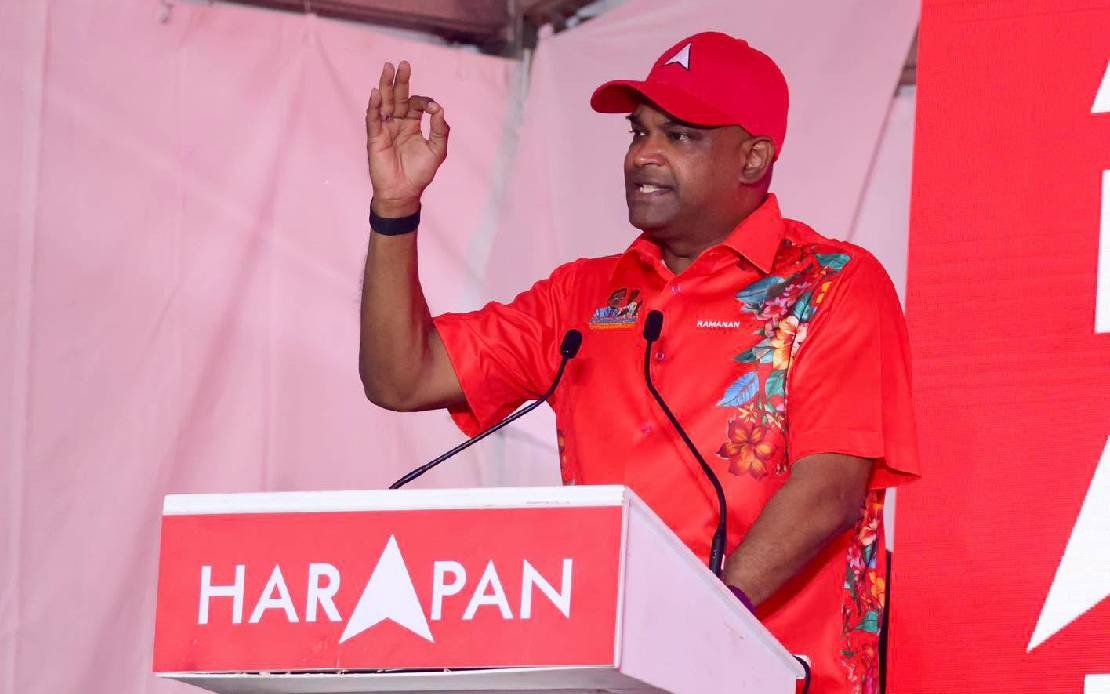
The Federal Government remains steadfast in treating Johor as a cornerstone of its national development agenda, according to senior Pakatan Harapan figures campaigning ahead of the state election scheduled for July 11. Speaking at a roadshow in Simpang Renggam, PKR Vice-President Datuk Seri R Ramanan outlined the government's track record of sustained investment and public support initiatives throughout the state, signalling that the coalition views Johor's prosperity as integral to its broader economic and social objectives.
Ramanan's remarks reflect the high political stakes surrounding Johor, a state that has historically served as an economic engine for Malaysia and maintains considerable influence in national politics. The emphasis on federal backing for state-level development suggests that the ruling coalition is attempting to build voter confidence by demonstrating tangible benefits flowing from alignment between state and federal administrations. The roadshow format itself—part of the "Johor Ke Depan, Undi Harapan" initiative—indicates a coordinated grassroots campaign designed to connect with voters at the community level rather than through traditional mass rallies.
The PKR leader specifically referenced multiple intervention categories: capital investments in businesses and industries, physical infrastructure expansion, and direct assistance schemes targeting households. By grouping these programmes together, Ramanan sought to present a comprehensive narrative of federal engagement rather than fragmented, project-by-project announcements. This framing carries particular weight in Johor, where residents across urban centres like Johor Bahru and smaller towns such as Kluang have experienced uneven development outcomes in recent years, creating expectations that federal resources should flow equitably throughout the state.
Ramanan's call for voter endorsement of Pakatan Harapan in the state election explicitly links electoral outcomes to administrative efficiency. The argument that alignment between state and federal governments accelerates development implementation is a standard feature of Malaysian political discourse, yet it carries practical weight. A state government controlled by the ruling federal coalition can theoretically coordinate more effectively with federal agencies, access central funding mechanisms more readily, and avoid the inter-governmental friction that sometimes characterises states governed by opposition parties. For Johor voters, this proposition presents a choice between consolidated governance and the checks-and-balances dynamic of divided administrations.
The presence of multiple party representatives at the Simpang Renggam event underscores the coalition-building nature of Malaysian electoral politics. Datuk Seri Amirudin Shari representing PKR, Faiz Fadzil from Amanah, and the three state candidates for Machap, Benut, and Layang-Layang constituencies collectively demonstrated that Pakatan Harapan functions as an organized partnership rather than competing individual parties. This unity of message—that the coalition deserves continued or expanded control—represents a deliberate strategy to prevent vote fragmentation and present voters with a clear choice between coalition and opposition.
The timing of this campaign activity, occurring roughly one week before polling, reflects the final phase of electoral mobilisation when parties concentrate resources on persuasion and turnout efforts. The roadshow format, targeting specific constituencies and smaller towns, suggests an attempt to reach voters who may not attend large rallies or follow mainstream media intensively. Simpang Renggam, located in the Labis state constituency, represents the type of semi-rural area where direct engagement can influence voting patterns, particularly among swing voters and those making final electoral decisions.
Johor's political significance extends beyond state-level governance to affect national coalition dynamics. A strong Pakatan Harapan performance would bolster the coalition's standing heading into any potential federal electoral cycle, whilst a disappointing result would raise questions about the coalition's political momentum and appeal to voters in a traditionally competitive state. Conversely, if opposition parties gain ground in Johor, it could signal shifting voter preferences that carry implications for neighbouring states and federal politics more broadly.
The 172 candidates contesting across Johor's state constituencies represent the largest candidate pool in this election cycle, reflecting competitive races in multiple areas. With early voting scheduled for July 7 and election day on July 11, the compressed campaign period places emphasis on high-impact messaging and voter mobilisation infrastructure. Ramanan's emphasis on federal-level support and investment can be understood as an attempt to dominate the policy discussion during these final days, steering voter attention toward economic performance and development delivery rather than other potentially damaging narratives.
For Malaysian voters and observers tracking political trends, Ramanan's statements exemplify how coalition parties frame their electoral pitch during campaign periods. The emphasis on tangible benefits—investments, projects, assistance—rather than ideological positioning reflects the pragmatic nature of Malaysian electoral competition, where voters often prioritise perceived competence and resource delivery. By anchoring his campaign message to concrete federal actions, Ramanan attempted to transform the state election into a referendum on economic management and development outcomes rather than allowing it to become primarily a contest about political personalities or opposition platforms.
The broader context of this campaigning includes ongoing national debates about economic inequality, infrastructure gaps between urban and rural areas, and the distribution of development benefits across different communities. Johor, encompassing wealthy urban zones alongside agricultural and manufacturing regions with lower average incomes, reflects these tensions acutely. Pakatan Harapan's message appears designed to address these disparities by highlighting federal programmes reaching beyond major cities, thereby positioning the coalition as committed to inclusive development rather than concentration of resources in already-prosperous areas.
Looking ahead to July 11, the results will provide significant indicators about voter sentiment regarding federal government performance and the Pakatan Harapan coalition's trajectory. A strong showing in Johor would validate the coalition's claims of federal effectiveness and sustained popular support, whilst weaker results would invite questions about voter satisfaction and the coalition's ability to translate federal-level policies into perceived community benefits. Either outcome will reverberate through subsequent political calculations at both state and national levels.

