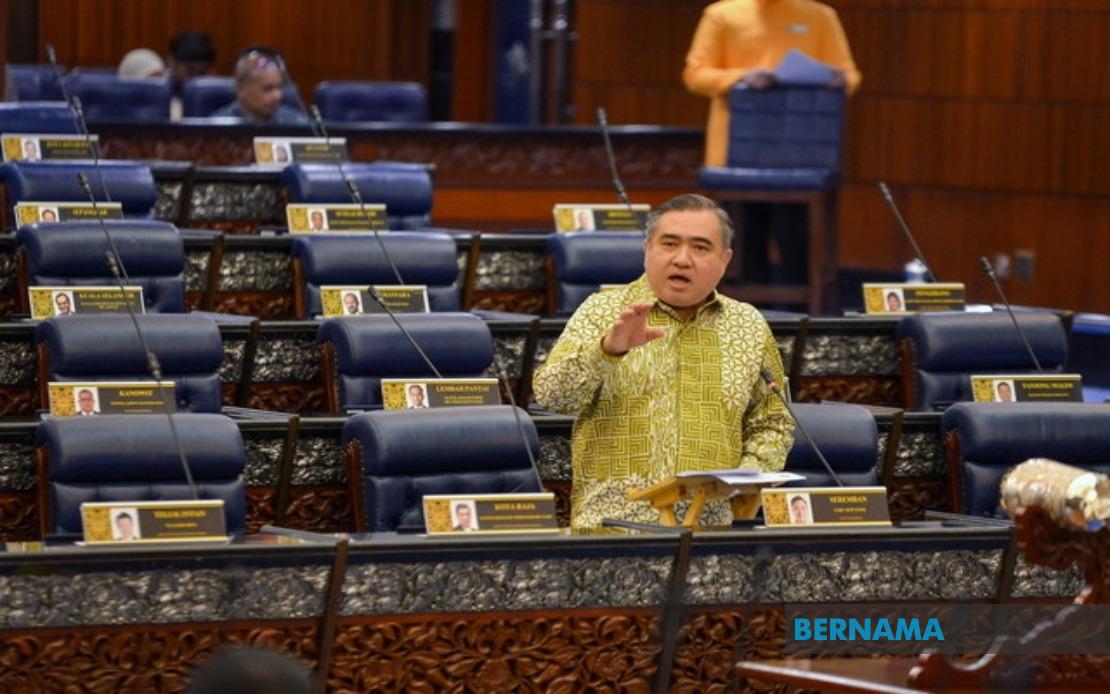
The Federal Government has committed to funding Johor's ambitious Elevated Autonomous Rapid Transit system, Transport Minister Anthony Loke announced in Parliament this week, signalling a significant shift in how Malaysia approaches large-scale urban infrastructure development. The decision comes after detailed feasibility studies revealed that the mega-project cannot sustain itself through private investment alone, requiring direct government intervention to move forward. Loke disclosed the announcement during question-and-answer proceedings in the Dewan Rakyat, responding to queries about implementation timelines and the government's financial commitment to the corridor linking the state's major urban centres.
The E-ART project represents a critical component of Johor's long-term transport strategy, particularly as the state grapples with mounting congestion and rapid urbanisation. The system is designed to provide high-capacity, rapid transit connections across the Johor Bahru metropolitan area, complementing existing rail and bus infrastructure. However, financial negotiations remain ongoing, with officials still determining the precise mechanism through which federal funding will be structured, the actual monetary commitment, and how repayment obligations will be managed during the concession period. These details will be formalised and presented to Cabinet for final approval before the formal Concession Agreement is executed with the selected consortium.
Initially, the appointed private sector consortium was expected to shoulder the project's financing burden independently. However, comprehensive assessment results have since demonstrated that such an arrangement would be financially unworkable, necessitating government co-investment to make the initiative economically sound. This recognition reflects growing realities across Southeast Asia, where ambitious rapid transit systems increasingly require hybrid financing models combining public and private resources. The decision underscores the government's determination to upgrade Johor's transport infrastructure despite budgetary constraints, positioning public investment as essential to regional competitiveness and quality of life improvements.
Construction timelines suggest an aggressive development schedule, with the E-ART expected to be completed within four years from the date the Letter of Acceptance is formally issued. This compressed timeline reflects the urgency surrounding Johor's transport needs, particularly given the imminent opening of the Johor Bahru-Singapore Rapid Transit System Link in January 2027. The Singapore connection will dramatically increase cross-border traffic flows, potentially exacerbating existing congestion bottlenecks unless complementary domestic transit infrastructure is simultaneously expanded. Transport planners recognise that the RTS Link's launch will create a critical window where integrated, seamless connectivity becomes essential for capturing the economic benefits of enhanced regional mobility.
To address anticipated traffic pressures before the E-ART becomes operational, the Transport Ministry and Johor state government have developed a comprehensive traffic dispersal strategy. This multi-modal approach prioritises strengthening existing public transport networks, particularly expanding the BAS.MY service coverage significantly. The enhanced bus service will grow to 28 routes operating 254 vehicles, including newly procured electric buses that align with Malaysia's sustainability commitments. This expansion demonstrates recognition that rapid transit projects cannot succeed in isolation—supporting conventional public transport systems must develop in parallel to create genuine alternatives to private vehicle use.
The Stage Bus Service Transformation programme, now in its second iteration, will dedicate 157 additional buses to high-demand Johor Bahru Sentral and Bukit Chagar routes commencing in early 2027. This timing deliberately precedes E-ART completion, ensuring passengers have viable alternatives during the construction period and immediately after the Singapore RTS Link opens. The coordination between different transport modes reflects sophisticated urban planning that treats transit infrastructure as an integrated ecosystem rather than isolated projects. Such comprehensive planning is increasingly recognised as essential for success in competitive regional markets where transport quality significantly influences investment decisions and talent attraction.
Parallel initiatives include procurement of 12 additional KTM Komuter Southern train sets, which remain pending final approval processes. While awaiting procurement authorisation, the ministry launched the Shuttle Selatan service on June 16, connecting Kulai-Kempas-Johor Bahru and Kempas-Pasir Gudang corridors with daily capacity of 14 trips. This interim solution demonstrates proactive management of transport gaps, providing immediate service improvements to commuters while longer-term projects advance through governmental approval cycles. These shuttle services serve crucial functions beyond mere convenience—they establish travel patterns, build ridership confidence, and provide operational experience that informs permanent system design.
Fare policy represents another critical dimension of the government's transport strategy. Loke confirmed that fares across all public transport projects remain under government control, rejecting market-driven pricing models that would reflect true operational costs. This decision reflects policy prioritisation of affordability and accessibility over commercial viability, accepting that controlled fares necessitate continuous government subsidies. The transport minister acknowledged this inherent tension, noting that fare regulation reduces project competitiveness and competitiveness requires compensatory government funding injections. This philosophical commitment to low-cost public transport represents a deliberate choice to prioritise equity and social accessibility over fiscal efficiency.
For Malaysian readers, these developments carry significant implications extending beyond Johor's immediate transport landscape. The federal government's willingness to fund large-scale infrastructure projects suggests broader policy directions prioritising regional development and addressing congestion in high-growth areas. Johor's experience may establish precedents influencing how future transport projects are financed and implemented across Malaysia. Furthermore, the E-ART's completion will establish benchmarks for autonomous rapid transit technology adoption in the region, potentially influencing similar systems planned or under consideration elsewhere in Southeast Asia. The project demonstrates Malaysia's commitment to technological advancement and infrastructure modernisation.
The infrastructure investments also reflect strategic positioning relative to Singapore, where the RTS Link will create unprecedented connectivity. Enhanced transport within Johor ensures that the state captures maximum economic benefits from cross-border movement, preventing congestion from becoming a competitive disadvantage. Well-coordinated, efficient transport systems attract foreign investment, facilitate talent mobility, and enhance quality of life—all factors increasingly important as regional competition intensifies. Johor's positioning as a gateway to Singapore makes transport infrastructure investment not merely a convenience matter but a strategic economic imperative.
The E-ART project ultimately exemplifies how modern urban development requires sophisticated financing, comprehensive planning, and commitment to public welfare over purely commercial returns. Federal funding represents recognition that some infrastructure projects serve broader social and economic functions transcending private sector profitability thresholds. As Johor implements these transport initiatives, outcomes will be closely monitored by policymakers elsewhere in Malaysia and across the region, establishing crucial lessons regarding autonomous rapid transit viability, financing mechanisms, and integration with complementary transport modes in Southeast Asian contexts.

