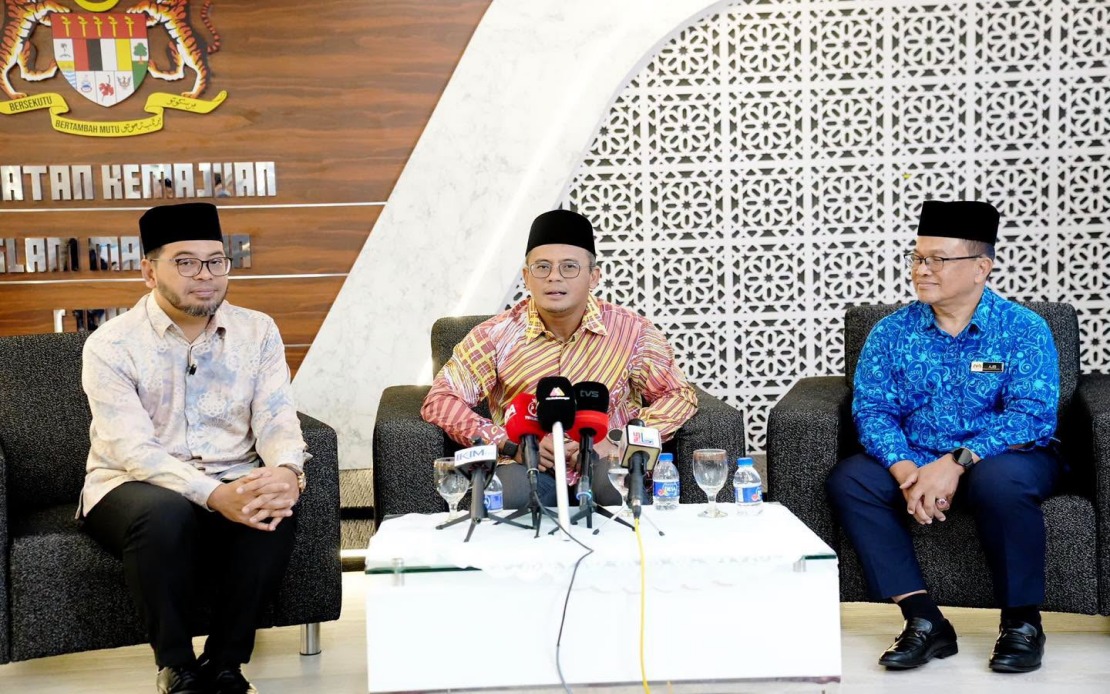
The Festival Turath Islami Selangor has reached a significant milestone by transitioning from a state-level event into a national platform, marking an important step in Malaysia's broader engagement with classical Islamic scholarship and heritage. The fourth edition, now renamed Festival Turath Islami Malaysia (FTIM) 2026, represents a collaborative expansion between the Selangor State Government and the Federal Government through the Prime Minister's Department (Religious Affairs). This elevation reflects growing recognition within Malaysian policy circles that deepening public familiarity with traditional Islamic scholarly works contributes to developing informed, intellectually grounded Muslim communities.
Selangor Menteri Besar Datuk Seri Amirudin Shari announced that the eight-day festival will commence on September 13, with the majority of programmes relocated from the Selangor State Mosque to Putrajaya's Putra Mosque. This venue change carries symbolic weight beyond mere logistics, as it underscores the event's transition from regional to national significance. The choice of Malaysia's administrative capital also signals the Federal Government's commitment to positioning classical Islamic scholarship as a cornerstone of national intellectual and spiritual development. Minister in the Prime Minister's Department (Religious Affairs) Dr Zulkifli Hasan's presence at the media briefing reinforced federal backing for the initiative.
The 2026 festival carries the thematic designation "Hikmah Warisan Islam," centring its programming around Al-Hikam al-Ata'iyyah, an enormously influential classical Sufi text authored by Ibn Ata-illah As-Sakandari. This particular work, which examines concepts of sincerity, trust and the spiritual relationship between the believer and the Divine, holds particular relevance across the Malay-Muslim world. Al-Hikam al-Ata'iyyah has shaped Islamic thought throughout Southeast Asia and remains deeply embedded in traditional Islamic educational systems across the region, making it an intellectually coherent and culturally resonant focal point for a national forum.
The festival's trajectory reveals a deliberate curatorial approach to Islamic heritage. Since its inception in 2023, FTIS has systematically examined canonical Islamic scholarly works, beginning with Imam Al-Ghazali's foundational Ihya' 'Ulumuddin (Revival of the Religious Sciences), progressing through Imam al-Nawawi's Al-Arba'in al-Nawawiyah (Forty Hadith), and continuing with Imam Jalaluddin al-Suyuti's Tafsir al-Jalalain (Quranic commentary). This methodical exploration of different genres and traditions within Islamic scholarly literature demonstrates institutional commitment to comprehensive engagement with Islamic intellectual history rather than selective or narrow focuses.
The scale of academic participation underscores the event's ambitions. FTIM 2026 will convene 23 local and international scholars delivering insights across more than 42 scholarly sessions throughout the eight days. The roster includes Sheikh Dr Ali Jum'ah, a globally recognized Islamic scholar whose works and rulings carry substantial weight within contemporary Islamic discourse. Additionally, participants include Prof Dr Sayyid Idris al-Fasi al-Fihri, Ustaz Dr Adi Hidayat, Ustaz Wadi Annuar and Selangor Mufti Datuk Setia Dr Haji Anhar Haji Opir. This mix of international and domestic expertise creates opportunity for cross-cultural scholarly exchange while maintaining grounding in Malaysian Islamic institutional frameworks.
Beyond formal scholarly sessions, FTIM 2026 encompasses diverse programming formats designed to engage audiences across varying levels of Islamic knowledge and commitment. The schedule includes Kuliah Subuh (dawn lectures), recitations of Dalail al-Khairat (litanies praising the Prophet Muhammad), and intensive five-day Talaqqi Kitab Al-Hikam sessions focused on direct textual study. Complementary programmes encompass Tausiah Perdana (keynote addresses), Qasidah ceremonies featuring classical Islamic devotional poetry, and an Islamic Book Festival. This programmatic diversity acknowledges that intellectual engagement occurs through multiple modalities and that heritage appreciation extends beyond seminar-room discussions into embodied spiritual and cultural practice.
A particularly noteworthy innovation is the inaugural National Muzakarah Ulama Turath, which convenes Islamic scholars from across Malaysia to strengthen intellectual cooperation and develop collective responses to contemporary challenges facing Muslim communities. The muzakarah format, rooted in Islamic jurisprudential tradition, emphasizes collaborative deliberation and consensus-building. By applying this classical methodology to modern questions, FTIM 2026 bridges historical scholarship with present-day relevance, suggesting that engagement with classical texts yields practical insights applicable to current circumstances.
From a broader Southeast Asian perspective, FTIM 2026's expansion to national status reflects regional patterns wherein Islamic heritage and scholarship are increasingly positioned as cultural anchors and intellectual resources. Malaysia's elevation of this festival to federal level sends signals to other ASEAN nations about legitimacy and value attributed to classical Islamic learning within governance frameworks. The event also implicitly addresses global conversations about Islamic modernism and traditionalism by demonstrating that traditional scholarship need not exist in tension with contemporary nation-state institutions and national identity.
The festival's emphasis on particular classical texts also warrants consideration regarding curriculum and knowledge priorities. By situating Al-Hikam al-Ata'iyyah at the festival's centre, organizers highlight Sufi dimensions of Islamic thought at a moment when Sufism occupies contested terrain within global Islamic discourse. Within Malaysian contexts, this deliberate highlighting of Sufi scholarship affirms the spiritual and philosophical dimensions of Islamic tradition as legitimate subjects for serious intellectual engagement, countering narratives that reduce Islam to legalistic or political categories.
For Malaysian participants and observers, FTIM 2026 presents valuable opportunity for engagement with foundational Islamic texts under expert guidance. The expansive eight-day format with 42 scholarly sessions creates genuine possibility for meaningful learning rather than superficial exposure. The international participation also positions Malaysia within global Islamic intellectual networks, suggesting that serious scholarship extends beyond Western academic institutions to encompass robust conversation within traditionally grounded Islamic centers of learning. This positioning carries subtle but significant implications for Malaysia's regional intellectual authority and soft power within Muslim-majority Southeast Asia.

