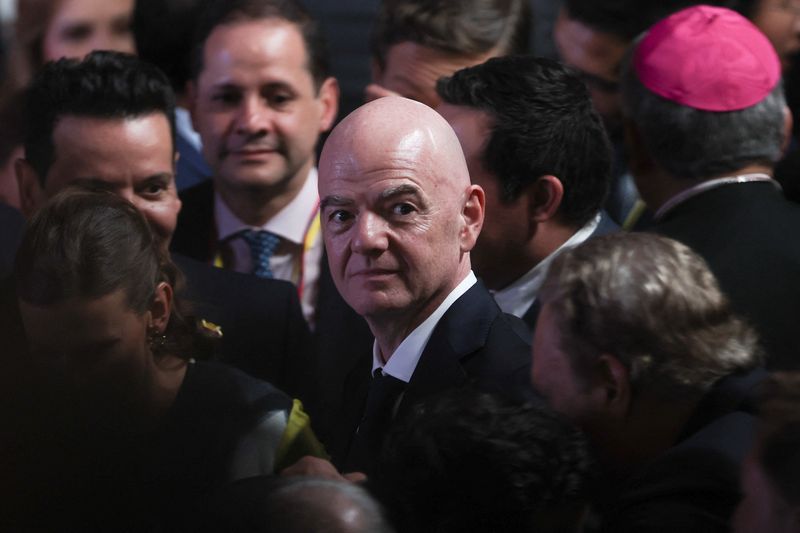
FIFA has thrown its weight firmly behind President Gianni Infantino, issuing a forceful statement on Saturday that warns against what the organisation characterises as a "concerted and ongoing effort" to destabilise his position. The statement underscores growing tension within world football's governing body as it navigates a deepening leadership crisis triggered by the spectacular collapse of an ambitious commercial strategy that would have generated roughly $4.2 billion through the sale of World Cup broadcasting and tournament rights.
The proposal's failure has unleashed a torrent of criticism from multiple directions within global football. UEFA, the European confederation, has formally withdrawn its confidence in Infantino, whilst numerous national associations and senior FIFA insiders have begun questioning whether he can effectively lead the organisation. The backlash prompted an emergency gathering in Morocco this week where FIFA's upper echelon sought to contain the damage by publicly reaffirming their collective backing for the embattled president, even as they acknowledged serious missteps in how the monetisation initiative was conceived and executed.
FIFA's Saturday statement represents a defensive posture adopted by an organisation seeking to project unity whilst internal divisions widen. The statement does not name specific individuals or organisations attempting to challenge Infantino's authority, nor does it detail precisely which media reports or allegations it considers problematic. This calculated ambiguity suggests FIFA's communications strategy aims at delegitimising all opposition collectively rather than engaging substantive criticisms point by point.
The timing of FIFA's statement follows investigative reporting from The Daily Telegraph concerning financial payments UEFA made to a former staff member during Infantino's tenure as the European body's general secretary. Infantino has categorically denied any wrongdoing in relation to these payments, and FIFA has formally rejected the allegations as baseless. The emergence of these historical claims has provided ammunition for those questioning the president's suitability for continued leadership.
In its statement, FIFA argued that detractors "do not have the support of FIFA's Member Associations" and therefore resort to "allegation, insinuation or misinformation" rather than pursuing challenges through established institutional channels. This framing positions Infantino's opponents as acting outside legitimate democratic frameworks, suggesting they lack the numerical support required to mount a credible formal challenge. FIFA further committed to aggressively contesting what it labels "unsubstantiated assertions and demonstrably false claims," vowing to challenge inaccurate or misleading reports "directly and vigorously".
The governance row carries particular significance for Infantino's ambitions regarding the presidential election scheduled for the FIFA Congress in Morocco in March. A fourth consecutive term would cement his status as one of football's most consequential administrators, yet the current turbulence has created unprecedented vulnerability at a critical juncture. No heavyweight challenger has yet declared candidacy, though the deteriorating leadership climate has created space for potential rivals to emerge before nomination deadlines.
Support for Infantino remains geographically uneven, revealing fault lines within global football's power structure. Europe's football establishment has largely turned against him, with UEFA's institutional rejection joined by individual voices like Norwegian Football Federation President Lise Klaveness, who publicly called for his resignation on Friday, arguing that institutional trust essential to effective governance has fundamentally eroded. Yet in the Global South, Infantino continues commanding substantial backing. The Confederation of African Football unanimously endorsed his leadership on Thursday, whilst South America's CONMEBOL federation explicitly rejected any ouster mechanism that circumvents a full membership vote.
Mexico's football federation (FMF) similarly declared support for Infantino despite regional tensions, with the federation insisting it "will neither recognise nor approve any process convened outside of that institutional framework." This statement represents a rebuke to its own confederation, CONCACAF, which had previously called for "comprehensive reckoning" with Infantino's presidency. The divergence between regional confederations and individual national associations illustrates the complex coalitions shaping this dispute.
The failed commercial initiative at the heart of this crisis reflects deeper structural tensions within FIFA. The proposal attempted to monetise World Cup rights in novel ways to generate revenue for member associations and development programmes, yet it triggered alarm among traditional stakeholders invested in current commercial arrangements. The hasty presentation and subsequent botched rollout raised questions about Infantino's consultation practices and his willingness to properly socialise transformative proposals before implementation.
FIFA's Morocco meeting on Wednesday represented an attempt at damage control that simultaneously acknowledged institutional failings whilst rallying the leadership ranks. Officials apologised to the 211 member associations for mishandling the proposal's introduction, effectively conceding that presentation and process failures had contributed to the initiative's rejection. Yet this mea culpa was coupled with unequivocal reaffirmation of presidential support, signalling that whilst execution warranted criticism, Infantino's fundamental position remained secure among FIFA's power brokers.
The broader implications for Southeast Asian football should not be overlooked. The region's national associations maintain voting power within FIFA's democratic structures, making their positioning during any future presidential contest potentially decisive. The current crisis provides an opportunity for regional confederations to reassess their priorities and influence within global football governance, particularly regarding how World Cup revenues and development funding are structured and allocated.
Infantino's ability to weather this particular storm likely depends on whether additional damaging revelations emerge or whether a credible challenger with sufficient international backing formally declares candidacy. For now, his coalition of African and South American support, combined with backing from key Asian and North American associations, provides a numerical foundation potentially sufficient to secure re-election. Nevertheless, the current climate of distrust represents an unprecedented challenge to his authority and sets the stage for a contentious electoral contest.

