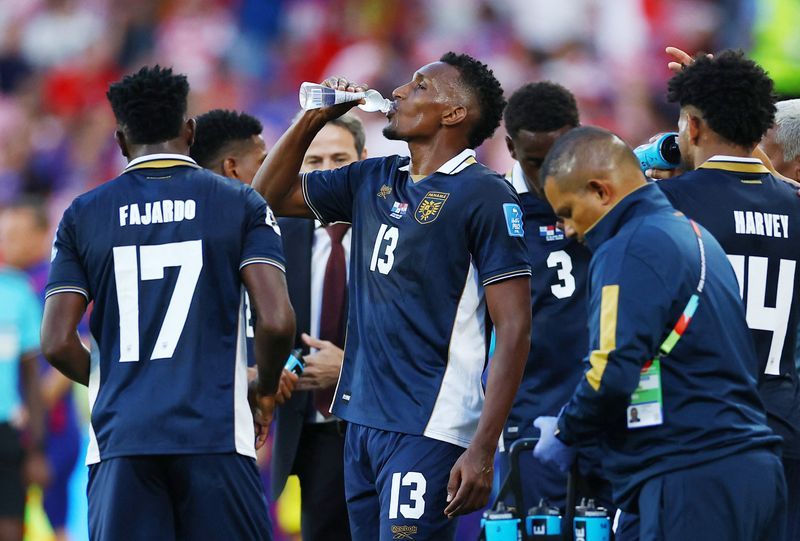
FIFA president Gianni Infantino has pushed back against mounting criticism of the mandatory hydration breaks introduced at the World Cup, firmly rejecting suggestions that the controversial stoppages are motivated by television advertising revenue or commercial interests. Instead, the football governing body's chief has framed the three-minute interruptions as a necessary sporting measure designed to protect player welfare in challenging climate conditions across North America.
The hydration breaks, mandated at the 22nd and 67th minutes of every match during the tournament, have proven divisive since matches began. While FIFA positions them as a health and safety initiative, critics ranging from elite coaches to casual observers have questioned their implementation, citing concerns about disrupting the natural flow and rhythm of matches that define football at its highest level.
Infantino has been direct in addressing speculation about financial motivation. "There is no additional revenue for FIFA, as all commercial agreements were signed well in advance," he stated on Wednesday. "So, this is not a financial issue for us. For us, it is purely a sporting matter." The clarification is significant given that broadcasters have indeed capitalized on these breaks by inserting advertising content during the stoppages, creating the perception of commercial exploitation alongside the stated health rationale.
Yet the breaks have introduced a tactical dimension that fundamentally alters how matches unfold. During these pauses, coaching staff can provide fresh in-game instructions and make strategic adjustments in real time, effectively granting additional opportunities for tactical intervention compared to the traditional structure of football. This possibility has prompted serious objections from prominent figures in the sport who worry about the game's integrity.
England manager Thomas Tuchel articulated this concern succinctly, arguing that the additional break "interrupts and changes the identity of the football match." Uruguay's Marcelo Bielsa went further philosophically, contending that dividing matches into shorter, artificially segmented periods strips away what he considers the fundamental character of football—a continuous test of endurance, concentration, and adaptability. These critiques reflect a deeper anxiety about altering the sport's essential nature.
Yet support for the underlying principle exists within the coaching community, albeit with reservations about blanket application. Spain coach Luis de la Fuente and Netherlands captain Virgil van Dijk have acknowledged the legitimate concern for player safety in extreme heat conditions. However, both have questioned whether such breaks remain necessary in cooler climates or at venues with climate-controlled conditions, suggesting the rule may be applied too broadly without proper contextual consideration.
Infantino's justification emphasizes the extraordinary demands of the World Cup schedule itself. "The main reason is the heat, but we also have to understand that in a competition like the World Cup, played over 39 days, with teams potentially playing eight matches in those 39 days, having a moment to rest is extremely important," he explained. This perspective highlights the cumulative physical toll of competing at elite intensity over compressed timeframes, where recovery becomes increasingly difficult as the tournament progresses.
A secondary argument Infantino advances concerns competitive equity. He stressed that FIFA's priority is ensuring "all teams, in every match, are playing under the same conditions." The logic here is that without mandatory breaks, teams in hotter stadiums would face different circumstances than those playing in cooler venues, potentially creating unfair advantages or disadvantages based on scheduling luck rather than footballing merit. This competitive fairness rationale appeals to principles of equitable tournament administration.
Moreover, Infantino countered assertions that the breaks diminish match quality or player intensity. The FIFA president contended that evidence from matches played under this format suggests players have maintained competitive performance levels throughout games, indicating that the stoppages do not noticeably degrade the standard of football or physical exertion on display. Whether this claim withstands broader scrutiny remains contested among analysts and observers.
For Malaysian and regional readers, this debate carries broader implications for how international football governance balances player welfare, commercial interests, and sporting tradition. As climate change pushes temperatures higher globally, similar interventions may become standard across international competitions, potentially reshaping how the game is played at its most prestigious levels. The World Cup precedent could influence Asian football confederations and domestic leagues throughout Southeast Asia as they contend with increasing heat stress on athletes.
The controversy also illustrates tensions inherent in modern sports administration, where financial imperatives, health considerations, and athletic integrity sometimes pull in different directions. FIFA's insistence that commercial arrangements were finalized before the breaks were introduced may be factually accurate, yet the perception of opportunistic advertising placement during pauses remains difficult to completely separate from public perception. How governing bodies communicate and implement such changes shapes trust and acceptance among stakeholders ranging from players to supporters.
Ultimately, the hydration break debate encapsulates broader questions about sports evolution in the modern era. As football becomes increasingly professionalized and commercialized, decisions affecting how matches are structured and played face heightened scrutiny from multiple constituencies. Whether FIFA's sporting rationale will ultimately prevail in changing the minds of skeptical coaches and fans remains uncertain, though the breaks have already become permanent fixtures of this World Cup's narrative.

