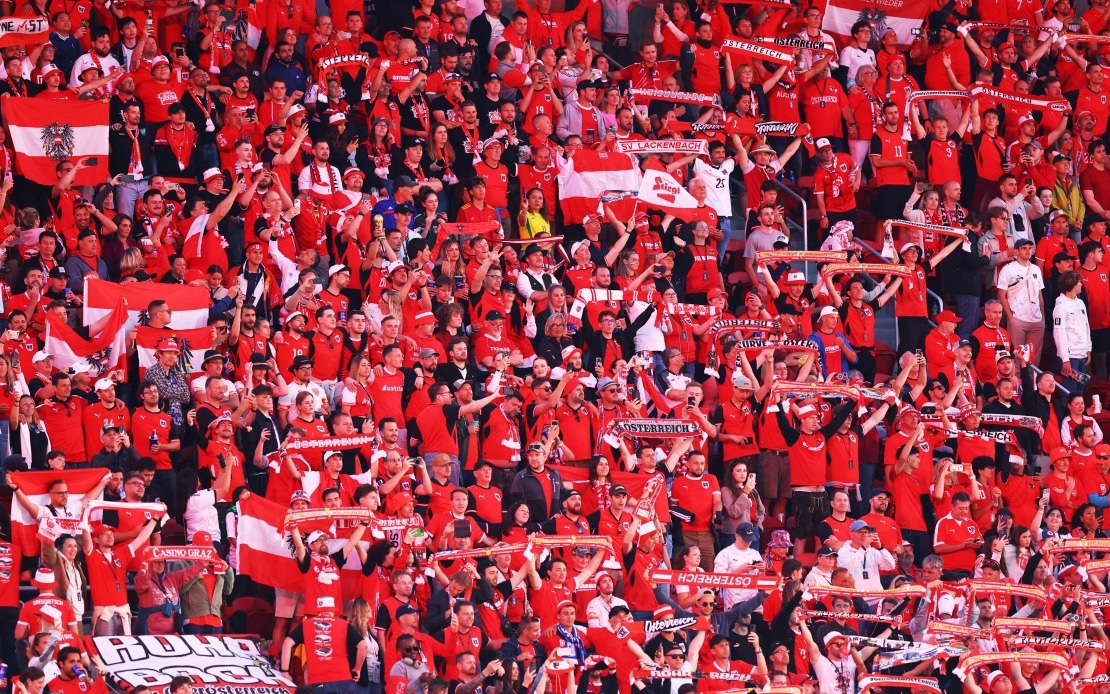
Football's governing body FIFA has declared the opening phase of the World Cup a commercial and attendance success, with official figures showing that over 1.02 million spectators filled stadiums for the opening 16 matches across North American venues. The announcement appears designed to counter scepticism about whether elevated ticket pricing would dampen public enthusiasm for sport's premier competition, a concern that had dominated pre-tournament discussion among fans and media commentators throughout the lead-up to the finals.
The aggregate attendance figure of 1,028,429 supporters through the opening fortnight represents a substantial vote of confidence in the tournament's accessibility, with FIFA proudly noting that venues operated at 99.34 per cent capacity. This near-complete stadium utilisation stands as a striking rebuttal to earlier predictions that fans would stay away in protest at what many perceived as exorbitant seat prices. The statistical achievement also underscores the genuine appetite for World Cup football among North American audiences, a demographic the sport has invested considerable effort in cultivating over recent decades.
Yet the narrative of unblemished success masks underlying complications that emerged during those opening fortnight matches. Spectators observing fixtures including South Korea against the Czech Republic in Guadalajara and Qatar facing Switzerland in the San Francisco Bay Area could plainly see substantial sections of empty seating, visual evidence that contradicted the optimistic messaging emanating from FIFA headquarters. These conspicuous vacant rows in otherwise modern stadiums raised legitimate questions about whether the attendance figures, while numerically impressive, told the complete story about distribution of supporters across different matches and venues.
FIFA president Gianni Infantino moved swiftly to personalise the attendance milestone, sharing a photograph on Instagram featuring himself alongside Aaron Bren, recognised as the one millionth attending supporter. This symbolic gesture reflected the governing body's desire to frame the attendance achievement as a celebration involving ordinary fans rather than merely an abstract statistical accomplishment. In his accompanying statement, Infantino expressed gratitude to supporters, characterising their presence as instrumental in bringing to life what he described as the tournament's inclusive nature, language designed to address recurring criticism about whether the World Cup remains accessible to ordinary spectators.
Parallel to FIFA's celebratory announcements, however, security and safety advocates raised alarm about structural vulnerabilities in how the tournament had been organised. Football Supporters Europe, a pan-European supporters' rights organisation, issued a formal warning regarding what it identified as dangerous gaps in fan segregation protocols at venues across the tournament. Ronan Evain, the organisation's executive director, articulated concerns to BBC Sport that the absence of traditional segregation measures between opposing supporters represented an abnormal departure from established tournament practice at previous World Cups.
Evain's critique extended beyond mere observation of physical separation failures. He identified what he termed a fundamental knowledge deficit at FIFA, suggesting the governing body lacked reliable intelligence about which supporters held tickets to specific sections, a situation he attributed directly to FIFA's aggressive promotion of secondary ticket markets and resales. This mechanism, while potentially expanding access for certain demographic groups, had simultaneously created opacity about supporter distribution across stadiums—a situation that Evain characterised as creating heightened risk of uncontrolled mixing between rival fanbases.
The security implications of this arrangement should not be understated for Southeast Asian stakeholders and observers. Malaysia and other regional nations have experienced periodic football-related incidents stemming from inadequate crowd management and insufficient segregation of opposing supporters. The World Cup's struggles with these fundamental organisational elements provide cautionary lessons about how even high-profile tournaments with substantial resources can inadvertently create conditions for crowd-related incidents if segregation protocols are compromised in pursuit of ticket sales maximisation.
FIFA's response to segregation concerns leaned heavily on asserting that the most committed supporters from participating nations received priority access through the 'participant member association' allocation system. Under this arrangement, official supporter contingents from competing countries received ringfenced ticket blocks, theoretically ensuring their geographical concentration within stadiums. However, this mechanism's effectiveness depends entirely on how successfully it operates in practice, and critics like Evain suggested that the secondary market dynamics had substantially undermined whatever segregation advantages the PMA system was designed to create.
The divergence between FIFA's attendance statistics and fan safety advocates' security warnings highlights a fundamental tension in modern World Cup administration. While governing bodies prioritise generating maximum ticket revenue and achieving full stadium capacity figures for publicity purposes, on-ground operational realities—particularly crowd management, supporter segregation, and safety infrastructure—demand equally rigorous attention. The World Cup's opening fortnight demonstrated this tension acutely, with impressive aggregate numbers masking genuine concerns about spectator protection.
For Malaysian football followers and regional observers, the World Cup's handling of attendance and segregation issues carries relevance beyond mere curiosity. As Southeast Asian nations occasionally host continental tournaments and contemplate larger international fixtures, the structural lessons from this competition prove instructive. The apparent conflict between maximising ticket accessibility through secondary markets and maintaining orderly, segregated crowd environments suggests that tournament organisers must make explicit choices about prioritising either revenue maximisation or safety assurance, as simultaneously achieving both appears increasingly challenging.
The coming weeks would determine whether FIFA's initial attendance figures, while statistically impressive, translate into sustained public engagement with the tournament or whether the security concerns raised by supporters' advocates materialise into more serious incidents. For now, the governing body has successfully claimed an attendance victory, though whether that victory encompasses genuine success across all relevant dimensions—commercial, logistical, and security-related—remains an open question that subsequent tournament analysis will address.