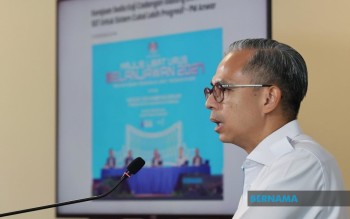
The government has signalled its intention to proceed methodically rather than rashly with exploring a combined taxation framework that would blend components of the Goods and Services Tax with the existing Sales and Services Tax regime. Finance Minister II Datuk Seri Amir Hamzah Azizan will lead this examination, according to MADANI Government spokesperson Datuk Seri Fahmi Fadzil, who noted during a post-Cabinet press conference in Putrajaya that sufficient time would be allocated for a thorough assessment before any proposals reach ministerial consideration.
The deliberate pace reflects the complexity of what would represent a significant restructuring of Malaysia's tax architecture. Fahmi, who serves as both Communications Minister and spokesman, acknowledged that this initiative cannot be rushed through without proper groundwork, particularly given the lessons drawn from the controversial 2015 implementation of the GST under the previous administration and complications that have emerged with the current SST framework. This cautious approach suggests policymakers are acutely aware of public sentiment regarding taxation changes and the political ramifications of past reform efforts.
Prime Minister Datuk Seri Anwar Ibrahim has directed the Finance Ministry to undertake what Fahmi characterised as a comprehensive study into the feasibility of such a hybrid model. The stated objective is to develop a more progressive taxation system that better serves Malaysia's economic and social objectives. The mandate appears designed to move beyond theoretical discussion toward concrete policy options that can be evaluated on their merits and presented with supporting analysis.
The proposal itself represents a significant philosophical shift from the current approach. Rather than maintaining the SST as an exclusively standalone system or reverting to a pure GST model, the government appears to be exploring whether selectively adopting certain GST mechanisms alongside the SST's existing framework could yield superior results. This middle-ground position reflects the political reality that a full GST reintroduction would be extremely contentious given public and political opposition, while acknowledging that the current SST system has limitations that might be addressed through targeted reforms.
Anwar indicated yesterday that Malaysia would retain SST as its core taxation system, providing reassurance to those concerned about a wholesale return to the GST that was repealed in 2018 following significant public criticism. However, his statement that the government would explore incorporating certain GST features suggests a recognition that the current system has room for improvement in terms of compliance, administration, or progressivity. The distinction between fully adopting GST and selectively borrowing its mechanisms represents a pragmatic middle position.
For Malaysian business and consumers, the implications of this review could be substantial. The SST system, while simpler to understand than GST, has been criticised for potential inequities and implementation challenges. Conversely, GST was widely perceived as regressive and burdensome, particularly on lower-income households. A hybrid approach would theoretically aim to combine SST's relative simplicity with GST's potential for greater equity, though designing such a system presents considerable technical and political challenges.
The study now underway must grapple with competing objectives. Any taxation system must balance revenue requirements for government services against economic competitiveness and taxpayer compliance. It must be administrable by the Inland Revenue Board without excessive costs while providing clear rules for businesses and individual taxpayers. Additionally, it must be perceived as fair, particularly in terms of distributional effects across income levels and economic sectors. These competing demands explain why careful analysis rather than hasty implementation is essential.
The timing of any announcement remains uncertain, with Fahmi noting that no specific deadline was discussed during Cabinet deliberations and that whether findings would coincide with the budget presentation was not determined. This suggests the government wishes to avoid artificial time pressures that might compromise the quality of analysis. Nevertheless, the upcoming federal budget would provide a natural platform for communicating any significant taxation policy shifts, making that a likely venue if the study progresses sufficiently.
Regionally, Malaysia's approach carries significance. Several Southeast Asian economies have grappled with similar questions about optimal consumption tax design, and any successful hybrid model Malaysia develops could offer lessons for neighbours. Conversely, if the initiative falters or yields disappointing results, it may influence how other nations approach tax reform. The experience of implementing, then repealing, the GST provides valuable lessons about the importance of public communication, gradual transition periods, and careful attention to distributional consequences.
The structure of governance surrounding this review reflects broader trends in Malaysian policymaking toward inclusive, consultative approaches. That Finance Minister II Amir Hamzah has been tasked with leading the work suggests the government intends serious, substantive analysis rather than symbolic gestures. His ministry will presumably consult with the Inland Revenue Board, business associations, consumer groups, and international tax experts to build a comprehensive evidence base.
For taxpayers and businesses awaiting clarity on Malaysia's medium-term tax direction, this announcement indicates decisions are under active consideration but will not materialise imminently. The government's willingness to study the question seriously, rather than dismissing it or rushing into implementation, suggests taxation policy is being treated as a substantive policy challenge requiring evidence-based decision-making rather than political theatre.
Ultimately, the success of whatever framework eventually emerges will depend not only on technical design but also on transparent communication about its rationale and how it addresses limitations in the current system. The Finance Ministry's now-underway assessment provides opportunity to build that evidence base and prepare the groundwork for informed public discussion about Malaysia's taxation future.

