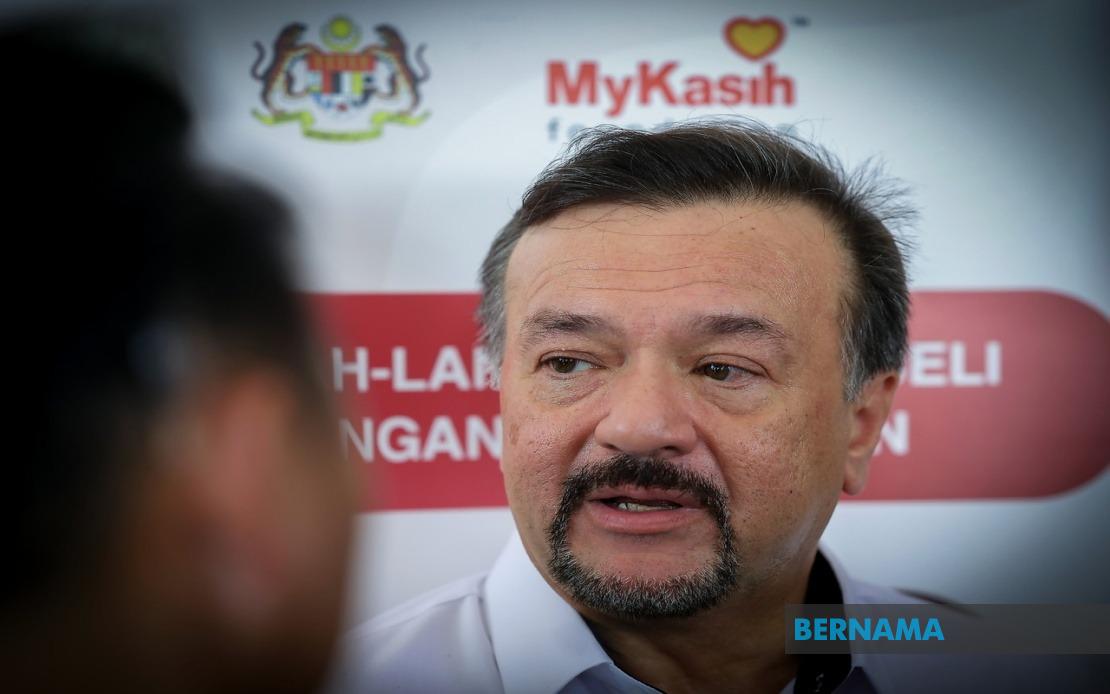
The Malaysian government is prepared to entertain proposals aimed at strengthening the BUDI MADANI Diesel subsidy scheme, according to Finance Minister II Datuk Seri Amir Hamzah Azizan. Speaking at a media briefing in Kuching on June 24, he emphasized that any modifications to the programme, including potential quota increases, would be grounded in concrete usage statistics rather than speculative demands. This flexible stance signals the government's commitment to managing fuel subsidy schemes in a way that responds to demonstrable consumer needs rather than blanket policy adjustments.
When Malaysia introduced the targeted RON95 petrol subsidy, critics initially questioned whether the allocated quotas were sufficient to meet driver demand across the nation. However, Amir Hamzah noted that data collected during the first five months of this year tells a different story. Analysis from January through May revealed that merely 0.76 per cent of programme participants exceeded the 200-litre monthly consumption threshold. This modest overage rate suggests the current quota structure accommodates the vast majority of users, undermining earlier concerns about systemic insufficiency.
The Finance Minister's comments reflect a methodical approach to subsidy administration that prioritizes empirical evidence over reactive policy-making. Rather than rushing to expand quotas in response to vocal complaints, the government intends to allow the BUDI Diesel system to operate for a full evaluation period before contemplating significant structural changes. This measured strategy reduces the risk of over-correcting to isolated cases of high consumption and prevents unnecessary fiscal drain on the national budget.
The government's willingness to revisit the programme demonstrates lessons learned from previous targeted subsidy initiatives. The e-hailing sector provides an instructive precedent. When ride-sharing services were first brought into Malaysia's targeted fuel subsidy framework, drivers reported that their allocated quotas fell short of operational requirements. Rather than dismissing such feedback, the government investigated consumption patterns recorded by participating ride-hailing companies, allowing the Ministry to distinguish between genuine systemic gaps and outlier cases.
Based on that analysis, the e-hailing subsidy structure evolved into a tiered system offering drivers a choice between two quota levels: 600 litres or 800 litres monthly. Drivers with higher fuel consumption patterns could qualify for the elevated allocation, creating a more nuanced programme that acknowledged operational diversity within the sector while maintaining overall subsidy discipline. This precedent directly informs how the government plans to manage the BUDI Diesel programme going forward.
Amir Hamzah's remarks underscore an important shift in Malaysian fiscal management: the recognition that one-size-fits-all subsidy policies often fail to account for legitimate variations in consumer usage across different demographics and use cases. Commercial drivers, for instance, face inherently different fuel demands than private motorists. A programme architecture that permits adjustments based on documented consumption patterns allows policymakers to target resources more efficiently while maintaining equity.
The BUDI Diesel initiative represents a continuation of the government's broader subsidy rationalization agenda, which seeks to replace universal fuel price controls with means-tested or usage-adjusted support mechanisms. This transition reflects global best practices in subsidy reform, wherein governments increasingly recognize that protecting low-income households requires sophisticated targeting rather than blanket price caps that benefit all consumers indiscriminately.
For Malaysian consumers and businesses reliant on diesel fuel, Amir Hamzah's openness to programme refinement provides some reassurance that legitimate concerns will receive serious consideration. However, the emphasis on data-driven decision-making means that anecdotal complaints or hypothetical scenarios are unlikely to trigger immediate policy shifts. Those who believe current quotas are inadequate would need to demonstrate consistent, measurable evidence of insufficiency across a meaningful portion of the user base.
The presence of Works Minister Datuk Seri Alexander Nanta Linggi at the Kuching briefing signals multi-agency coordination on subsidy implementation, suggesting that frontline government departments are engaged in monitoring programme effectiveness. This administrative oversight strengthens the government's capacity to identify genuine operational problems that might not emerge from consumption data alone, such as administrative bottlenecks or geographic disparities in fuel availability that could indirectly constrain quota usage.
Looking ahead, the BUDI Diesel programme's evolution will likely depend on how consumption patterns develop over subsequent months. Should usage data by mid-year reveal that quota inadequacy is affecting a meaningful segment of drivers, the government has explicitly signaled flexibility to revisit quota allocations. Conversely, if the current structure continues to accommodate the overwhelming majority of users, further expansion may prove unjustifiable from a budgetary perspective. This iterative, evidence-based approach represents a more fiscally sustainable model of subsidy governance than reactive quota increases driven by political pressure.
For the broader Southeast Asian context, Malaysia's refinement of subsidy targeting mechanisms carries regional relevance. Many developing economies in the region struggle to balance social welfare objectives with fiscal sustainability, often defaulting to universal price controls that distort markets and drain government revenues. Malaysia's demonstrated willingness to combine targeted support with systematic review processes offers a potential model for policymakers elsewhere grappling with similar tensions between protecting vulnerable populations and maintaining macroeconomic stability.

