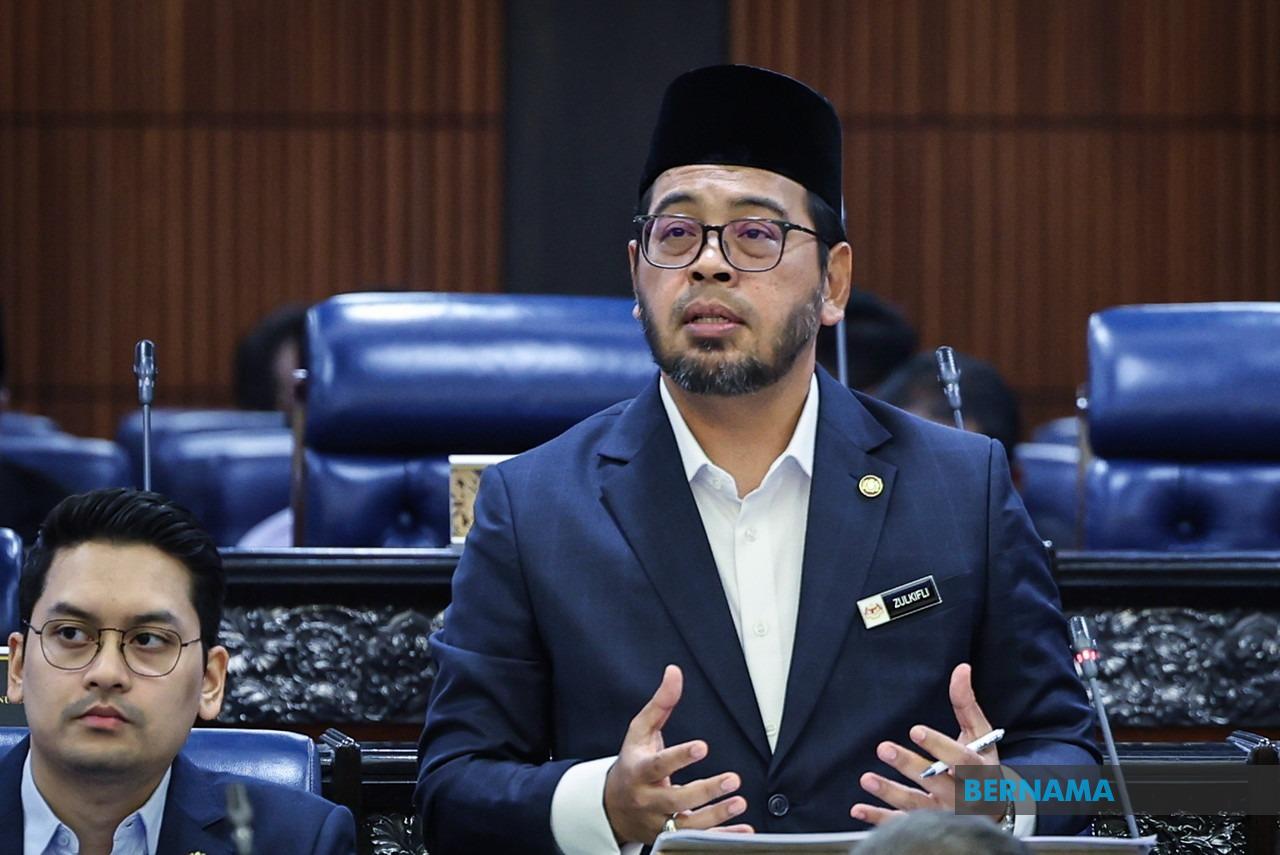
Dr Zulkifli Hasan, Malaysia's Minister in the Prime Minister's Department (Religious Affairs), has provided damning evidence of systematic financial manipulation at Lembaga Tabung Haji (TH), using an evocative analogy to illustrate how the pilgrimage fund deceived depositors about its true financial health. During parliamentary debate following a ministerial briefing on the Royal Commission of Inquiry (RCI) report into TH's affairs, Zulkifli employed the story of a fictional single mother named Mak Cik Senah to expose the mechanics of the fraud, comparing the fund's practices to Ponzi schemes and notorious financial scams that have plagued Malaysian society.
The minister's analogy cuts to the heart of the scandal: while TH appeared to deliver impressive returns to depositors through substantial dividend distributions, the underlying financial position remained deeply troubled. Zulkifli explained that the fund's managers violated fundamental principles of financial law by paying dividends despite the fund's assets being smaller than its total liabilities and obligations. Under Malaysian corporate governance standards, dividends can only legally be distributed when a fund's assets substantially exceed all debts and obligations—a requirement TH systematically breached throughout the period under investigation.
The mechanism of deception involved inflating asset valuations on paper to create an illusion of profitability and financial strength. Rather than allowing genuine market conditions to determine asset values, TH's management employed what Zulkifli described as creative accounting practices that violated Malaysian Financial Reporting Standards (MFRS) and fundamentally misrepresented the fund's position. The RCI discovered that the fund was essentially paying dividends using what amounts to "invisible money"—funds that existed only in doctored financial statements, not in actual reserves. This practice echoes the mechanics of classic pyramid schemes where early investors receive returns generated not by genuine profits but by new money from subsequent investors.
A particularly revealing finding involved Realisable Asset Value (RAV) calculations conducted outside TH's audited financial statements. By valuing assets through this external mechanism, the fund could present inflated figures in official reports without subjecting these valuations to rigorous independent audit scrutiny. The extent of this manipulation became clear when auditors from PricewaterhouseCoopers (PwC) discovered that of the RM4.6 billion in assets TH claimed to possess, only RM556 million had undergone professional independent valuation. This means approximately 88 percent of the fund's stated asset base lacked proper third-party verification, existing largely as theoretical values on spreadsheets rather than confirmed holdings.
Zulkifli took care to clarify confusion surrounding the role of other audit firms in TH's financial reporting. Ernst & Young, he noted, was not TH's auditor and played no role in asset valuation. Instead, Ernst & Young was merely asked to review pro forma statements that TH had already prepared—essentially validating figures that management had already chosen rather than independently determining asset values from first principles. This arrangement allowed TH to cite external audit involvement while avoiding the rigorous independent scrutiny that would normally characterize proper financial oversight. The PwC 2018 report became the crucial document confirming that the manipulation had occurred, providing forensic evidence of how the fund's leadership had systematically breached its legal obligations.
The RCI's investigation revealed that profit distributions declared before 2018 violated the fundamental requirements of the Tabung Haji Act, which explicitly prohibits dividend payments when a fund's total assets do not exceed its liabilities. Rather than face this legal constraint, TH's management simply manipulated the numbers, changed impairment policies, and deployed accounting methodologies designed specifically to make insolvent financial positions appear profitable. These were not honest errors or differences of opinion about accounting standards; they represented calculated violations of law designed to sustain the appearance of financial health while the fund hemorrhaged value beneath the surface.
The consequences of this systematic deception became catastrophic for Malaysian depositors and taxpayers alike. Zulkifli emphasized that the widening deficit between assets and liabilities—a gap artificially concealed by creative accounting—directly endangered the long-term financial sustainability of TH for future generations of pilgrims and savers. By distributing profits while actually operating at a loss, TH depleted its reserves faster than any legitimate business could survive. The government ultimately had no choice but to inject more than RM10 billion to prevent the institution's complete collapse, effectively using taxpayer money to bail out an organization that had been brought to financial ruin through systematic misconduct by its management.
The minister's invocation of the Mak Cik Senah analogy carries particular resonance for Malaysian audiences familiar with local financial fraud narratives. By comparing TH's practices to Skim Pak Man Telo—a notorious financial scam that devastated many Malaysians—Zulkifli highlighted that the fund's behaviour represented not merely poor management but actual fraud comparable to schemes that had been prosecuted and condemned. The emotional impact of this comparison underscores that TH's depositors, many of whom are ordinary Malaysians saving for the pilgrimage, experienced losses essentially identical to those suffered by victims of classic investment frauds, except the perpetrators operated within a government-linked institution enjoying public trust and regulatory oversight.
The opportunity cost of this bailout extends far beyond the immediate rescue of TH itself. Zulkifli pointedly noted that the RM10 billion injection represented resources that could have funded dozens or even hundreds of hospitals, schools, mosques, and other critical infrastructure serving Malaysians and the broader Muslim community. The fiscal impact illustrates how financial misconduct at major institutions creates ripple effects throughout the entire economy, diverting resources from productive development to remedial rescue operations. For Malaysian policymakers and taxpayers, this represents a cautionary lesson about the importance of robust financial oversight and the devastating consequences of allowing institutional leadership to operate without genuine independent accountability.
The RCI findings carry implications extending beyond TH itself to broader governance frameworks in Malaysian government-linked companies and financial institutions. If a pilgrimage fund operating under specific legislative protections and supposedly subject to financial oversight could nonetheless engage in such systematic manipulation, questions arise about the adequacy of current audit and governance mechanisms across the entire landscape of Malaysian public institutions. The case suggests that formal regulatory structures—the existence of audit requirements, financial reporting standards, and statutory frameworks—provide insufficient protection without genuine independence of auditors and rigorous enforcement of accounting principles. Zulkifli's exposure of the fraud through parliamentary debate creates accountability pressure while also signalling to other institutional leaders that financial manipulation will face consequences.
Looking forward, the TH scandal underscores the necessity for reformed governance practices across Malaysian public institutions. The revelation that asset valuations can be conducted outside audited financial statements, that external auditors can be engaged merely to review management-prepared figures rather than independently determine financial positions, and that creative accounting can be deployed to obscure insolvency—all point to systemic weaknesses in institutional oversight. For Malaysian depositors and investors in government-linked entities, the case demonstrates the critical importance of demanding genuine transparency, independent professional valuations, and accountability mechanisms with teeth. The RM10 billion rescue, tragic though it was, at least prevented the complete loss of depositors' life savings, but only government intervention saved the institution from total failure.

