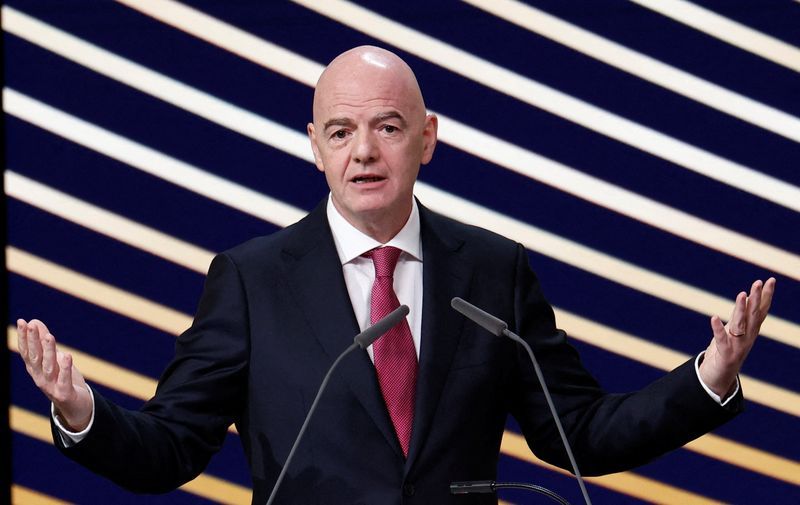
FIFA President Gianni Infantino confronts a steep climb to secure re-election following a damaging week in which the governing body's attempted privatisation of World Cup commercial rights triggered widespread rebellion among continental confederations. The football federations of Serbia, Sweden and Wales have already withdrawn their backing, signalling deep fractures within FIFA's traditionally fragile coalition. The pivotal contest to determine who leads world football from 2027 to 2031 will unfold on March 18 in Morocco, and multiple heavyweight candidates are now sizing up opportunities to challenge the incumbent.
The proposed scheme to invite private investors into World Cup ownership represented Infantino's boldest reform effort, intended to inject commercial dynamism into the tournament's commercial operations. Instead, the initiative exposed fault lines between FIFA's power centres, with UEFA launching the most scathing attack and CONCACAF, which will host the tournament in 2026, stopping short of outright rejection but signalling reservations. For Malaysian observers watching regional football dynamics, this instability at FIFA's apex carries immediate implications for Asian confederation interests and World Cup qualification processes overseen from Zurich.
VICTOR MONTAGLIANI, president of CONCACAF and a Canadian businessman with deep North American football connections, has emerged as a serious contender. The North American confederation's measured response to Infantino's proposal—rejecting the private equity concept without formally calling for the president's ousting—positions Montagliani as a potential bridge figure capable of uniting fractious confederations. With the 2026 World Cup being CONCACAF's first hosting responsibility since 1994, Montagliani commands considerable leverage and experience managing football's mega-events, crucial credentials for aspirants to the presidency.
Aleksander Ceferin, the Slovenian who leads UEFA, has established himself as Infantino's most articulate and uncompromising opponent. Ceferin's decision to boycott the recent World Cup final encapsulated the deterioration in relations between FIFA and its wealthiest confederation, representing an unprecedented rebuke from European football's power structure. His consistent and public criticism of Infantino's governance approach makes him a natural pole of attraction for federations seeking fundamental change in FIFA's strategic direction, though his European base might complicate appeal among non-European confederations seeking geographic balance.
Sheikh Salman bin Ibrahim Al Khalifa of Bahrain, a senior FIFA Council vice president representing the Asian Football Confederation, adds another dimension to the emerging contest. The AFC's scepticism toward World Cup expansion and its pointed criticism of FIFA's consultation processes suggest a confederation moving toward more assertive positions on global football governance. Sheikh Salman's position bridges Asia's substantial economic and football development interests with established FIFA institutional experience, potentially making him attractive to confederations concerned about centralised decision-making and the exclusion of stakeholder voices.
Nasser Al-Khelaifi, the Qatari sports executive and Paris Saint-Germain president, represents perhaps the most unconventional candidacy. According to political analysis from Europe, prominent soccer officials have begun coalescing around Al-Khelaifi as a serious alternative to Infantino, reflecting European football's desire for leadership offering fresh perspectives untethered to the current administration's controversial decisions. His substantial wealth, global business connections, and demonstrated capacity to navigate complex international sports politics at the highest levels position him as a potential consensus candidate, though his controversial ownership record and close ties to Middle Eastern state interests raise their own governance questions.
Lise Klaveness of Norway represents the strongest voice for gender inclusion in FIFA's top leadership. The Norwegian football federation president distinguished herself through vociferous opposition to Infantino's World Cup privatisation scheme and has previously pursued ethics complaints against FIFA management, including the suspension of playing bans following direct U.S. government intervention. Her willingness to challenge FIFA's institutional inertia and her prominence within global football's women's movement reflect shifting expectations around leadership diversity and accountability at world sport's highest levels.
The apparent proliferation of credible challengers fundamentally alters FIFA's political landscape. Rather than facing a coronation typical of recent elections, Infantino now confronts genuine competition rooted in substantive disagreements about governance philosophy, commercial strategy, and stakeholder consultation. The World Cup privatisation proposal served as a crystallising moment exposing deeper anxieties among confederations that FIFA decision-making had become excessively centralised and insufficiently responsive to member federations' concerns and interests.
For Southeast Asian football, these developments carry significance beyond institutional manoeuvring. Any FIFA president genuinely committed to more inclusive governance and distributed decision-making could strengthen the AFC's bargaining position on tournament scheduling, qualification formats, and financial distributions. Conversely, a president perceived as continuing Infantino's top-down approach might reinforce asymmetries in how global football resources and opportunities distribute between developed and emerging markets. Malaysia's football interests depend partly on AFC confederate cohesion and institutional negotiating strength at FIFA, making the outcome of this presidential contest consequential for regional football development trajectories.
The campaign phase running through March 2027 will clarify whether this apparent challenger momentum reflects genuine constituency discontent or merely rhetorical positioning. Confederation voting calculations will ultimately determine whether Infantino retains office or whether FIFA enters a new era under alternative leadership committed to governance reform. The stakes extend beyond institutional personnel changes to encompass FIFA's fundamental operating philosophy and the balance of power between the global governing body and its constituent confederations.

