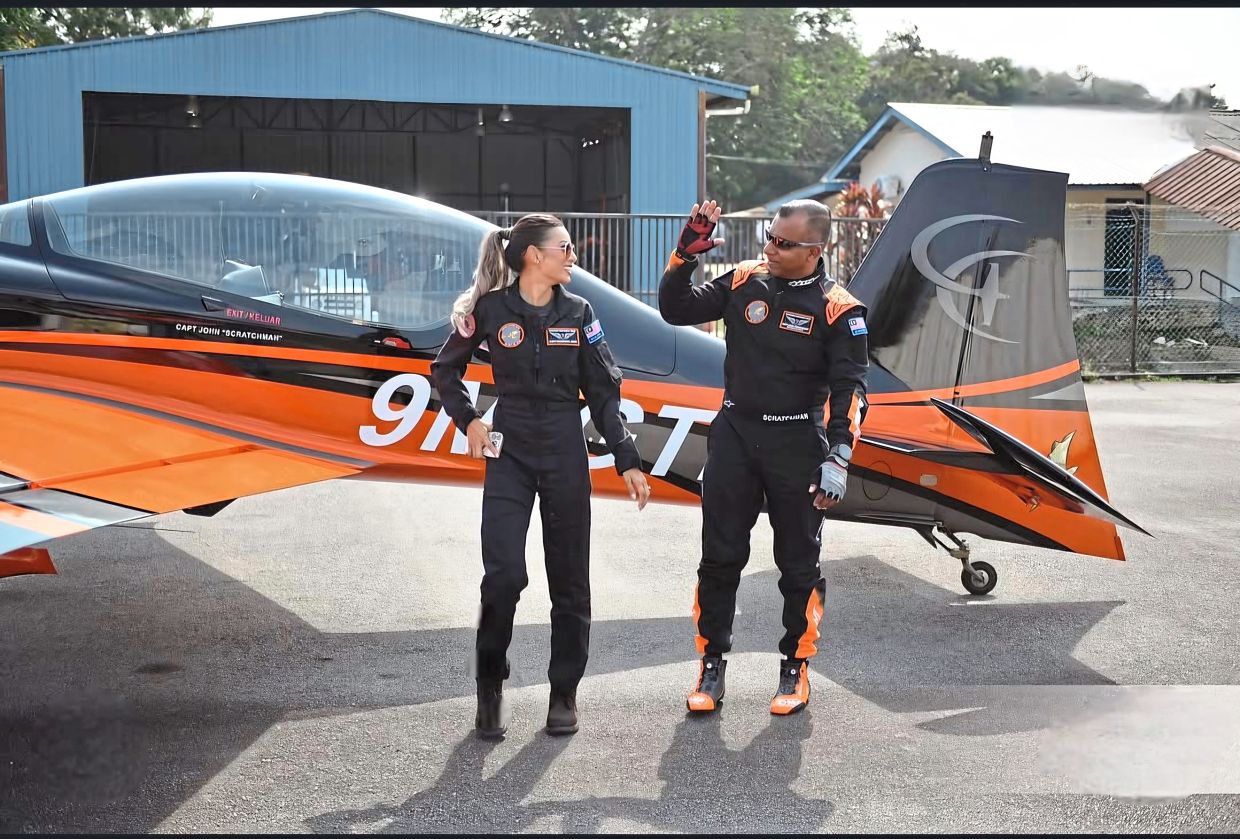
Samantha Laura John represents a distinctive strand in Malaysian aviation: the second generation carrying forward a parent's passion for flight. At 26, she has just completed her training in Ipoh as a fully qualified pilot, following a path carved by her father, Lieutenant-Colonel (R) John Sham Alagarsamy, whose 26-year tenure with the Royal Malaysian Air Force as a fighter pilot, instructor and examiner established a legacy that transcends generations. In a sector where women remain underrepresented, this father-daughter partnership offers a compelling narrative about how family values and mentorship can inspire unconventional career choices in Southeast Asia.
The younger John's journey began in childhood, shaped by the rhythms of military life. She recalls being captivated by aircraft and the sight of her father in uniform, watching him depart for training missions focused on combat readiness and navigation exercises. That early exposure to her father's world—the discipline, the purpose, the responsibility—planted seeds that would eventually blossom into her own aviation ambitions. Yet her path was neither linear nor inevitable. After completing her International General Certificate of Secondary Education, she initially explored alternatives, enrolling in a two-year cadet pilot programme with an airline in Sepang, Selangor in 2018. Though the experience proved rewarding, it clarified rather than satisfied her aspirations. The pull of the cockpit remained undeniable, and she ultimately returned to formal pilot training, graduating in 2025.
John Sham Alagarsamy's own career trajectory reflects a generation of Malaysian aviation professionals who have navigated the transition from military to civilian domains. Following his retirement from the RMAF, he shifted into commercial aviation in 2019 and earned a distinction that few achieve: recognition by the Civil Aviation Authority of Malaysia as the country's first and only civil aviator certified for aerobatics. His performances at major exhibitions, including Lima, flying the GB1 GameBird aircraft, have made him a familiar figure in Malaysia's aerospace community. His credentials extend beyond the skies—he is also a accomplished musician and professional deejay known as "Scratchman", having won the Malaysian Open DJ Competition in 1992. This multifaceted identity demonstrates that aviation professionals in Malaysia often cultivate diverse skill sets, a pattern that reflects both personal ambition and the practical realities of building sustainable careers in a competitive sector.
Despite holding her pilot's licence, Samantha has not yet pursued commercial flying full-time. Currently based in Kota Kinabalu, she operates an event management company with her husband, David Chong, 30, while offering vocal coaching services. This apparent deviation from the expected trajectory warrants examination, as it reveals the complex interplay between aspiration and circumstance that often characterises career development among professionals from military families. She has indicated her intention to eventually return to commercial aviation, suggesting that her current path represents a chapter rather than a conclusion in her aviation story.
The family's residential history across Malaysia shaped Samantha's worldview in profound ways. Her father's postings took them from Labuan to Kuantan, Alor Setar and Butterworth in Penang before she reached primary school age. While frequent relocations presented challenges typical of military families, they also created formative experiences. Growing up on air force bases exposed her to environments characterised by discipline and collective purpose. She witnessed firsthand the weight of responsibility that RMAF pilots carry in safeguarding Malaysia's airspace and maritime borders—an understanding that many civilians never acquire. In 2012, the family embarked on an extended international sojourn when John was attached to the Australian Defence Force while completing a master's degree in military and defence studies from the Australian National University in Canberra. This experience broadened Samantha's perspectives on defence cooperation and international aviation systems, adding layers of sophistication to her understanding of her father's profession.
The phenomenon of children following parents into aviation is not unique to the John family. Sisters Safia Amira Abu Bakar and Safia Anisa Abu Bakar have similarly pursued aviation careers following their father, Captain Abu Bakar Shafie. These examples suggest that aviation dynasties, though modest in number in Malaysia, represent a meaningful pattern in how the sector recruits and retains talent. Research from Universiti Teknologi Malaysia's social science journal titled "Parental Influence and Undergraduates' Career Choice Intentions" provides empirical support for what families like the Johns demonstrate intuitively: strong parent-child relationships characterised by open communication and trust significantly influence career decisions by encouraging exploration and fostering long-term planning.
John Sham Alagarsamy's parenting philosophy provides insight into how he nurtured rather than coerced his children's aviation interests. He deliberately avoided imposing his own career path, instead offering encouragement framed around ambition itself. "If they aim for the stars, at least they'd reach the sky," he has said, articulating a philosophy centred on scaled dreaming rather than prescribed outcomes. This approach allowed Samantha the psychological space to explore alternatives while maintaining connection to aviation. When she eventually committed to pilot training, it was not as a reaction to paternal pressure but as a conscious embrace of her genuine passion.
Samantha's description of the pilot's experience reveals why the profession captivates those suited to it. She characterises the time spent in the cockpit as therapeutic, emphasising the absolute focus and spatial awareness required. "Once you're in the cockpit, you have to be fully focused and aware of your surroundings. You're always looking ahead, thinking ahead, and staying situationally aware. It's almost like working in six dimensions," she explains. This articulation suggests that aviation appeals not merely as career but as a mode of consciousness—a way of being in the world that demands and rewards a particular quality of attention. For someone raised observing these demands, the attraction runs deep.
The relationship between Samantha and her father carries unmistakable elements of mutual respect that extend beyond the filial bond. She speaks to him with evident regard, a dynamic rooted in childhood experiences of military discipline and household values emphasising integrity and service. John himself attributes his children's comportment to the example he and their mother, businesswoman Lynda Shanti Ganesaguru, have modelled. He received the Most Gallant Order of Military Service during his RMAF tenure, a recognition that underscores his commitment to duty. His reflection on parental influence—that children "often learn more from what we do than what we say"—encapsulates a philosophy common among military families, where actions communicate more than words ever could.
For Malaysian readers, the John family narrative carries broader implications. In a nation working to expand female participation in technical and professional fields, the presence of young women like Samantha entering aviation contributes incrementally to shifting demographics and expanding possibilities for future generations. Her journey occurred during an era when female pilots in Malaysia remained uncommon, yet she pursued the qualification regardless. Her willingness to trial alternative paths before returning to her true interest also models a kind of career pragmatism increasingly necessary in Malaysia's evolving economy. Furthermore, her father's successful transition from military to civilian aviation, followed by recognition as an aerobatics specialist and accomplishment in entirely separate creative domains, demonstrates the portable value of discipline, precision and continuous learning—qualities that today's Malaysian professionals across all sectors might do well to cultivate. The family's international experience in Australia, moreover, connects them to regional defence cooperation networks that shape how Malaysia engages with its strategic partners.
Moving forward, how Samantha's career unfolds—whether she prioritises commercial aviation or maintains her diversified portfolio of event management and vocal coaching—will reflect broader questions about how Malaysian professionals navigate the competing demands of family, personal interest and economic necessity. Her father's multi-faceted accomplishments suggest that the aviation sector in Malaysia need not be viewed as a narrow specialisation but rather as a foundation for varied contributions to society. For now, Samantha and John's recent family gathering in the Klang Valley, with reminiscences about years spent on different air force bases and the shared experiences that shaped them both, represents a moment of consolidation—a pause in which two generations can reflect on how passion, discipline and love have woven aviation through their family story.

