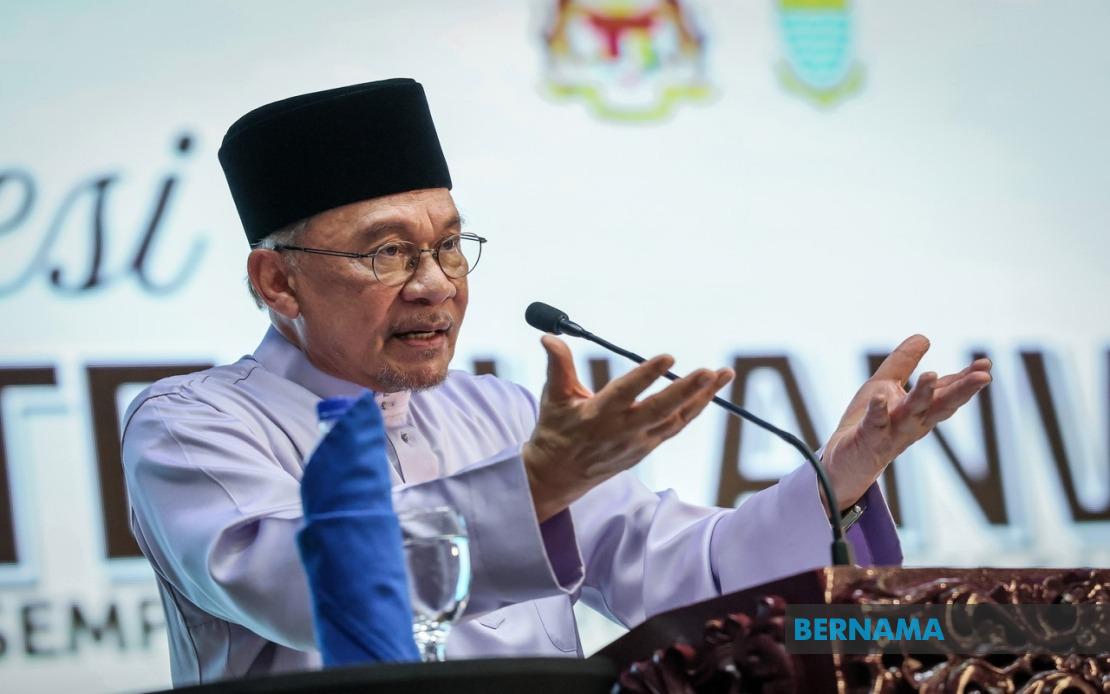
Prime Minister Datuk Seri Anwar Ibrahim has committed to providing a monthly allowance for Form Six students through Budget 2027, which will be presented to Parliament in October. The announcement, made during a Temu Anwar programme at the Tuanku Bainun Teacher Education Institute in Bukit Mertajam, addresses a significant disparity in the government's education support structure that has long gone unaddressed. Anwar, who also serves as Finance Minister, revealed the decision came following direct engagement with pre-university students who highlighted the inconsistency in how different educational tiers receive financial assistance.
The government's existing allowance framework creates an uneven playing field for students progressing through Malaysia's education system. Currently, students from primary school through Form Five benefit from government assistance programmes, as do those pursuing tertiary education at universities. Yet Form Six students—typically aged 17 to 19 and undertaking intensive pre-university studies—fall through this support net entirely. This gap has long frustrated both educators and student advocates, who argue that pre-university students face considerable academic pressure and financial burdens similar to or exceeding those of their Form Five counterparts. The omission has been particularly keenly felt given that Form Six is a critical juncture where many students from lower-income families face pressure to leave education and seek employment.
Anwar emphasised during his speech that the government recognises this inequity and is determined to rectify it. During recent consultations with pre-university cohorts, he heard directly about the financial hardships many face while pursuing their studies at this crucial educational stage. The Prime Minister noted that the illogical gap—where assistance exists at primary, secondary, and tertiary levels but mysteriously vanishes for pre-university students—had become increasingly difficult to justify. This acknowledgment represents a substantive policy shift, signalling that the administration views pre-university education not merely as a optional pathway but as an integral component of Malaysia's education continuum deserving equal support.
While Anwar announced the government's commitment to the allowance scheme, he carefully noted that the specific amount remains undetermined. The final quantum will depend upon the government's fiscal position when Budget 2027 is crafted, suggesting that negotiations within cabinet and with the Treasury are still ongoing. This measured approach reflects the broader budgetary constraints Malaysia faces and the competing demands from various constituencies for finite resources. Nevertheless, the public commitment provides certainty to students and educational institutions that relief is coming, even if the precise details remain to be crystallised in the coming weeks.
Education Minister Datuk Seri Fadhlina Sidek, present at the event, framed the allowance initiative as one of twelve resolutions emerged from the MADANI Pre-University Congress convened in Klang earlier that morning. The ministry's acceptance of all student-led proposals demonstrates a willingness to engage substantively with young people's concerns and to translate their feedback into policy action. Fadhlina committed to studying each resolution with a view toward implementation, emphasising that the Education Ministry would work to identify pathways to realise these proposals. This collaborative approach—where policy emerges from structured dialogue between government and student bodies—contrasts with top-down decree and suggests a more inclusive governance model.
The timing of this announcement carries strategic significance within Malaysia's political landscape. Coming months before the tabling of Budget 2027, the declaration allows the administration to demonstrate responsiveness to youth concerns ahead of potential electoral movements. For young voters and their families, particularly those from middle and lower-income backgrounds, education support remains a priority concern. By publicly committing to Form Six allowances, the government signals that it prioritises educational access and opportunity for all citizens regardless of socioeconomic background. This resonates particularly strongly with parents navigating Malaysia's competitive education system and weighing the financial implications of their children's academic choices.
The Form Six allowance scheme also reflects broader policy thinking about reducing inequality and ensuring equitable access to educational opportunity. Malaysia's vision of developing a high-skilled workforce depends fundamentally upon enabling talented students from all backgrounds to complete their education without financial distress forcing early departure from school. When Form Six students—many from first-generation university families or modest economic circumstances—must choose between continuing their studies and seeking employment to support households, the nation loses potential talent and innovation. An allowance scheme directly addresses this market failure by providing a financial bridge across the pre-university years.
Implementing such a scheme will require careful administrative planning. The government must determine eligibility criteria—whether means-testing will apply or if the allowance becomes universal for all Form Six students; whether it will differentiate between public and private institutions; and how payment mechanisms will function given Malaysia's varied geographic and digital connectivity landscape. These operational details will substantially affect both the scheme's cost and its real-world impact on beneficiaries. Transparency about these decisions will be important to ensure equitable implementation and public confidence in the programme's fairness.
The allowance announcement also sits within a broader context of education policy debates in Southeast Asia. Across the region, governments grapple with competing pressures to increase education quality while managing fiscal constraints and social demands. Malaysia's move to extend allowance coverage reflects international trends toward recognising pre-university education as a public investment requiring appropriate public support. Other ASEAN nations monitor such developments closely, as successful implementation in Malaysia could provide evidence supporting similar initiatives elsewhere in the region.
As Budget 2027 approaches, educators and students will watch closely for the quantum allocated to this new allowance and the specific terms of its implementation. The commitment represents a recognition that Form Six education, while not compulsory, has become practically essential for students pursuing university admission and professional pathways in Malaysia's knowledge-based economy. By extending the safety net of government assistance to this cohort, the administration demonstrates that education policy will increasingly focus on removing financial barriers to progression through the education system. This philosophical shift toward comprehensive student support—spanning primary through university—reflects evolving understanding of how government can effectively promote social mobility and national human capital development.

