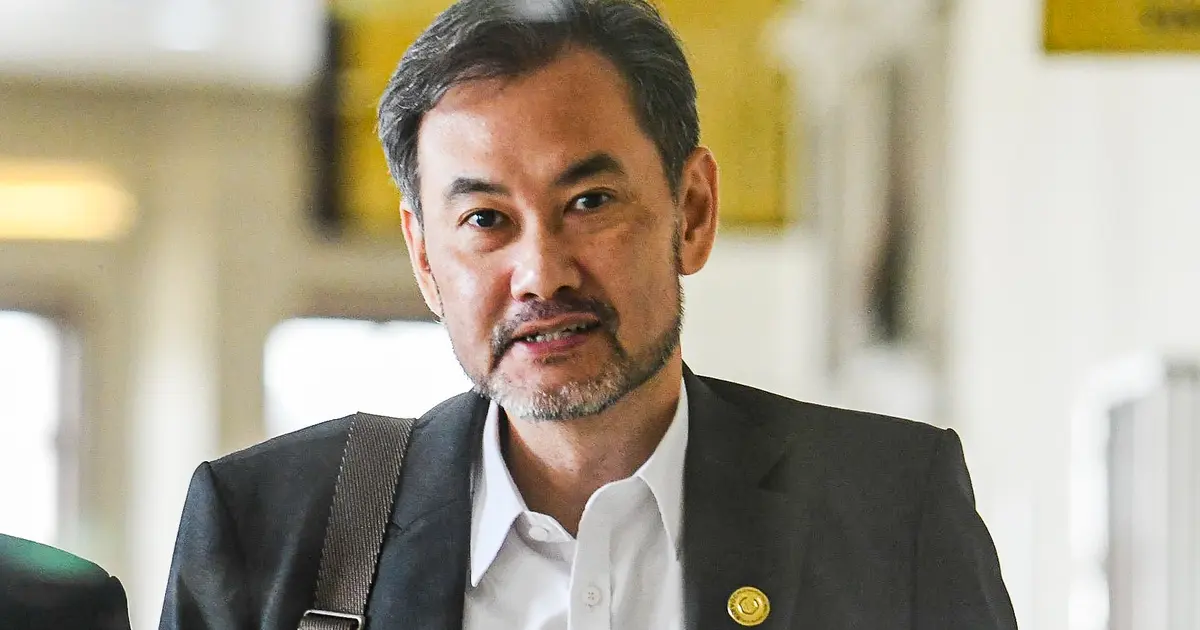
Shahrol Azral Ibrahim Halmi, who previously headed the state investment fund 1Malaysia Development Berhad, has firmly disputed claims suggesting he accorded fugitive financier Jho Low comparable status to that of Malaysia's sitting prime minister. The former CEO's statement comes amid ongoing scrutiny of the fund's operations and the roles various individuals played in its governance structures during the administration of former Prime Minister Najib Razak.
At the centre of the controversy lies the intricate web of communications that characterised the upper echelons of 1MDB's leadership during the height of the fund's operations. Rather than denying contact with Jho Low, Shahrol instead sought to contextualise the nature and significance of such interactions, positioning them as part of a broader communication landscape within the organisation rather than evidence of improper delegation or subordination of authority.
The distinction Shahrol attempts to draw is important for understanding how 1MDB functioned during this period. He contends that while he did communicate with Jho Low, these interactions occurred within a framework where the ultimate authority and decision-making power remained with Najib Razak, who served simultaneously as Prime Minister and Minister of Finance. The former CEO's characterisation suggests a hierarchical structure in which informal channels supplemented rather than superseded formal governmental processes.
Sources familiar with 1MDB's operations indicate that communication patterns within the fund departed significantly from conventional corporate governance standards. Multiple channels through which directives could flow, including informal pathways involving figures like Jho Low, created an environment where clarity of authority and accountability became increasingly murky. For Malaysian observers and international commentators alike, these structural ambiguities have proven central to explaining how massive fund diversions allegedly occurred with apparently minimal oversight.
The implications of these communication arrangements extend beyond mere administrative irregularity. International investigators and Malaysian authorities have long examined how 1MDB's institutional design facilitated the movement of billions of ringgit. By relying on informal channels and multiple intermediaries, the fund's leadership arguably created conditions where traceability and accountability became difficult to establish, a factor that has featured prominently in subsequent legal proceedings and public inquiries.
Jho Low, the businessman at the centre of these communications arrangements, remains a fugitive from Malaysian and international justice systems. Investigators allege his involvement in orchestrating the misappropriation of 1MDB funds, a scheme that ultimately implicated multiple countries and financial institutions across Southeast Asia and beyond. His influence over decision-making at 1MDB has been a point of particular concern for authorities seeking to understand how such a massive alleged fraud could occur within a state-owned entity.
The former CEO's denial must be understood within the broader context of ongoing legal proceedings and investigations spanning multiple jurisdictions. Malaysia, the United States, and several other nations have pursued cases relating to 1MDB's alleged misuse of funds, with numerous convictions already secured against various individuals and entities implicated in the scheme. Shahrol's statements, whether exculpatory or clarificatory in intent, form part of a continuing effort by various actors to establish their precise roles and responsibilities within the fund's hierarchy.
What Shahrol's clarification reveals, whether intentionally or not, is the unusual governance structure that characterised 1MDB during the Najib administration. A fund ostensibly created to pursue strategic development objectives for Malaysia instead operated through channels that blurred the lines between formal institutional authority and informal personal influence. The involvement of figures like Jho Low in communicating directives to the CEO raises fundamental questions about accountability structures within government-linked companies and the adequacy of Malaysia's institutional safeguards against misuse of public resources.
For regional observers monitoring Malaysia's efforts to strengthen governance and transparency, the 1MDB saga remains emblematic of the vulnerabilities that exist when informal power structures operate alongside formal institutional arrangements. The fund's collapse and subsequent investigations have prompted significant reforms within Malaysia's governmental and corporate oversight mechanisms, yet the case continues to illustrate how quickly institutional safeguards can be circumvented when multiple channels of communication and authority exist simultaneously.
The distinction between treating someone "like a prime minister" and acknowledging informal communication pathways may seem semantic, yet it carries legal and institutional significance. Shahrol's statement suggests he maintained his position as decision-maker while receiving inputs through various channels, including from Jho Low. However, critics argue that when informal channels become the dominant means through which critical decisions are communicated, the formal hierarchy becomes largely ornamental, raising serious questions about actual governance and control regardless of what titles or formal positions individuals held.
As Malaysia continues grappling with the 1MDB legacy, testimonies from figures like Shahrol contribute to the ongoing documentation of how governance failures occurred at institutional levels. Whether such statements serve to clarify responsibility or obscure it remains subject to interpretation, particularly given the complexity of the alleged transactions and the multiplicity of actors involved. What remains unambiguous is that the informal nature of 1MDB's communication structures created conditions conducive to the alleged massive misappropriation of public funds.

