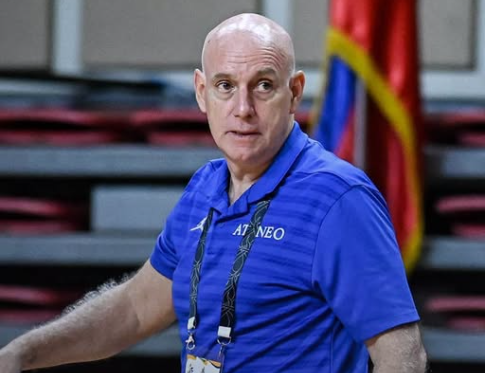
The Philippine National Police–Criminal Investigation and Detection Group has recommended prosecuting Thomas Anthony 'Tab' Baldwin, the former head coach of Ateneo de Manila University's men's basketball team, alongside 10 associates for breaching Republic Act No. 11053, the Anti-Hazing Act. The recommendation stems from a June 8 incident in Dipaculao, Aurora, where basketball players Rene Baterbonia and Divine Adili drowned during what was officially termed a training exercise.
Under Philippine law, hazing encompasses far more than the traditional initiation rites many associate with the term. The definition covers any conduct that inflicts physical or psychological distress as a prerequisite for membership or continued participation in a group. In this instance, authorities argue the Aurora beach session crossed definitively into hazing territory, transforming what organisers framed as team-building into a dangerous, ill-conceived punishment regime.
Beyond Baldwin, the accused include strength and conditioning coaches Grant Dearns and Ceasar Vicent Javellana Elumba; assistant coaches Dean Caesar B. Castaño, Sandro Nicholas Romero Soriano, and Reynaldo Jacinto; student managers Paolo Manuel Maceda Adevoso and Andrew Lorenzo Bondoc Salud; physical therapist John Eric Quiambao Rueca; and utility personnel Aris Ramos Pronce and Joel Palmiano Rapa. Significantly, all 11 individuals were present on the beach and, according to authorities, none intervened to stop or question the escalating activities.
The reconstruction of events that day paints a picture of relentless, cumulative physical stress. The selected players were roused at 4 am and immediately ordered to run four kilometres. This initial exertion was deliberately designed to exhaust the athletes before subjecting them to more intense challenges. The subsequent phase involved competitive games with harsh penalties imposed on losing teams, intensifying the physical and psychological strain on participants.
The timing of the seawater training session proved catastrophic. The activity commenced at approximately 2 to 2:30 pm, coinciding precisely with the predicted high tide at 2:27 pm on June 8. Rather than selecting safer conditions, the organisers proceeded despite knowing that high tides create particularly hazardous marine environments characterised by powerful rip currents, substantial wave action, and unpredictable seabed variations. This convergence of dangerous natural conditions and exhausted human bodies created a perfect storm for tragedy.
Authorities emphasise that the Aurora session served a specific, unsavoury purpose beyond conventional team preparation. Twenty basketball players attended the activity, yet only 17 would be retained on the final roster submitted to the University Athletics Association of the Philippines for that season. The beach exercise functioned implicitly as a selection mechanism, determining who would survive the ordeal and remain on the team. This configuration transformed the hazing from mindless ritual into a calculated, performance-gated elimination process.
The discovery of no weights attached to either victim's body contradicts conspiracy theories suggesting the drownings resulted from some unconventional training methodology. Instead, the absence of such devices underscores that the victims simply could not cope with the cumulative fatigue, harsh marine conditions, and psychological pressure engineered by the coaching staff. Exhaustion and environmental factors combined to overwhelm two athletes in their prime.
Former coach Baldwin previously issued a public video apology lasting nearly nine minutes, aired through Ateneo's official social media channels. The public expression of remorse, however, does not preclude criminal liability under Philippine law. Authorities treat the expressed regret as secondary to their findings that multiple individuals—not just Baldwin—actively created, orchestrated, and failed to terminate an environment they either knew or should have recognised as lethal.
This case carries profound implications for Philippine collegiate athletics and institutional accountability more broadly. Universities across the region face pressure to demonstrate that they prioritise athlete welfare over institutional advancement or competitive success. The Ateneo incident illustrates how institutional norms, coaching cultures, and competitive pressures can conspire to normalise dangerous practices. When those practices culminate in preventable deaths, accountability extends beyond individual negligence to systemic failure.
For Malaysian and Southeast Asian sporting institutions, the case serves as a cautionary reminder about unregulated coaching authority and the dangers of closed, hierarchical athletic environments. The region's collegiate and professional sports networks sometimes operate with insufficient oversight mechanisms to challenge dangerous methodologies. The Philippine police investigation demonstrates that legal frameworks exist to hold accountable those who abuse positions of authority, even when powerful institutions attempt to shield perpetrators from consequences.
The distinction authorities draw between intensive training and unlawful hazing establishes important precedent. Physical conditioning programmes remain legitimate, but those programmes must incorporate reasonable safety measures, medical supervision, environmental awareness, and the fundamental principle that no competitive outcome justifies risking athlete lives. The prosecution recommendations represent an assertion that institutional prestige and team performance cannot justify the preventable death of young athletes under an organisation's direct supervision.

