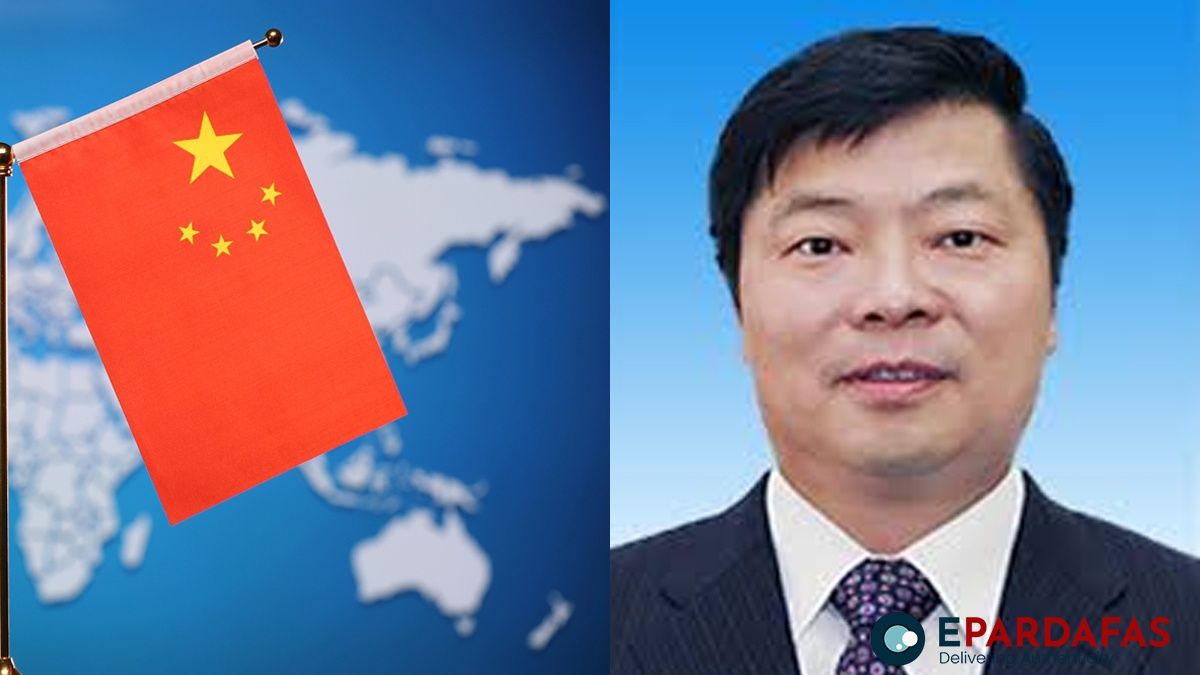
Beijing's top anti-corruption authority has opened an investigation into Ouyang Weimin, the former president of the China Development Bank, accusing him of serious breaches of party discipline and legal violations. The Central Commission for Discipline Inspection and the National Commission of Supervision announced the probe on Sunday in a terse statement, providing minimal detail about the allegations or the scope of the inquiry. The move forms part of China's broader crackdown on graft that has ensnared numerous senior officials across government and the military under President Xi Jinping's administration.
Ouyang's career trajectory reflects the typical path of elite officials within China's financial establishment. He joined the Communist Party in 1986 and built much of his early professional foundation at the People's Bank of China, the country's central bank, before moving into regional governance. His appointment as vice-governor of Guangdong demonstrated his ascent within the party hierarchy; Guangdong's position as an economic powerhouse neighbouring Hong Kong makes it a crucial posting for officials groomed for national prominence. In 2019, Ouyang reached the pinnacle of his career when he was named president and deputy party secretary of the China Development Bank, positions that placed him at the helm of one of Beijing's most influential development finance institutions.
The China Development Bank itself holds enormous institutional weight within China's financial system. Established in 1994, the institution operates as a state-owned development financing mechanism directly answerable to the State Council, China's cabinet-level governing body. Its mandate encompasses financing major infrastructure projects and supporting growth in strategic sectors and economically lagging regions—functions that make it instrumental in executing Beijing's long-term developmental priorities. As president, Ouyang oversaw the allocation of substantial capital resources and shaped lending decisions across industries deemed critical to national economic objectives. His departure from the presidency in 2023 preceded Sunday's investigation announcement, raising questions about whether internal irregularities had prompted his earlier removal.
The investigation into Ouyang reflects the sustained intensity of Xi Jinping's anti-corruption agenda, a signature initiative that has fundamentally reshaped China's political landscape since the president's consolidation of power. The campaign has touched virtually every tier of the bureaucracy and defence establishment, ensnaring thousands of officials accused of graft, embezzlement, and abuse of authority. What began as a purge marketed to the public as a moral housecleaning has evolved into a mechanism through which Xi has neutralised potential rivals and solidified factional control within the party. Former security czar Zhou永康 and other high-ranking officials with power bases independent of Xi's patronage networks have fallen victim to the investigation machinery, fuelling international scepticism about whether the campaign prioritises genuine corruption prevention or political consolidation.
For Malaysia and Southeast Asia more broadly, Ouyang's investigation carries implications for understanding how Beijing manages elite finance officials and potentially executes its development lending strategies in the region. The China Development Bank has been a major financier of Belt and Road Initiative projects across Southeast Asia, including infrastructure investments in Malaysia, Indonesia, and Thailand. Personnel changes and investigations among its leadership could signal shifts in how development finance decisions are made, or whether particular geographic regions or sectoral priorities might be deprioritised. Regional governments engaging with Chinese development partners may scrutinise whether institutional instability at the apex of these institutions affects project continuity or lending terms.
The opacity surrounding Ouyang's specific allegations underscores a persistent feature of China's anti-corruption machinery: the absence of transparent, independent adjudication. The Central Commission for Discipline Inspection's one-sentence announcement provided no substantive information about charges, alleged victims, or timeframes for investigation completion. This approach contrasts sharply with legal systems in democratic nations, where public interest and due process norms demand detailed disclosure of charges and evidence. Analysts cannot yet determine whether Ouyang allegedly misappropriated state funds, took bribes, abused authority in lending decisions, or committed other infractions. The silence itself has strategic value within China's political system, allowing Xi's allies to maintain narratives about rooting out corruption while preventing the emergence of countervailing political narratives that might coalesce around an accused official.
Ouyang's investigative detention also illustrates how China's elite official class operates within a fundamentally precarious institutional environment. Regardless of career achievement or bureaucratic rank, officials remain vulnerable to investigation if they fall out of favour or become entangled in factional politics. The transition from prestigious positions—vice-governor of China's industrial heartland, president of a state development bank—to investigation and potential prosecution can occur swiftly and without warning. This structural insecurity arguably shapes behaviour among officials who must navigate between executing duties effectively and avoiding actions that might provoke scrutiny from rival factions or the centre. For those doing business with China or relying on continuity of bilateral relationships, such personnel volatility creates unpredictability in counterpart relationships.
The investigation's timing and announcement strategy reveal standard practices within China's system for managing elite discipline cases. By releasing information through the official anti-corruption body's statement rather than through party media or broader official channels, authorities maintain control over narrative framing while signalling seriousness to party insiders. The investigation's announcement, rather than a formal trial, becomes the primary newsworthy moment—establishing Ouyang's culpability in public perception before legal proceedings formally commence. This approach reflects confidence in ultimate institutional control and the virtual certainty that investigation will result in conviction, given that China's anti-corruption courts operate within the broader party discipline system rather than as independent judicial bodies.
Looking ahead, regional observers should monitor how Ouyang's case affects China Development Bank operations and leadership appointments. Whether his successor adopts different lending philosophies, whether investigations expand to encompass his subordinates or colleagues, and whether the bank's development financing strategies shift in response to institutional upheaval will provide important signals about Beijing's current developmental priorities and the stability of its development finance ecosystem in the coming years.

