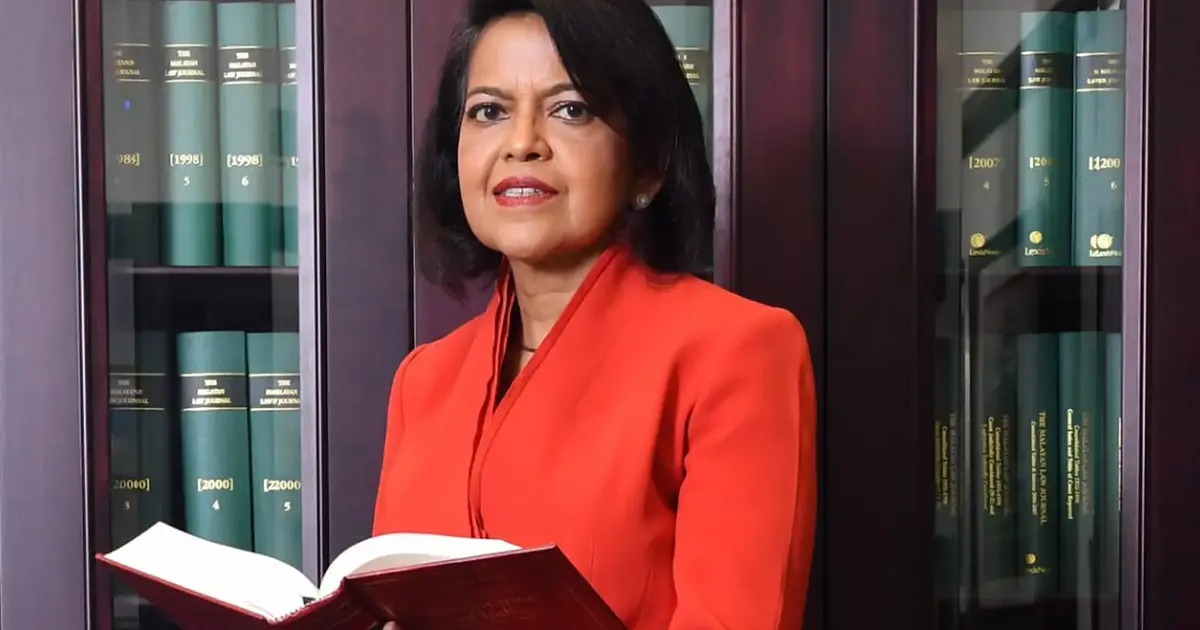
The Malaysian Media Council has elevated retired Federal Court judge Nallini Pathmanathan to its leadership position as chairman, marking a significant shift in the governance structure of the body that oversees media standards and conduct across the country. The appointment arrives at a pivotal moment when the media landscape faces mounting pressures from technological disruption, changing audience consumption patterns, and evolving regulatory expectations that demand experienced judicial perspective.
Pathmanathan's elevation to this role introduces substantial credibility rooted in her extensive judicial background. Her experience on Malaysia's highest court positions her uniquely to navigate the complex intersection of constitutional freedoms, statutory regulations, and industry self-governance that characterises contemporary media oversight. The judiciary's appointment of a retired judge to lead a regulatory body signals the Council's intention to strengthen its institutional authority and its capacity to adjudicate disputes with greater legitimacy.
The timing of this leadership transition underscores the urgency of the challenges confronting Malaysia's media sector. The industry is contending with fragmented readership, declining print revenues, the explosion of digital platforms, and the pervasive problem of misinformation and disinformation across social networks. Traditional publishers have struggled with business model viability while simultaneously facing demands from multiple stakeholders—politicians, civil society, advertisers, and audiences—each with competing interests in how news is gathered and presented.
Pathmanathan's appointment also reflects broader institutional recognition that media governance requires the kind of analytical rigour and interpretative authority that judicial training provides. Her background suggests the Council intends to strengthen its capacity to render binding determinations on complaints, craft clearer editorial guidelines, and mediate between press freedom imperatives and public interest considerations. The judiciary's institutional weight may enhance the Council's influence with major media organisations that might otherwise view self-regulatory mechanisms as toothless.
For Malaysian journalists and media organisations, the Council's new direction carries several implications. The appointment of someone with Pathmanathan's stature could elevate the Council's status as an authoritative voice on professional standards, potentially making its rulings more influential in industry practice and in public discourse about media accountability. However, it also raises questions about whether judicial training and sensibilities might inadvertently introduce legalistic approaches to matters that traditionally required flexibility and editorial judgment.
The broader Southeast Asian context matters considerably here. Across the region, media self-regulatory bodies struggle with legitimacy, funding, and enforcement capacity. Singapore's Press Council, Thailand's broadcast regulators, and Indonesia's Press Council each navigate different models of balancing industry autonomy with public accountability. Malaysia's decision to anchor its Council leadership in judicial expertise represents a distinct regional approach, one that privileges institutional authority and legal reasoning over industry consensus or collegial peer review.
The Council's emphasis that this appointment responds to industry challenges carries implicit recognition that voluntary self-regulation alone may be insufficient in contemporary conditions. Malaysia's media sector operates within a regulatory environment that includes the Communications and Multimedia Act, the Printing Presses and Publications Act, and broadcasting licensing regimes administered by separate bodies. The Media Council's relationship to these statutory frameworks requires careful navigation to avoid redundancy or jurisdictional conflict, a task likely demanding judicial clarity.
Pathmanathan's appointment also opens questions about the Council's future relationship with government, opposition parties, and civil society organisations. Her judicial background might insulate the Council from accusations of political partisanship that sometimes plague media regulatory bodies, yet it could simultaneously create perceptions of formality or distance from the lived concerns of journalists working under deadline pressure and economic constraint. Building trust with the industry will require demonstrating that judicial rigour enhances rather than impedes legitimate journalism.
The challenge for the new chairman will be establishing the Council as an indispensable forum for resolving media disputes and setting standards without undermining the editorial independence that quality journalism requires. Malaysia's media environment includes outlets ranging from government-linked organisations to independent digital platforms, from tabloid publications to serious current affairs providers. A regulatory framework that commands respect across this spectrum requires legitimacy grounded in transparent processes, reasoned judgment, and demonstrable even-handedness.
Looking forward, Pathmanathan's leadership will test whether judicial credibility can translate into effective industry governance. The Council will likely face pressure to develop clearer guidelines on digital journalism, fact-checking standards, and the treatment of political coverage during election periods. Her role will involve convening stakeholders, building consensus around professional norms, and ensuring that self-regulation remains genuinely regulatory rather than merely ceremonial.
The appointment ultimately reflects Malaysia's media industry at an inflection point. Traditional models of press regulation have become insufficient, yet tighter statutory control conflicts with constitutional protections for freedom of expression. By anchoring the Media Council in judicial authority, stakeholders are wagering that experienced judgment applied with integrity can forge a middle path. Whether that gamble succeeds will depend substantially on how Pathmanathan translates her judicial approach into leadership practices that journalists, media organisations, and the broader public recognise as fair and essential.