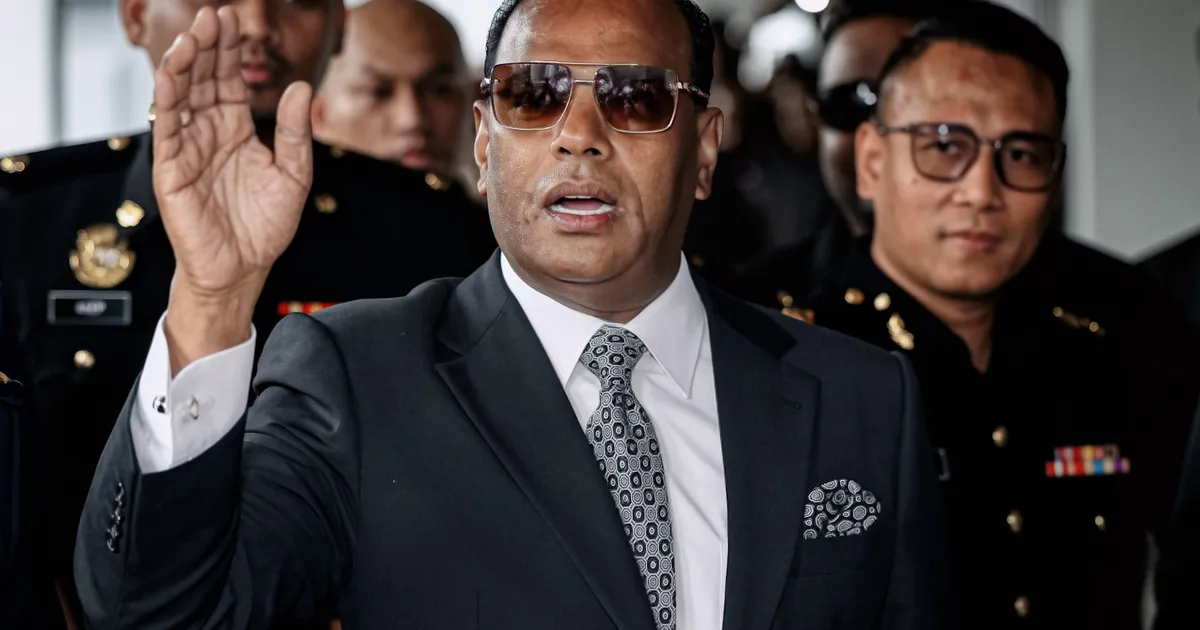
Former Human Resources Minister Saravanan has pushed back against allegations that he improperly solicited special treatment from Prime Minister Anwar Ibrahim, insisting instead that his written communication sought nothing more than a comprehensive and fair reassessment of the corruption charges lodged against him. The distinction between these framings cuts to the heart of Malaysia's ongoing conversation about political accountability, judicial independence, and the fine line between legitimate requests for procedural fairness and attempts to circumvent the justice system.
Saravanan's clarification comes amid mounting scrutiny of his contacts with the Prime Minister's office, a development that has intensified public discourse about how political figures should navigate legal proceedings once they have left office. The former minister maintains that the substance of his letter reflected genuine concerns about the credibility of the accusations against him rather than any scheme to obscure facts or derail investigations. This assertion places considerable emphasis on his reading of the evidence, suggesting that a thorough independent examination would ultimately vindicate him of wrongdoing.
The distinction between seeking a "cover-up" and requesting a "thorough review" matters profoundly in Malaysian political and legal contexts. Officials who cross into the territory of obstructing justice or attempting to influence prosecutorial decisions face severe reputational damage and potential additional charges. Saravanan's framing suggests he believes his request fell squarely within acceptable bounds—that of a citizen entitled to administrative fairness and proper process. However, critics may question whether a former minister with ongoing access to high-level political circles requesting Prime Ministerial intervention in his own case represents the kind of systemic imbalance that undermines public confidence in the rule of law.
The gravity of corruption allegations in Malaysia cannot be understated. Malaysia has long struggled with perceptions of high-level graft, and public confidence in the integrity of investigations and prosecutions remains fragile. When political figures who have recently held ministerial office become subjects of graft inquiries, the stakes for institutional credibility multiply. Every communication with senior government officials risks creating an appearance of improper influence, regardless of the writer's intentions.
Saravanan's position that the charges against him are not credible speaks to a broader pattern within Malaysian politics where officials who face legal action frequently maintain their innocence and attribute proceedings to political persecution or misunderstanding. This narrative, whether accurate in any given case, has become routine enough that it no longer carries the shock value it might in other democracies. Malaysian society has grown somewhat inured to such denials, which paradoxically makes it harder for genuinely wronged individuals to be heard.
The role of Prime Minister Anwar Ibrahim in this unfolding situation deserves careful consideration. As PM, Anwar occupies a unique position where he must balance respect for judicial independence with his authority over the executive branch and certain administrative functions. Any suggestion that he could or would intervene in an active prosecution would trouble fundamental governance principles. The fact that Saravanan felt compelled to write to the PM suggests either that he believed the PM could help, or that he simply sought to ensure the highest levels of government understood his perspective—a distinction that may ultimately hinge on what the letter actually contained.
For Malaysian readers and observers across Southeast Asia, this episode reflects the tension inherent in any system where political figures and judicial authorities inhabit the same institutional ecosystem. Unlike jurisdictions with strict separation of powers and firewall mechanisms, Malaysia's political structure creates situations where former officials maintain networks and relationships that naturally inform their decision-making about how to address legal predicaments. That this appears to trouble observers suggests at least some awareness that such entanglement, however common, represents a genuine vulnerability in the system.
The credibility of graft accusations ultimately depends not merely on Saravanan's personal assessment but on the strength of evidence, the independence of investigators, and the rigor of prosecutorial decision-making. His insistence that charges lack merit will either be validated or contradicted through the proper judicial process. What becomes problematic is if appeals to higher political authority become the mechanism through which such credibility is determined, rather than evidence and legal argumentation.
Saravanan's intervention also highlights how former ministers remain embedded within Malaysia's political elite even after leaving office. The assumption that a letter to the Prime Minister might influence his case—whether he intended it that way or not—speaks volumes about the concentration of power and the informal networks that characterize Malaysian governance. A truly robust democratic system would erect barriers making such appeals futile, thereby discouraging them entirely and protecting both the official from temptation and the system from compromise.
Moving forward, the trajectory of Saravanan's legal case will itself become an indicator of how seriously the Anwar Ibrahim administration takes assertions of judicial independence. Any perception that his case receives preferential treatment would reinforce skepticism about whether Malaysia's anti-corruption infrastructure operates according to uniform standards or remains subject to political calculation. Conversely, if the case proceeds without apparent interference, it may gradually restore confidence that such communications need not inevitably corrupt outcomes.
The broader lesson for Malaysian society concerns governance architecture and the incentives embedded within it. When former ministers feel moved to seek Prime Ministerial intervention in their prosecutions, the system has already revealed its vulnerabilities. The question is not whether Saravanan sought a cover-up in this instance, but whether the system permits such requests to carry weight at all—and whether structural reforms might render such appeals structurally impotent, thereby protecting both individual officials from ethical temptation and democratic institutions from corrosion.

