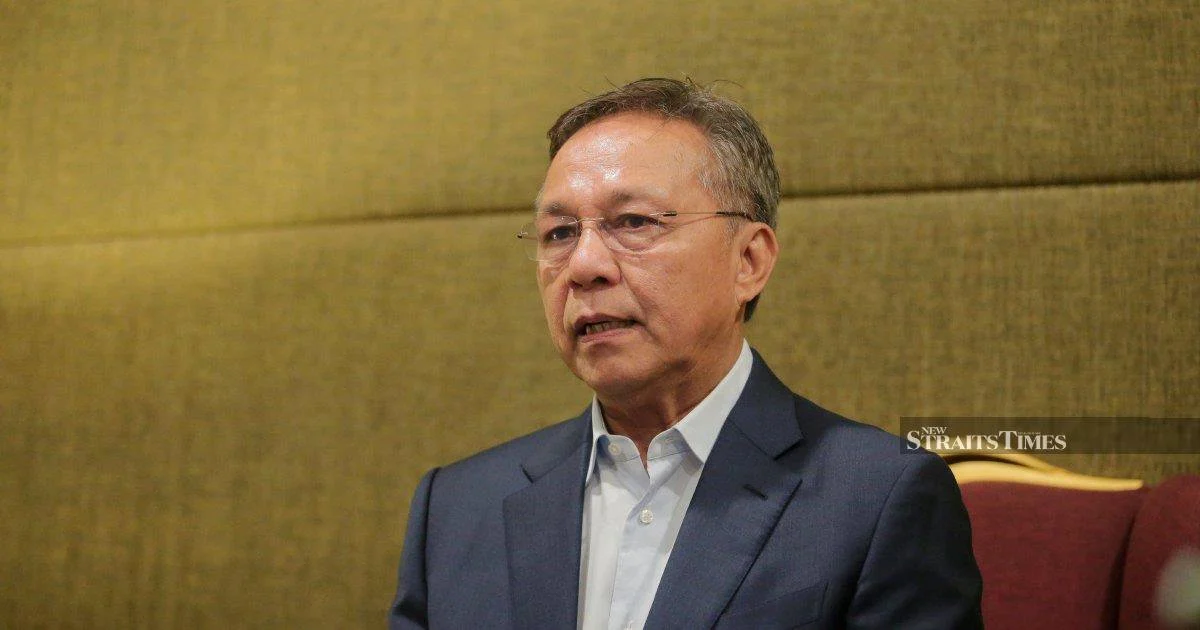
The exclusion of Datuk Seri Hasni Mohammad from the Johor Barisan Nasional slate for the forthcoming state election marks a significant turning point in the political trajectory of the former menteri besar, with observers pointing to a possible realignment of his electoral ambitions towards the parliamentary arena. Hasni, who previously served as Johor's top administrator, has occupied a central position in the state's political establishment for years, making his removal from the regional candidate roster a noteworthy development that has triggered widespread political commentary.
The decision to exclude him from the state-level contest has provoked considerable speculation within Malaysian political circles regarding his future direction. Rather than disappearing from the political landscape entirely, sources suggest that Hasni may be positioning himself to contest a parliamentary constituency in the subsequent general election, representing a potential shift in his political focus. This interpretation gains credibility given his standing within the Barisan Nasional framework and the typical trajectory of senior figures who opt to concentrate their efforts at the federal rather than state level.
The removal itself reflects broader dynamics within Johor's Barisan Nasional machinery, where candidate selection invariably involves strategic calculations about seat viability, party management, and the consolidation of electoral strength in key constituencies. For a figure of Hasni's experience and seniority, such an omission would typically signal either an intentional repositioning within party structures or a deliberate choice to pursue alternative electoral pathways. The timing and manner of the announcement suggest the former is more plausible, indicating a coordinated strategic decision rather than a punitive measure.
Hasni's potential transition from state-level politics to parliamentary representation would align with established patterns observed among senior Barisan Nasional figures across Malaysia. Many former state leaders have successfully leveraged their administrative experience and political capital to build constituencies at the federal level, where the scope of influence and national significance are substantially greater. Such a move would not represent an unusual departure but rather a logical evolution in his political career, particularly given the heightened prominence attached to parliamentary seats in Malaysia's governance structure.
The parliamentary arena offers distinct advantages that may have motivated this strategic recalibration. Federal-level politics provides access to broader policy-making processes, greater visibility on the national stage, and enhanced opportunities for ministerial appointment or influence within a potential government. For someone with Hasni's background as a former chief executive, these advantages would likely outweigh the prestige associated with state-level representation, particularly if parliamentary avenues remain available.
The state of Johor itself holds considerable weight within Barisan Nasional's electoral calculations, being one of the party coalition's traditionally strongest bastions. Consequently, the candidate selection process for state elections in Johor is invariably competitive and closely scrutinised by party hierarchies. The decision to exclude a figure of Hasni's standing suggests that the Barisan Nasional machinery in Johor has determined that either his candidacy would not optimally serve party interests at the state level, or that his energies are better channelled towards federal constituencies where his experience might prove decisive.
This development also reflects the intricate internal politics of Barisan Nasional, where competing factions vie for candidate slots and electoral positioning. The exclusion of prominent figures often involves negotiations and understandings within the coalition structure that are rarely fully transparent to outside observers. For Malaysian political analysts, such moves typically indicate broader compromises within the party apparatus rather than reflecting disapproval of the individual concerned.
The parliamentary possibilities for Hasni would depend on several factors, including the configuration of constituencies in the next general election and the availability of seats deemed winnable by Barisan Nasional strategists. His choice of parliamentary constituency would carry significance not merely for his own political fortunes but potentially for broader dynamics within the coalition, particularly in terms of how different factions are accommodated within candidate selection frameworks.
For regional observers seeking to understand Malaysia's political evolution, the Hasni situation exemplifies how senior figures continuously adapt their political positioning in response to changing circumstances and internal party dynamics. The flexibility demonstrated by experienced politicians in adjusting their electoral strategies underscores the fluid nature of Malaysian politics, where career trajectories are determined by complex interactions between personal ambition, party machinery, and electoral opportunity.
The coming months will clarify whether speculation about Hasni's parliamentary intentions materialises into concrete action. If he does ultimately contest a federal seat in the subsequent general election, his campaign would likely benefit from the administrative credentials and political networks developed during his tenure as Johor's chief minister, providing him with substantial advantages over less experienced contenders. Conversely, if alternative explanations emerge for his exclusion from the state slate, observers may need to reassess their current understanding of the strategic calculus behind the Barisan Nasional decision-making process in Johor.

